
How to Build a Reputation for Strong Judgment Over Time

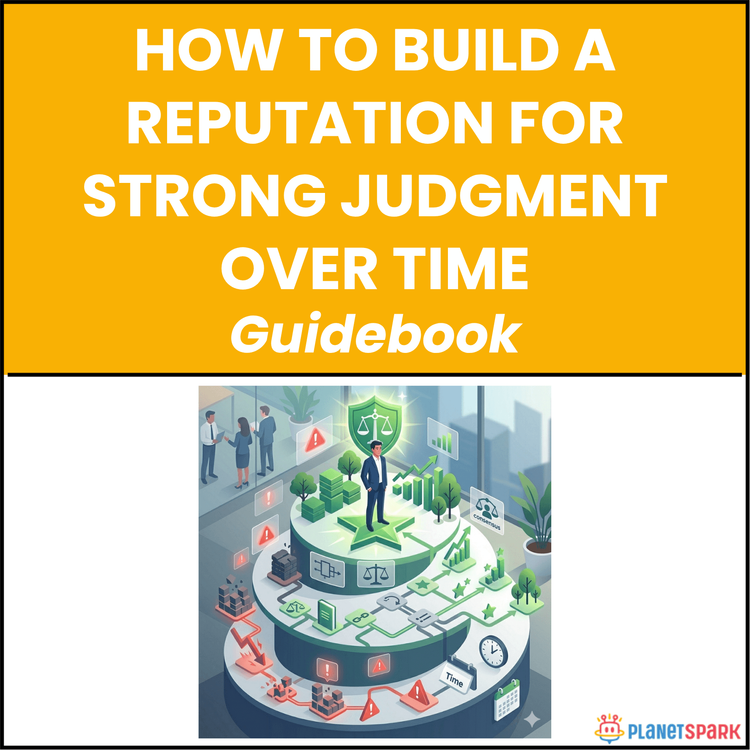
How to Build a Reputation for Strong Judgment Over Time
Building a Reputation for Strong Judgment Over Time: A Practical Guide for Professionals
In the workplace, making the right decisions is essential for success, but making those decisions consistently and with confidence is what truly sets top professionals apart. Judgment is the invisible currency of professional credibility, yet most people aren’t explicitly taught how to develop or communicate their judgment in the workplace. Without a reputation for strong judgment, even the most talented professionals can be overlooked when big decisions need to be made.
“How to Build a Reputation for Strong Judgment Over Time” is a practical guide designed to help you develop, demonstrate, and protect your reputation for making smart decisions, time and again. This resource provides actionable steps to sharpen your judgment and become the professional others trust to lead, even in high-stakes situations.
Who Is This Resource For?
This guide is especially valuable for:
- Career changers who need to develop their judgment in a new field or role
- Managers who are stepping into greater responsibility and need to communicate their decisions clearly
- Consultants and advisors who rely on their judgment and strategic recommendations to build trust with clients
- Early to mid-career professionals who want to build a solid reputation for strong, reliable judgment
If you’re ready to build a reputation for making the right call—consistently, credibly, and with confidence—this resource will provide you with the tools you need to get started.
What Does This Resource Contain?
This guide offers you a concrete mental model for judgment, as well as practical steps to apply it:
1. What Strong Judgment Actually Means
Learn how judgment is different from intelligence, experience, and confidence. Judgment is about making well-informed decisions that serve the right outcome for the right reasons, even when the decision is difficult or uncertain.
2. Step 1: Build Situational Awareness Before You Speak
The foundation of good judgment is understanding the context before offering a recommendation. Learn how to read both the technical details and the political, relational, and historical context to fully grasp what’s at stake.
3. Step 2: Develop and Apply a Clear Decision-Making Framework
Strong judgment requires structured thinking. This phase introduces a decision-making framework that helps you apply appropriate rigor based on the stakes and urgency of the decision.
4. Step 3: Communicate Your Thinking, Not Just Your Conclusions
How you communicate your reasoning is just as important as the decisions you make. This step helps you articulate your decision process clearly, giving others a reason to trust your thinking—even if they disagree with your conclusion.
5. Step 4: Manage Uncertainty Without Faking Certainty
Strong judgment involves managing uncertainty transparently. This phase teaches you how to express your level of certainty honestly, giving you the confidence to communicate without over-claiming.
6. Step 5: Build a Track Record Through Consistent Micro-Decisions
Your reputation for judgment is built in the accumulation of hundreds of small decisions. This phase encourages you to make deliberate choices in everyday situations, demonstrating your judgment in real time.
Summary of the Resource
This guide helps you:
- Understand strong judgment and how to build it over time
- Apply a decision-making framework to clarify the thinking process behind each decision
- Communicate your reasoning clearly to build trust with others
- Manage uncertainty by being honest about what you know and what you don’t
- Build a track record of good judgment through everyday decisions
By implementing these steps, you’ll build a solid reputation for making the right call, even under pressure.
How Will This Resource Be Useful?
This guide will help you:
- Build a strong judgment reputation through consistent, intentional decision-making and communication.
- Make better decisions by applying structured frameworks and building awareness of the context and trade-offs involved.
- Gain trust and influence by communicating your reasoning clearly, making your decision-making process visible to others.
- Develop a track record that shows others that you are dependable, trustworthy, and capable of leading through difficult decisions.
By applying the strategies in this resource, you’ll build a reputation for strong judgment that will serve you throughout your career.
How Should You Use This Resource?
Here’s how to get started:
1. Review the core concepts of the guide and familiarize yourself with the definition of strong judgment.
2. Use the Situation Audit before any high-stakes meeting or decision to build situational awareness and ensure you understand the full context.
3. Develop and apply a decision-making framework to your decisions. Structure your thinking by considering the impact, reversibility, available information, and urgency of each decision.
4. Communicate your thinking clearly by using the Judgment Communication Stack to articulate your reasoning in every important conversation.
5. Manage uncertainty transparently by using calibrated language to express your confidence level honestly and openly.
6. Build your track record by consistently making deliberate, well-informed decisions and reviewing them periodically to improve.
Action Steps
Here’s what you can do immediately:
1. Complete a Situation Audit before your next important decision or meeting. Use the worksheet to clarify the key context and assumptions involved.
2. Develop a decision-making framework and start applying it to your next significant decision, no matter how urgent or complex.
3. Practice using the Judgment Communication Stack when presenting your decisions to others, ensuring you articulate your reasoning and acknowledge potential risks.
4. Track your decisions in a decision journal to build a personal record of your judgment and review it quarterly for growth insights.
Book your free session today!