
How to Build Authority Without Becoming Controlling

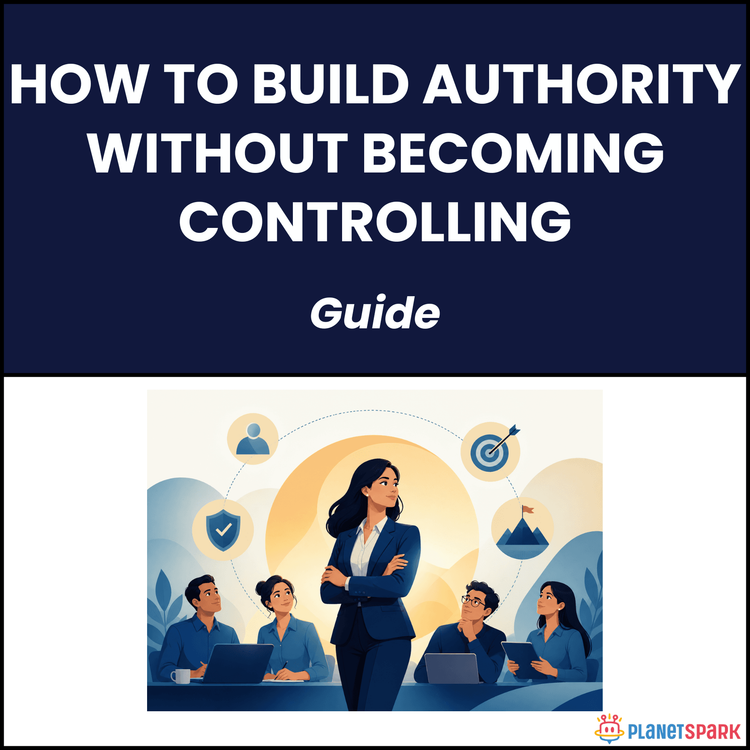
How to Build Authority Without Becoming Controlling
Build Authority Without Becoming Controlling: 10 Practical Templates for Managers and Professionals
If you’ve ever struggled to strike the right balance between being respected and being liked at work, you’re not alone.
Many professionals either avoid asserting authority altogether—staying quiet, over-explaining, or hesitating to make decisions—or swing to the opposite extreme, becoming overly directive, rigid, or controlling. Neither approach works in the long run.
True authority isn’t about power or hierarchy. It’s about clarity, trust, and consistency. It’s about people choosing to follow your lead—not because they have to, but because they believe in your judgment.
That’s exactly where this resource comes in. It gives you ready-to-use templates and structured frameworks to help you lead with influence, not control, across real-world professional situations.
Who Is This Resource For?
This template pack is designed for working professionals who regularly need to influence outcomes, guide teams, or manage expectations.
You’ll benefit from this resource if you are:
- A first-time manager learning how to lead without micromanaging
- A team lead or project owner responsible for delivering results through others
- A consultant or freelancer managing client expectations and boundaries
- An early–mid career professional stepping into leadership responsibilities
- Someone struggling to balance authority with approachability
- A professional who wants to communicate more clearly and confidently in high-stakes situations
Importantly, you don’t need a formal leadership title. Authority is a skill—not a designation.
What Does This Resource Contain?
This is a scenario-driven template pack built around 10 real-world professional challenges. Each template is designed to be practical, actionable, and immediately usable.
Here’s what you’ll find inside:
1. Leadership Stance Statement
Define your leadership philosophy and set expectations clearly from day one.
2. Team Working Agreement
Establish shared norms so authority comes from alignment—not control.
3. Delegation Clarity Brief
Assign ownership effectively without micromanaging.
4. Structured Feedback Conversation Guide
Deliver feedback that is clear, direct, and constructive.
5. Client Scope Boundary Letter
Reset expectations professionally when clients overstep boundaries.
6. First-90-Days Authority Plan
Build trust and credibility strategically in a new role.
7. Authority Recovery Note
Rebuild trust after mistakes or moments of lost credibility.
8. Stakeholder Influence Map
Understand power dynamics and build authority across teams.
9. Meeting Facilitation Framework
Lead meetings with clarity and decisiveness—without dominating.
10. Authority-Under-Pressure Response Script
Respond calmly and confidently when your decisions are challenged.
Each template is tied to a specific situation, making it highly relevant and easy to apply.
Summary of the Resource
At its core, this resource is a complete system for building authority in a structured, repeatable way.
Instead of relying on instinct or personality, it gives you:
- Clear frameworks for communication
- Ready-to-use language for difficult situations
- Step-by-step structures for leadership moments
- Practical tools to build trust and credibility over time
The underlying philosophy is simple: authority is earned through clarity, consistency, and trust—not control or fear.
How Will This Resource Be Useful?
This resource delivers immediate, real-world value in your day-to-day work.
Here’s how it helps:
You communicate with clarity
No more vague instructions, over-explaining, or second-guessing your words.
You set boundaries confidently
Whether with clients, peers, or team members, you’ll know exactly how to hold your ground professionally.
You avoid micromanagement
By using structured delegation and expectation-setting, you empower others while staying accountable.
You handle difficult conversations better
From feedback discussions to public challenges, you’ll have language that keeps you calm and credible.
You build long-term trust
Instead of relying on authority by position, you develop authority through consistency and behavior.
You recover faster from mistakes
Instead of losing credibility after a misstep, you’ll know how to regain trust quickly and intentionally.
How Should You Use This Resource?
To get the most out of this template pack, don’t try to use everything at once. Approach it strategically.
Step 1: Start with your foundation
Begin with the Leadership Stance Statement. This defines how you lead and sets the tone for everything else.
Step 2: Identify your current challenge
Pick the template that matches your immediate situation:
- New role → First-90-Days Plan
- Difficult conversation → Feedback Guide
- Client issue → Boundary Letter
Step 3: Customize quickly
Each template is designed to be completed in under 15 minutes once you have context. Replace placeholders, adjust tone, and keep it relevant.
Step 4: Apply in real situations
Use the templates in live scenarios—meetings, emails, feedback conversations, or planning sessions.
Step 5: Build consistency over time
Authority is not built in one moment. Use these templates repeatedly to create patterns of clear, confident behavior.
Action Steps
If you want to start using this resource immediately, here’s what to do next:
1. Open the Leadership Stance Statement template and complete it today
2. Identify one current situation where you need more authority
3. Choose the matching template from the pack
4. Fill it out with your real context (no placeholders)
5. Use it in your next meeting, conversation, or communication
6. Reflect on what worked and refine your approach
Even one template applied well can significantly change how others perceive your leadership.
The difference between average professionals and effective leaders is not knowledge—it’s execution.
Authority is not something you are given. It is something you demonstrate—through how you communicate, how you make decisions, and how you handle difficult moments.
This resource gives you the structure, language, and confidence to do exactly that. Whether you’re leading a team, managing clients, or influencing stakeholders, these templates help you show up with clarity and credibility—without becoming controlling.
Start small. Apply one template. Then build from there.
Because the way you communicate today shapes the authority you’ll have tomorrow.