
How to Build Confidence During Uncertain Career Moves

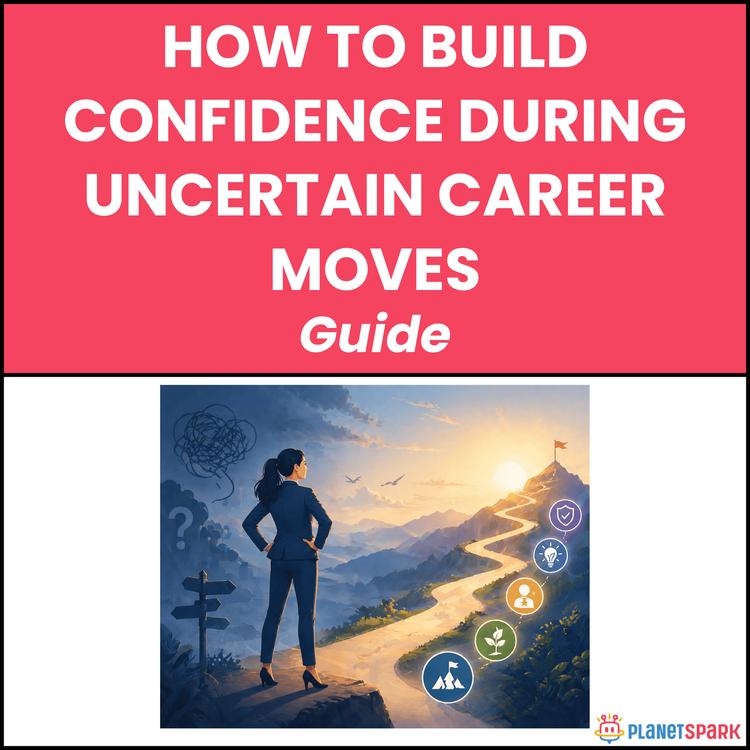
How to Build Confidence During Uncertain Career Moves
Strengthening Confidence During Career Transitions: A Practical Guide for Uncertain Career Moves
You’ve updated your resume. You’ve explored new roles. You’ve even thought through your next career move.
And yet — something still holds you back.
It’s not always a lack of skills. More often, it’s a lack of confidence.
Career transitions—whether it’s switching industries, stepping into leadership, or restarting after a break—can feel disorienting. The structure, identity, and validation you once relied on disappear, leaving behind uncertainty and self-doubt.
This is exactly where the “How to Build Confidence During Uncertain Career Moves” resource comes in. It’s not just another career guide—it’s a practical, action-driven playbook designed to help you rebuild confidence from the ground up and take meaningful steps forward, even when the path isn’t clear.
Who Is This Resource For?
This resource is designed for professionals who are navigating change and want clarity without guesswork. It is especially valuable for:
- Early to mid-career professionals (0–15 years of experience)
- Career switchers exploring new industries or roles
- Job seekers dealing with uncertainty or repeated rejections
- Consultants and managers transitioning into new responsibilities
- Professionals experiencing self-doubt despite strong capabilities
If you’ve ever felt “I’m capable, but I’m not sure I’m ready,” this guide is built for you.
What Does This Resource Contain?
This guide is structured into six practical modules, each addressing a critical aspect of building confidence during career transitions.
1. Understanding Career Uncertainty
Learn the three types of uncertainty—identity, competence, and direction—and how to deal with each specifically instead of feeling overwhelmed.
2. The Confidence Gap Model
A powerful framework that shows why confidence is not a prerequisite for action—but a result of it.
3. Inner Confidence Architecture
Tools to build a strong internal foundation, including:
- Values clarity
- Evidence inventory (tracking achievements)
- Growth narrative building
- Self-compassion practices
4. Transferable Skills Mapping (Competence Bridge)
A structured method to translate your existing skills into new career contexts, making you more confident in interviews and networking conversations.
5. Before, During, and After Framework
A three-phase system to manage career transitions:
- Before: Preparation and planning
- During: Navigating uncertainty and maintaining confidence
- After: Consolidating growth and building long-term confidence
6. Practical Worksheets and Checklists
Including:
- Inner confidence audit worksheet
- Skills mapping template
- 60-day preparation checklist
- Confidence self-evaluation sheet
- Action planning framework
Each section is designed to be actionable—not just informative.
Summary of the Resource
At its core, this guide helps you do one thing: build grounded confidence through clarity, evidence, and action.
Instead of relying on motivation or positive thinking, it gives you a repeatable system:
- Understand what’s causing your uncertainty
- Build evidence of your capabilities
- Take consistent, small actions
- Use results to strengthen confidence over time
It’s not a one-time read—it’s a tool you return to at every stage of your career.
How Will This Resource Be Useful?
This guide delivers real, measurable benefits for working professionals:
- Clarity in Decision-Making
You stop second-guessing your direction and start evaluating choices based on values and evidence.
- Stronger Self-Belief
By documenting your achievements and reframing your story, you build confidence rooted in reality—not assumptions.
- Better Career Communication
You learn how to clearly articulate your value, especially in new or unfamiliar roles.
- Faster Execution
Instead of waiting to feel “ready,” you learn how to take action and build confidence through doing.
- Resilience During Transitions
You gain tools to handle imposter syndrome, rejection, and uncertainty without losing momentum.
- Structured Career Growth
The frameworks help you approach transitions systematically rather than emotionally.
How Should You Use This Resource?
To get maximum value, use this guide as an active tool—not passive reading material.
Step 1: Read for Context
Start by going through the guide end-to-end to understand the overall framework.
Step 2: Complete the Worksheets
Set aside focused time to:
- Do the Inner Confidence Audit
- Build your Evidence Inventory
- Write your Growth Narrative
Step 3: Map Your Skills
Use the Competence Bridge template to translate your existing experience into your target role.
Step 4: Follow the Before-During-After Framework
Apply the relevant module depending on your stage:
- Planning a move → Focus on “Before”
- Actively transitioning → Focus on “During”
- Settling into a new role → Focus on “After”
Step 5: Revisit Regularly
Return to the guide every few weeks or at key career moments to recalibrate your confidence and direction.
Action Steps
If you’re ready to start building confidence immediately, take these three steps:
1. Identify Your Uncertainty
Write down whether your current challenge is:
- Identity-based (“Who am I in this new role?”)
- Competence-based (“Do I have the skills?”)
- Direction-based (“Is this the right path?”)
2. Create Your Evidence Base
List 5 professional achievements that prove your capabilities. Be specific.
3. Take One Small Action
Choose a low-risk step you can take this week:
- Reach out to someone in your target field
- Start a small project
- Practice your career story
4. Build Momentum
Repeat this cycle weekly:
Action → Feedback → Learning → Confidence
5. Set a Decision Date
Commit to a specific timeline for your next career move or milestone.
The goal is not perfection. It’s progress.
Career confidence is not something you’re born with—it’s something you build.
Every professional you admire has faced uncertainty at some point. What separates those who move forward from those who stay stuck is not fearlessness, but action in the presence of fear.
This resource gives you a structured way to act, learn, and grow—no matter where you are in your career journey.
Use it consistently. Revisit it often. Apply it honestly.
Because the more you practice confidence, the more natural it becomes.