
How to Build Financial Flexibility for Career Transitions

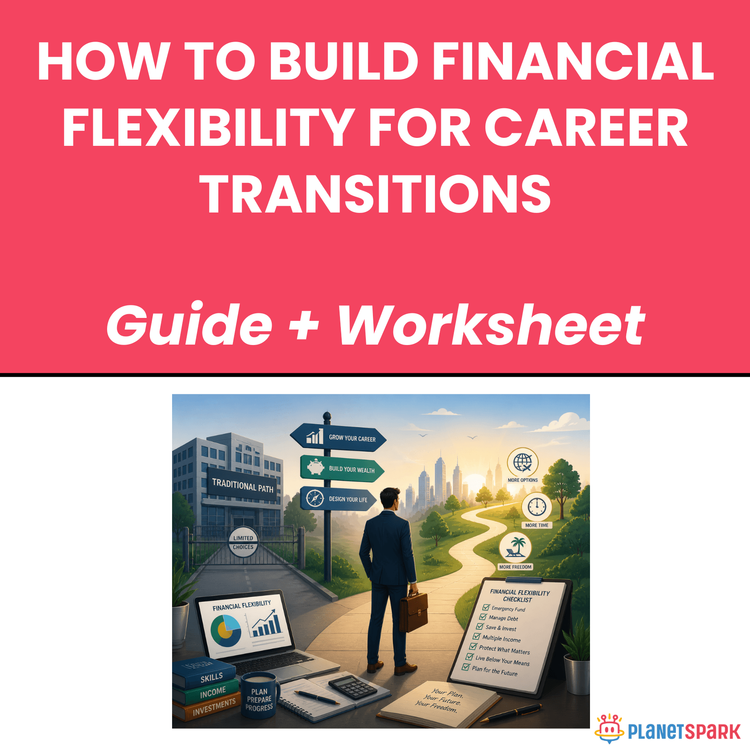
How to Build Financial Flexibility for Career Transitions
Ways to Build Financial Flexibility for Career Transitions: A Practical Guide + Worksheet for Working Professionals Ready to Make Their Next Bold Move — Without Financial Panic
Most professionals don't leave unfulfilling jobs because they can't—they stay because they feel financially trapped. The mortgage, the EMIs, the lifestyle commitments, the school fees. The numbers feel like a cage. But here's the truth that most financial advice misses: you don't need to be rich to make a career change. You need to be financially flexible.
Financial flexibility isn’t about having a huge savings cushion or a privileged starting point. It’s about how you structure your money so it gives you real choices. Choices like saying no to a toxic role, accepting a lower-paying opportunity that aligns with your values, or taking time to explore a new path without immediate financial pressure.
This guide is designed for time-poor working professionals who are serious about making a career transition—whether that means switching industries, moving into independent consulting, taking time to upskill, or simply creating breathing room for a job search without pressure. With a structured, repeatable process, you can plan your career transition with clarity and confidence, ensuring that your decisions are not dictated by financial panic.
Who Is This Resource For?
This guide is ideal for:
- Professionals planning a career transition: Whether you're considering switching industries, moving into freelancing, or simply seeking more time to explore new opportunities.
- Mid-career professionals: Individuals who want to make a deliberate and confident move, not a reactive one.
- Time-constrained professionals: Those who want practical advice without a massive time commitment.
- Anyone looking to build financial flexibility: If you're feeling trapped by your current job because of financial commitments, this guide helps you break free.
If you’re ready to move on from your current role without the stress of financial panic, this guide will provide you with a clear, actionable roadmap.
What Does This Resource Contain?
This resource is a comprehensive guide with worksheets designed to help you build financial flexibility for a career transition. Inside, you'll find:
- Assessing Your Current Financial Reality: Learn how to audit your income, expenses, and assets to understand your starting point clearly.
- Defining Your Transition Timeline & Runway: Understand how much runway you have and how long you can sustain your current lifestyle if your income drops.
- Building Your Transition Fund Strategically: Learn how to set up and grow a fund that will help you transition without stress.
- Reducing Financial Drag & Creating Optionality: Identify unnecessary expenses that are limiting your choices and learn how to free up cash flow for your transition fund.
- Generating Bridge Income: Discover ways to generate side income during your transition period through consulting, freelancing, or other skills.
- Executing With Confidence: A checklist to ensure you're fully prepared financially before taking the leap.
This guide is practical, actionable, and designed to fit into the busy lives of working professionals. It’s not about drastic changes—it’s about taking small, steady steps that lead to greater financial freedom.
Summary of the Resource
“How to Build Financial Flexibility for Career Transitions” helps professionals prepare for career shifts by creating financial freedom through a structured plan. This guide provides:
- Step-by-step financial assessment: Understand where you stand financially so that you can make informed decisions.
- Runway calculation: Know how much financial leeway you have before needing a major income change.
- Transition fund strategies: Build a dedicated fund to support your career transition without dipping into emergency savings.
- Actionable worksheets: Use practical tools to audit your expenses, plan for a smoother transition, and track progress.
This guide isn’t about financial perfection—it’s about building flexibility and intentionality in your financial life so that you can transition when the time is right for you, not when circumstances force your hand.
How Will This Resource Be Useful?
By following the steps in this guide, you will:
- Clarify your financial situation: Understand exactly where you stand financially, including your monthly income, expenses, assets, and liabilities.
- Prepare your financial runway: Ensure you have enough time and flexibility to make a career move without financial pressure.
- Build a dedicated transition fund: Save and structure money specifically for your career transition, so you don’t feel guilty or hesitant to use it.
- Create income streams: Generate bridge income through side gigs like consulting or freelancing to make the transition smoother.
- Ensure financial protection: Understand your insurance needs and tax implications during your transition.
You’ll go from feeling financially trapped to feeling financially flexible, empowered to make your next career move with confidence.
How Should You Use This Resource?
This guide is modular and can be used sequentially or in segments depending on where you are in your transition process. Follow these steps:
1. Start with the Financial Reality Audit: Assess your current financial situation, including income, expenses, and assets. This will serve as your baseline.
2. Calculate Your Runway: Use the worksheet to determine how much time you have before your income drops and how much runway you need to feel safe.
3. Build Your Transition Fund: Follow the strategies provided to create a dedicated fund to support your transition.
4. Reduce Financial Drag: Review your expenses and identify areas where you can eliminate unnecessary spending, increasing your financial flexibility.
5. Explore Bridge Income Options: Before you leave your current role, start building a secondary income stream to support your transition.
6. Execute with Confidence: Use the provided checklists and templates to ensure you're fully prepared before making the leap.
Use this guide as a reference and work through it at your own pace, focusing on the areas that matter most to you as you prepare for your career transition.
Action Steps
To get started immediately:
1. Complete the Financial Reality Worksheet: Understand your income, expenses, and liabilities in detail.
2. Calculate your runway: Use the worksheet to determine how much time you have before your income drops and how much runway you need to feel safe.
3. Set up a transition fund: Open a dedicated savings account for your transition and make your first deposit, no matter how small.
4. Identify a bridge income opportunity: Reach out to a potential client or explore freelance opportunities to build income while you transition.
These actions will give you the financial foundation you need to confidently pursue your career transition.
Your next career move is within reach. With the financial flexibility provided by this guide, you can move forward with confidence and control.
Book your free session today!