
How to Build Financial Resilience Against Unexpected Expenses

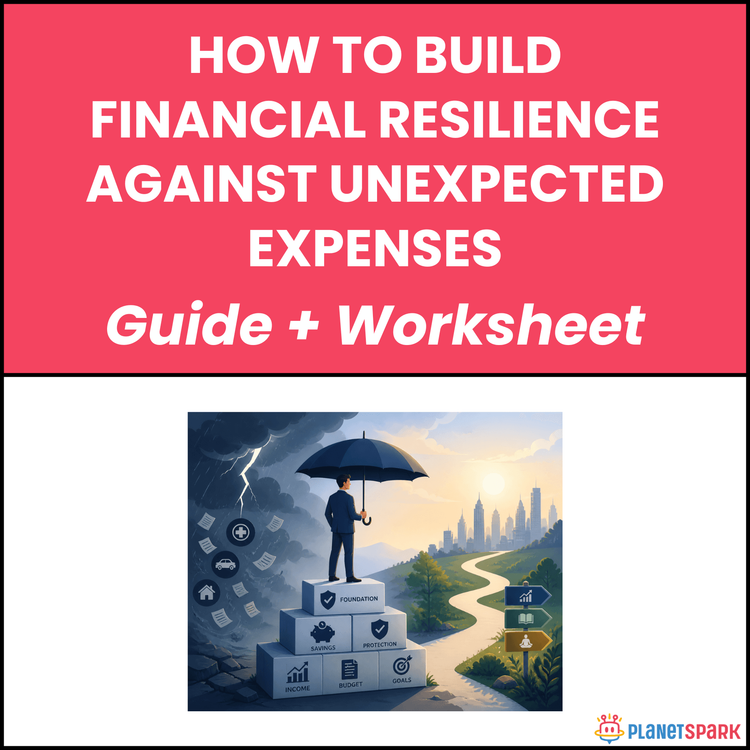
How to Build Financial Resilience Against Unexpected Expenses
Prepare Your Finances for Unexpected Expenses and Setbacks: A Practical Guide for Working Professionals
If a sudden expense hit you today—a medical bill, job disruption, or urgent repair—how prepared would you be?
Most working professionals focus on earning more, growing their careers, and planning long-term investments. But when something unexpected happens, even a strong income can feel unstable. The reality is simple: income alone doesn’t create security—systems do.
That’s exactly why the resource “How to Build Financial Resilience Against Unexpected Expenses” exists. It’s designed to help you stop reacting to financial shocks and start preparing for them with clarity, structure, and confidence.
This is not about complex financial strategies or aggressive investing. It’s about building a practical, reliable system that protects your day-to-day life—so unexpected expenses don’t derail your progress or decision-making.
Who Is This Resource For?
This resource is especially valuable if you are:
- A working professional with 0–15 years of experience
- A career switcher navigating financial uncertainty
- A consultant or freelancer with irregular income
- A manager balancing income, expenses, and dependants
- Someone living paycheck to paycheck without a buffer
- A professional who wants clarity and control over their finances
- Anyone who feels unprepared when unexpected expenses arise
If you want to feel financially stable—not just earn more—this guide is built for you.
What Does This Resource Contain?
This is a structured, step-by-step system designed to help you build real financial resilience—not just theoretical knowledge.
Inside the resource, you’ll find:
- A six-module roadmap that takes you from financial awareness to long-term resilience
- A Financial Baseline Audit framework to understand your income, expenses, debt, and savings clearly
- A tiered emergency fund system (Tier 1, Tier 2, Tier 3) to build protection step by step
- A personalised Risk Exposure Map to identify and prioritise real-life financial risks
- A Resilience Architecture framework to create systems using accounts, automation, and rules
- The Sinking Fund strategy to plan for predictable but irregular expenses
- A Crisis Response Framework (CRF) to handle financial shocks without panic
- Worksheets and decision logs for structured thinking and execution
- A real-world case study showing how professionals apply the system
- Common financial mistakes and practical fixes
- An insurance coverage checklist to strengthen protection layers
- A 30-day action plan to implement everything step by step
- A quick-reference guide for ongoing use
Everything is designed for immediate application—not passive reading.
Summary of the Resource
“How to Build Financial Resilience Against Unexpected Expenses” is a practical, system-driven guide that helps professionals create stability in uncertain situations.
It shows you how to:
- Understand your current financial position clearly
- Build a safety buffer step by step
- Prepare for real-world financial risks
- Create systems that work automatically
- Respond to financial shocks without panic
If you invest a few focused hours into this resource, you won’t just learn about financial resilience—you’ll start building it.
How Will This Resource Be Useful?
This resource helps you move from financial uncertainty to structured control.
You’ll gain:
- Clarity on your actual financial position—not assumptions
- A clear plan to build an emergency buffer without feeling overwhelmed
- Confidence in handling unexpected expenses
- Reduced financial stress and anxiety
- Better decision-making during financial disruptions
- Systems that reduce reliance on willpower or guesswork
- Long-term financial stability that supports your career growth
Most importantly, it helps you stop reacting to money problems—and start managing them proactively.
How Should You Use This Resource?
To get the best results, follow a phased approach:
Start by reading the guide once to understand the overall structure and how each module connects. This gives you clarity before taking action.
Next, begin with Module 1 and complete the Financial Baseline Audit. Use real numbers from your bank statements to get an accurate picture.
Then move to building your emergency buffer using the tiered approach. Focus on completing Tier 1 first to create immediate protection.
After that, identify your personal risk exposures and map out the most likely financial shocks in your life.
Once you have clarity, design your financial system using accounts, automation, and sinking funds so your finances run smoothly in the background.
Finally, familiarise yourself with the Crisis Response Framework so you’re prepared before a financial shock happens.
Revisit the guide regularly—especially during:
- Career transitions
- Salary changes
- Major life events
- Financial setbacks or disruptions
This is not a one-time read—it’s a system you return to and refine over time.
Action Steps
After accessing this resource, take these steps immediately:
1. Block 2–3 focused hours in your calendar
2. Complete your Financial Baseline Audit using real data
3. Open a separate emergency fund account
4. Start building your Tier 1 emergency buffer
5. Identify your top 3 financial risks using the Risk Exposure Map
6. Set up at least one sinking fund for predictable expenses
7. Review your insurance coverage for gaps
8. Save and review the Crisis Response Framework
9. Schedule a monthly 15-minute financial check-in
10. Follow the 30-day plan to build your system step by step
Small, consistent actions here can create long-term financial security.
Financial resilience isn’t about having more money—it’s about having a system that protects you when things don’t go as planned. When you build structure into your finances, unexpected expenses stop feeling like crises and start becoming manageable events.
Use this resource not just to handle financial shocks, but to build a stronger, more stable foundation for your career and life.
Book your free session today!