
How To Build Influence By Understanding Human Motivations

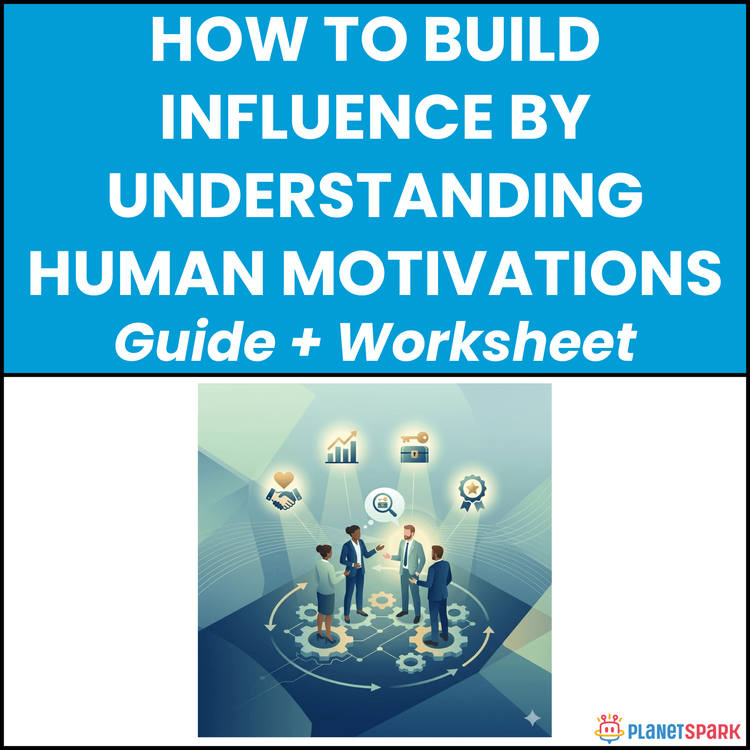
How To Build Influence By Understanding Human Motivations
Mastering Human Motivation: A Practical Guide to Building Influence, Earning Trust, and Being Heard
You’ve done the work. You’ve prepared your ideas. You’ve presented clearly.
But still — your ideas don’t land the way you expect.
Someone else says something similar, and it gets immediate buy-in. A stakeholder resists your proposal without clear logic. A decision goes in a direction you didn’t anticipate.
This isn’t about communication skill alone. It’s about motivation.
Most professionals try to influence others by improving what they say — better slides, better arguments, better data. But influence doesn’t start there. It starts with understanding what the other person actually cares about.
People don’t make decisions purely based on logic. They make decisions based on what matters to them — their priorities, fears, goals, and perceptions — and then justify those decisions with logic afterwards. As explained in the resource (page 2), influence is not something you push; it is something others grant based on how understood they feel.
The resource “How to Build Influence by Understanding Human Motivations” helps you shift from trying to convince people to actually connecting with what drives them. Once you understand that, your communication becomes more relevant, your ideas gain traction, and your influence grows naturally.
Who Is This Resource For?
This resource is ideal for:
- Working professionals who feel their ideas are overlooked
- Individuals who struggle to gain buy-in from stakeholders
- Managers and team leads who want to influence without authority
- Consultants working with diverse stakeholders
- Professionals aiming to grow into leadership roles
If you’ve ever thought “Why didn’t this land the way I expected?”, this guide gives you the answer.
What Does This Resource Contain?
This is a structured guide combined with practical worksheets. It includes:
- A clear explanation of why influence starts with motivation (page 2)
- The Influence Equation:
- Understand motivations
- Build genuine connection
- Earn lasting influence
- A practical model of human motivation (page 4):
- Security (need for safety and stability)
- Status (need for recognition and respect)
- Significance (need for meaning and impact)
- Tools to identify what drives different people
- Worksheets to map motivations of key stakeholders
- Techniques to adapt your communication based on motivations
- Real-world applications for meetings, conversations, and decisions
Summary of the Resource
This guide helps you shift your approach to influence.
Instead of focusing only on what you want to say, you learn how to:
- Understand what others care about
- Align your message with their motivations
- Build trust and connection
The result is stronger communication, better relationships, and increased influence.
How Will This Resource Be Useful?
This resource gives you a strategic advantage in professional interactions.
You will be able to:
- Understand why people respond the way they do
- Improve how your ideas are received
- Build stronger connections with stakeholders
- Reduce resistance and friction in conversations
- Influence decisions without relying on authority
- Communicate more effectively in high-stakes situations
As highlighted on page 2, influence is not about being the loudest — it’s about being the most understood.
How Should You Use This Resource?
To get the most value, apply it actively.
Step 1: Learn the Motivation Model
Understand the three core drivers: Security, Status, and Significance.
Step 2: Observe People
Identify what seems to matter most to key stakeholders.
Step 3: Map Motivations
Use the worksheet to document what drives each person.
Step 4: Adapt Your Communication
Frame your ideas based on their priorities.
Step 5: Test and Refine
Observe how people respond and adjust your approach.
Step 6: Build Consistency
Apply this approach across meetings, emails, and conversations.
Action Steps
Start immediately:
- Identify one stakeholder you need to influence
- Ask: What matters most to them? (Security, Status, or Significance)
- Write down their likely priorities
- Adjust one message or conversation based on this insight
- Observe how they respond
- Refine your approach
- Repeat with another stakeholder
Influence is not about pushing harder.
It’s about understanding deeper.
When you align your communication with what truly matters to others, your ideas don’t just get heard — they get accepted.
That is the difference between speaking and influencing.