
How to Build Psychological Resilience in Competitive Environments

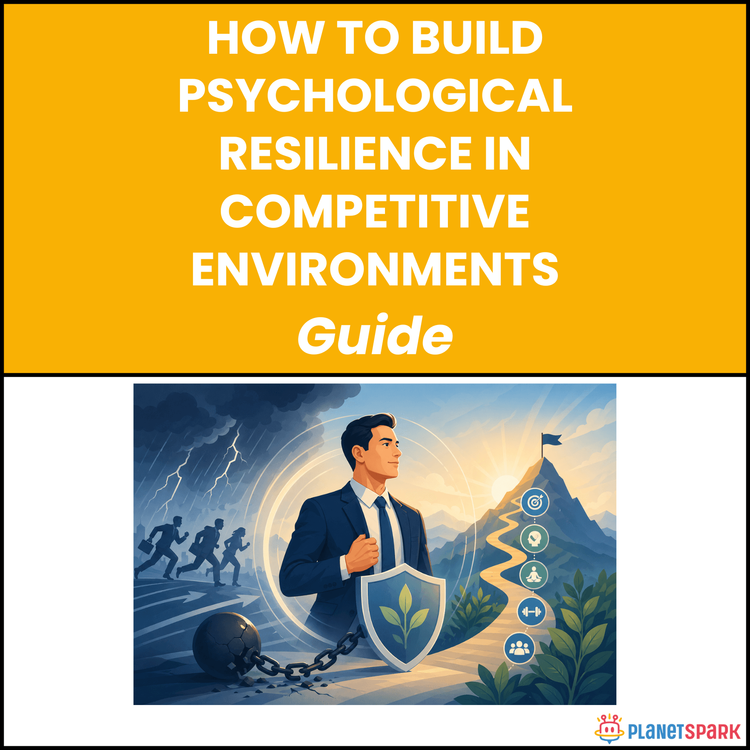
How to Build Psychological Resilience in Competitive Environments
A Professional’s Playbook for Building Psychological Resilience in Competitive Work Environments
Most professionals believe career success depends only on skills, performance, and hard work. But in reality, one factor often determines whether you grow consistently or burn out under pressure: psychological resilience.
Deadlines, difficult managers, promotion cycles, constant comparison, workplace politics, and career uncertainty create a kind of pressure that doesn’t disappear after one bad week. It becomes ongoing mental weight. Many professionals try to manage it with willpower alone—pushing harder, working longer, and ignoring stress signals until exhaustion takes over.
That is exactly why the resource “How to Build Psychological Resilience in Competitive Environments” exists.
This practical playbook helps working professionals build the internal systems needed to perform under pressure without sacrificing mental clarity, confidence, or long-term wellbeing. Instead of vague advice like “stay positive” or “be strong,” it offers a structured framework to help you recover faster, think more clearly, and stay effective in demanding professional environments.
Who Is This Resource For?
This resource is especially valuable if you are:
- A working professional with 0–15 years of experience navigating high-pressure roles
- A job seeker facing repeated rejection, uncertainty, or confidence dips
- A manager or team lead balancing responsibility, performance, and emotional demands
- A consultant, specialist, or individual contributor working in competitive environments
- A mid-career professional managing promotion pressure or leadership expectations
- Someone who feels mentally exhausted, constantly stressed, or emotionally reactive at work
- A high performer who wants sustainable success without burnout
If you are ambitious, outcome-driven, and want to perform well without constantly feeling overwhelmed, this guide is built for you.
What Does This Resource Contain?
This is not a motivational self-help guide. It is a practical resilience system built around real workplace challenges.
Inside the resource, you’ll find:
- A clear explanation of why resilience is now a critical professional skill
- Insights into how competitive environments affect the mind and decision-making
- Common warning signs that indicate you need resilience support now
- A complete 5-Pillar Resilience Framework for long-term professional sustainability
The five pillars include:
- Self-Awareness: Understanding your personal stress signature
- Cognitive Flexibility: Reframing unhelpful thoughts and emotional reactions
- Recovery Routines: Building habits that restore focus and energy
- Adaptive Skills: Strengthening problem-solving and emotional regulation
- Social Supports: Creating accountability and support systems that reduce isolation
You’ll also get:
- Reflection exercises to identify stress triggers and emotional patterns
- A Stress Signature Tracker worksheet for practical self-awareness
- A Reappraisal Journal to improve cognitive flexibility
- Guided prompts to help you respond intentionally instead of react impulsively
- Practical systems you can use during real workplace pressure—not just theory
Everything is designed for immediate application and long-term growth.
Summary of the Resource
“How to Build Psychological Resilience in Competitive Environments” is a practical guide that helps professionals manage pressure more effectively, recover from setbacks faster, and maintain performance without emotional exhaustion.
It teaches you how to identify your personal stress patterns, regulate your responses, build recovery systems, and create sustainable habits for high performance.
If your work environment feels mentally demanding, this resource gives you a clear framework to stay steady, focused, and confident—even when pressure increases.
How Will This Resource Be Useful?
This resource helps you move from reactive survival mode to intentional professional resilience.
You’ll gain:
- Better awareness of your personal stress triggers and warning signs
- Stronger emotional regulation during high-pressure situations
- Improved decision-making under stress
- Reduced overthinking, rumination, and self-doubt
- Practical routines that protect energy and prevent burnout
- Greater confidence during setbacks, criticism, and uncertainty
- A healthier relationship with ambition, performance, and self-worth
Most importantly, it helps you stop relying on willpower alone and start building systems that support long-term success.
Resilience is not about becoming tougher. It is about becoming more adaptive, self-aware, and sustainable.
How Should You Use This Resource?
To get the best results, use this guide in a phased and practical way.
First, read through the full framework once to understand how the five pillars work together. This helps you see the bigger picture instead of treating stress as isolated incidents.
Next, identify which pillar reflects your biggest current challenge. For example, if you constantly overthink criticism, start with Cognitive Flexibility. If exhaustion is your main issue, focus on Recovery Routines first.
Then, complete the worksheets and reflection exercises. Start with the Stress Signature Tracker to understand your patterns before trying to change them. Awareness creates better intervention.
Use the Reappraisal Journal whenever you face emotionally difficult situations at work. Writing things down helps reduce emotional distortion and improve clarity.
Finally, revisit the guide regularly—not just during burnout, but as an ongoing professional development tool.
You can return to this resource whenever you:
- Face a difficult manager or workplace conflict
- Prepare for promotion cycles or performance reviews
- Experience rejection, setbacks, or confidence drops
- Feel mentally exhausted or emotionally overloaded
- Enter a new role or high-pressure transition
Resilience works best when built proactively, not only during crisis.
Action Steps
After accessing this resource, take these steps immediately:
1. Identify one recent high-pressure professional situation you struggled with
2. Complete the Stress Signature reflection exercise from Pillar 1
3. Track your stress responses for the next two weeks using the worksheet
4. Use the Reappraisal Journal for one emotionally difficult work situation
5. Identify which of the five pillars needs your immediate attention most
6. Build one small recovery routine you can consistently maintain this week
Small awareness shifts create major long-term professional stability.
Your career will always involve pressure. The goal is not to eliminate challenge—it is to build the capacity to handle it without losing yourself in the process.
Psychological resilience is what allows talented professionals to stay consistent, make better decisions, and continue growing when others burn out or disengage. It protects both your performance and your wellbeing.
Use this resource not just to survive competitive environments, but to build a stronger, calmer, and more sustainable version of professional success.