
How to Build Systems That Support Sustainable High Performance
Free DownloadPDF

Noorul Ain FatimaVisit Profile
I’m a passionate public speaking educator who has guided hundreds of students in building confidence, clarity, and impactful communication skills. With hands-on experience in mentoring learners of different age groups, I focus on making learning engaging, practical, and result-driven. I truly enjoy helping students find their voice and express themselves with confidence in every situation.
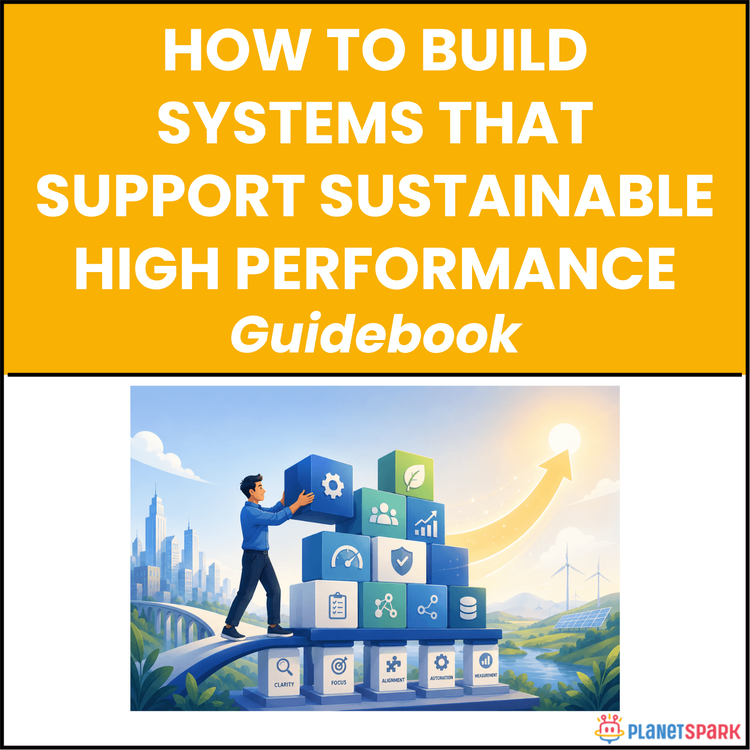
How to Build Systems That Support Sustainable High Performance
Free DownloadPDF
Noorul Ain FatimaVisit Profile
I’m a passionate public speaking educator who has guided hundreds of students in building confidence, clarity, and impactful communication skills. With hands-on experience in mentoring learners of different age groups, I focus on making learning engaging, practical, and result-driven. I truly enjoy helping students find their voice and express themselves with confidence in every situation.
How to Build Systems That Support Sustainable High Performance (Without Burning Out): A Practical Guide for Working Professionals
If you’ve ever had weeks where you perform at your best—only to crash the next week—you’re not alone.
Most professionals don’t struggle with capability. They struggle with consistency.
You push hard to meet deadlines, stretch your energy to deliver results, and try to stay productive—but without a structure, performance becomes unpredictable. Some weeks you’re focused and effective. Other weeks feel scattered, exhausting, and reactive.
This is exactly why “How to Build Systems That Support Sustainable High Performance” exists.
It shifts the focus from motivation and discipline to something far more reliable: systems. Instead of forcing performance through effort alone, this resource helps you design an environment where high-quality work becomes consistent, repeatable, and sustainable over time.
Who Is This Resource For?
This guide is built for working professionals who want to perform at a high level—without sacrificing their health, clarity, or long-term growth.
It is especially valuable if you are:
- A professional with 0–15 years of experience navigating increasing responsibilities
- Delivering results but struggling with consistency or burnout
- Managing multiple priorities across work, learning, and personal life
- A manager or consultant dealing with decision fatigue and energy drain
- Someone who wants to perform better without working longer hours
- Feeling stuck in cycles of overwork followed by exhaustion
If you want high performance that lasts—not just short bursts—this resource is designed for you.
What Does This Resource Contain?
This is a structured, system-first guidebook that breaks sustainable high performance into six core building blocks, each supported by practical frameworks and exercises.
Inside the resource, you’ll find:
A foundational understanding of sustainable performance:
- A clear definition of what “sustainable high performance” actually means
- The performance flywheel model (output, energy, and time working together)
- A shift from “working more” to “working with structure”
Mindset architecture tools:
- A mindset audit worksheet to uncover limiting beliefs
- Common performance-damaging beliefs and how to reframe them
- A shift from reactive thinking to systems thinking
Energy design frameworks:
- A 4-dimension energy model (physical, emotional, mental, purposive)
- A 5-day energy mapping exercise to identify peak performance hours
- Practical guidance on aligning work with energy rhythms
- Daily recovery strategies to maintain performance capacity
Workflow structuring systems:
- The Capture → Clarify → Prioritise → Execute workflow model
- A structured weekly planning protocol (30–45 minutes)
- The “Big 3” prioritisation method for weekly focus
- Techniques for reducing cognitive overload and improving execution
Decision clarity frameworks:
- A practical urgency vs impact decision model
- Pre-commitment templates for recurring decisions
- Meeting acceptance criteria and communication boundaries
- Methods to reduce decision fatigue and improve focus
Recovery protocols:
- Micro (daily), meso (weekly), and macro (long-term) recovery systems
- A comprehensive recovery checklist across physical, mental, emotional, and purposive areas
- Clear indicators of recovery gaps and how to fix them
Accountability systems:
- A structured accountability loop (goals, tracking, review, adjustment)
- Daily performance logs for self-reflection
- Weekly and monthly system audits
- Guidance on choosing and working with an accountability partner
Real-world application:
- A detailed case study showing how a professional improved performance while reducing work hours
- Common system-building mistakes and how to avoid them
- A structured 30-day system launch plan
Everything is designed to be implemented step-by-step—not just understood.
Summary of the Resource
“How to Build Systems That Support Sustainable High Performance” is a practical guide that helps professionals design a personal operating system for consistent, high-quality output.
It moves you away from:
- Overwork and burnout cycles
- Inconsistent performance
- Decision fatigue and scattered focus
And toward:
- Structured, repeatable performance systems
- Better energy management and recovery
- Clear priorities and focused execution
If you want to perform at your best without constantly pushing harder, this resource gives you the blueprint.
How Will This Resource Be Useful?
This resource helps you replace effort-driven performance with system-driven performance.
You’ll gain:
- Consistency in your output without relying on motivation
- Better control over your energy, time, and attention
- Reduced stress through clear workflows and decision frameworks
- Higher quality work by aligning tasks with peak energy periods
- Stronger boundaries that protect your focus and recovery
- Long-term sustainability without burnout
Most importantly, it helps you build a system where high performance becomes the default—not the exception.
How Should You Use This Resource?
To get the most value, approach this guide as a system you build over time—not something you consume in one sitting.
Start with clarity:
Read through the guide once to understand how all six building blocks connect. This gives you a complete picture of the system.
Then implement sequentially:
Week 1: Complete the mindset audit and energy mapping exercise. Identify your peak hours and make one scheduling change.
Week 2: Build your workflow system. Set up your capture method, define priorities, and implement the weekly planning protocol.
Week 3: Introduce decision clarity and recovery systems. Define your decision rules and fix one recovery gap.
Week 4: Build accountability. Set up a daily log, monthly audit, and accountability partner.
Focus on one layer at a time. Avoid trying to implement everything at once.
Finally, maintain and refine:
Use weekly reviews and monthly audits to adjust your system based on real-life feedback. This is how the system becomes sustainable.
Action Steps
After accessing this resource, take these steps immediately:
1. Block 45 minutes this week for “System Setup”
2. Complete the Mindset Audit worksheet
3. Track your energy for 5 days at 90-minute intervals
4. Identify your peak performance window and protect it
5. Define your “Big 3” priorities for the upcoming week
6. Set one decision rule (e.g., meeting acceptance criteria)
7. Identify one recovery gap and fix it this week
8. Start a simple daily performance log
These small actions will begin shifting your performance from reactive to structured.
High performance is not about pushing harder every day. That approach eventually breaks.
Sustainable high performance comes from designing systems that support you—especially on the days when motivation is low, energy is limited, and pressure is high.
When your systems are strong:
- Your priorities stay protected
- Your energy is managed
- Your decisions are clearer
- Your progress becomes consistent
You don’t need to do more. You need to operate better.
Start building your system today—and let it carry your performance forward.
Book your free session today!