
How to Communicate Career Experiments Without Looking Unfocused

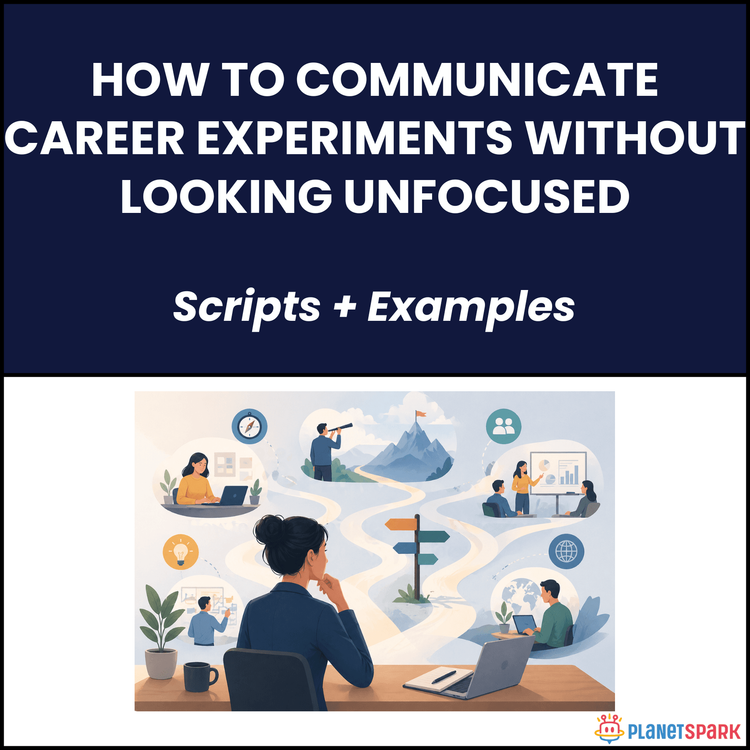
How to Communicate Career Experiments Without Looking Unfocused
Explain Career Gaps, Side Projects, and Career Pivots Without Looking Unfocused
If you’ve ever hesitated before explaining your career path—especially one filled with pivots, side projects, freelance work, or breaks—you’re not alone.
Modern careers are no longer linear. Professionals today experiment. They switch industries, test new roles, freelance, build side projects, or even take intentional breaks. But here’s the challenge: while these experiences can be incredibly valuable, they’re often misunderstood.
Without the right narrative, your career experiments can raise doubts instead of interest.
This is exactly why the “How to Communicate Career Experiments Without Looking Unfocused” template pack exists—to help you confidently frame your non-linear career as intentional, strategic, and valuable.
Who Is This Resource For?
This resource is designed for working professionals who:
- Have non-linear career paths (career switches, gaps, multiple roles)
- Are transitioning between industries or functions
- Have freelanced, consulted, or worked independently
- Are managing side projects, startups, or portfolio careers
- Have taken a sabbatical or break and need to explain it confidently
- Feel unsure about how to present their story in interviews, LinkedIn, or applications
Whether you're a job seeker, consultant, manager, or early-career professional, this resource helps you take control of your narrative.
What Does This Resource Contain?
This is a scenario-driven template pack with 10 ready-to-use scripts designed for real-world situations.
Inside, you’ll find:
- Interview scripts to explain career pivots and unconventional paths
- Cover letter blocks to position freelance or contract work as intentional experience
- LinkedIn narrative frameworks to present a cohesive professional story
- Networking scripts to confidently introduce your evolving career
- Internal communication templates for proposing role shifts within organizations
Key templates include:
- The Strategic Pivot Script – Positioning career switches as skill-driven decisions
- The Freelance-to-Full-Time Bridge – Reframing freelance work as structured growth
- The Side Project Legitimiser – Turning passion projects into credible experience
- The Sabbatical Reframe – Explaining breaks without sounding disengaged
- The Failed Startup Redirect – Positioning setbacks as high-learning experiences
- The Portfolio Career Pitch – Presenting multiple roles as a strength, not confusion
Each template is structured, practical, and designed to be customized with your own details.
Summary of the Resource
This resource gives you a clear, structured way to:
- Turn career “experiments” into compelling professional stories
- Replace vague or defensive explanations with confident, outcome-driven language
- Connect diverse experiences into one coherent narrative
- Communicate your value consistently across interviews, LinkedIn, and applications
In short, it helps you shift perception—from “unfocused” to “strategic and intentional.”
How Will This Resource Be Useful?
The biggest problem professionals face isn’t their career path—it’s how they explain it.
This resource helps you:
- Build confidence in how you talk about your career
- Eliminate the need to justify or apologise for non-linear moves
- Highlight outcomes instead of just listing experiences
- Position yourself as proactive and self-directed
- Reduce interviewer doubts by addressing questions before they arise
- Stand out in competitive hiring situations with a clear, compelling narrative
Instead of avoiding difficult questions, you’ll be prepared to answer them with clarity and authority.
How Should You Use This Resource?
To get the most value from this template pack, follow a structured approach:
1. Identify Your Scenario
Start by identifying which situation best matches your current position—career switch, freelance phase, gap, side project, etc.
2. Select the Relevant Template
Use the template directory to choose the script designed for your exact scenario.
3. Customize Thoughtfully
Replace placeholder text with your own details—your experience, outcomes, and goals. Focus on being specific and measurable.
4. Align Across Platforms
Adapt the same narrative for different contexts:
- Interviews
- LinkedIn profile
- Cover letters
- Networking conversations
5. Practice Delivery
Don’t just write your story—practice speaking it. Clarity improves with repetition.
6. Combine Templates if Needed
If your situation is complex, mix elements from multiple templates to create a hybrid narrative.
Action Steps
If you want to start immediately, here’s what to do:
1. List all your career “experiments” (freelance work, projects, pivots, breaks)
2. Identify the skills and outcomes from each experience
3. Choose one template that fits your current goal (job search, networking, internal move)
4. Draft your first version using the template
5. Refine it to focus on outcomes, not explanations
6. Test it in a real conversation or interview setting
7. Update your LinkedIn and resume to reflect the same narrative
Consistency is key—the same story should show up everywhere.
Your career doesn’t need to look perfect—it needs to make sense.
When you learn how to connect your experiences into a clear narrative, you stop looking unfocused and start being seen as someone who takes ownership of their growth.
That shift changes how employers, clients, and peers perceive you—and more importantly, how you present yourself.