
How To Design Systems For Managing Energy, Time, And Attention

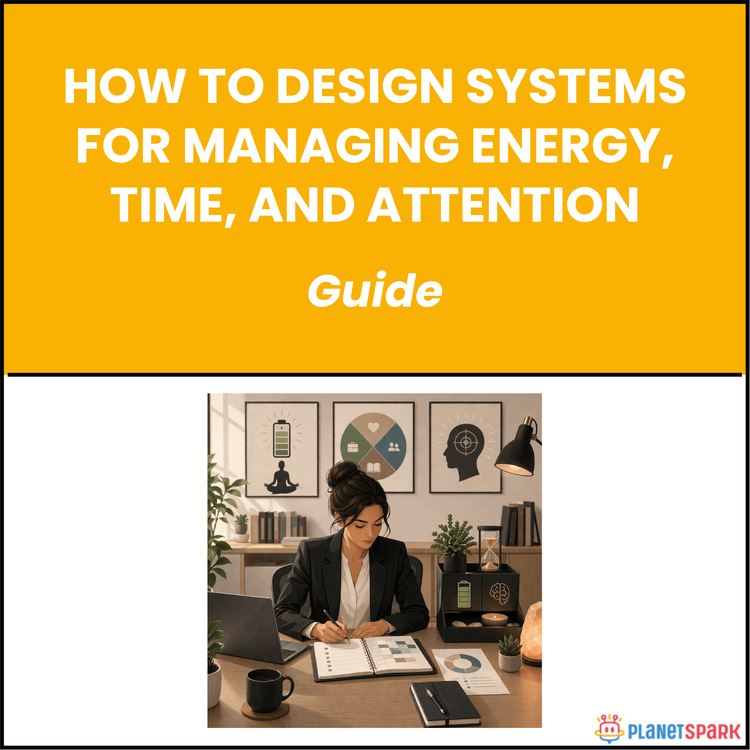
How To Design Systems For Managing Energy, Time, And Attention
How to Design Systems for Managing Energy, Time, and Attention: A Practical Framework for Sustainable High Performance
Most professionals think productivity is a time problem.
So they buy planners, download apps, optimize calendars, and try to fit more into already overloaded schedules.
But despite all that effort, they still feel exhausted, distracted, and constantly behind.
Why?
Because time is only one part of the equation.
The resource “How To Design Systems For Managing Energy, Time And Attention” introduces a far more effective framework: high performance depends on managing three separate resources—your energy, your time, and your attention.
And once you understand how those three systems work together, productivity stops feeling like a constant struggle.
Who Is This Resource For?
This guide is especially valuable for:
- Working professionals managing heavy workloads
- Managers balancing meetings, strategy, and team responsibilities
- Consultants switching between multiple client contexts
- Mid-career professionals looking to improve performance sustainably
- People experiencing burnout despite working long hours
- Anyone struggling with focus, overload, or inconsistent productivity
If you’re busy all day but still feel like your most important work isn’t getting done, this resource is designed for you.
What Does This Resource Contain?
This is not a generic productivity guide. It’s a practical systems playbook built specifically for real-world professional environments.
Here’s what’s inside:
1. The Triple Resource Model
As shown in the diagram on page 3, the guide explains how:
- Energy = capacity to act
- Time = container for action
- Attention = quality of presence
Sustainable performance happens only when all three align.
2. Energy Mapping Framework
A structured 5-day audit to identify:
- Peak energy windows
- Cognitive troughs
- Focus patterns
- Recovery triggers
3. The Four Energy Domains
The guide expands energy beyond just sleep and rest:
- Physical energy
- Mental energy
- Emotional energy
- Purpose energy
4. Time Architecture System
A complete framework for structuring your week intentionally instead of reactively
5. The Three Block Types
Introduces a practical weekly structure:
- Creative/Strategic blocks
- Maintenance blocks
- Reactive blocks
6. Weekly Architecture Template
A customizable planning system to redesign your calendar around your actual performance patterns
7. Boundary System Framework
Includes:
- Communication norms
- Deep work protection
- Notification batching
- Weekly reset rituals
8. Attention Architecture System
Explains how fragmented attention destroys productivity and how to rebuild focus intentionally
9. Attention Distraction Audit
A diagnostic framework covering:
- Digital interruptions
- Environmental interruptions
- Internal interruptions
- Structural interruptions
10. Five Attention Protection Protocols
Practical systems including:
- Capture systems
- Notification architecture
- Time-boxed deep work
- Environmental focus signals
- Task-switch discipline
11. Priority Matrix Framework
The visual framework on page 14 helps match tasks to your real-time energy and attention state instead of forcing productivity mechanically.
12. Real-World Case Study
Demonstrates how a senior manager dramatically improved strategic output and reduced stress using the framework
13. 30-Day Implementation Checklist
A step-by-step rollout plan to implement the system gradually
14. System Maturity Assessment
Helps evaluate whether your systems are actually working over time
15. Stress Recovery Protocols
Includes:
- Micro-break systems
- Deliberate disengagement
- Recovery rituals
- Sleep optimization strategies
16. Quick Reference System Card
A condensed operational version of the entire framework for daily use
Summary of the Resource
This resource helps you stop relying on willpower and start operating with systems.
Instead of asking:
“How do I get more done?”
You begin asking:
“How do I align my energy, time, and attention for better performance?”
In practical terms, the guide helps you:
- Identify your best performance windows
- Protect deep work and focus time
- Reduce cognitive overload
- Recover more effectively
- Improve output quality without increasing work hours
How Will This Resource Be Useful?
The biggest benefit of this framework is that it changes how you think about productivity itself.
You stop managing only your calendar
You begin managing your actual performance capacity
You improve output quality
Deep work aligned with peak energy creates significantly better results
You reduce burnout
Recovery becomes part of the system—not an afterthought
You regain focus
Attention protection protocols dramatically reduce distraction
You make smarter scheduling decisions
Your work aligns with your biology instead of fighting against it
You create sustainable performance
Instead of sprint-and-crash cycles, you build repeatable consistency
As highlighted in the guide, many professionals complete more meaningful work in 2–3 aligned hours than they previously completed in an entire distracted workday.
How Should You Use This Resource?
To get the most value, implement the framework in phases.
Step 1: Complete the Energy Audit
Track your energy and focus patterns for 5 days
Step 2: Identify Your Peak Windows
Protect your highest-energy periods immediately
Step 3: Build Your Time Architecture
Redesign your week using:
- Creative blocks
- Maintenance blocks
- Reactive windows
Step 4: Run the Attention Audit
Measure what’s fragmenting your focus
Step 5: Install One Attention Protocol
Start simple:
- Notifications off
- Capture notebook
- Time-boxed focus sessions
Step 6: Add Recovery Systems
Build breaks, resets, and disengagement rituals intentionally
Step 7: Review Monthly
Continuously refine your architecture based on real performance
The guide strongly emphasizes “observation before optimization”—understanding your real patterns before redesigning your systems.
Action Steps
Start implementing the framework immediately with these steps:
1. Complete a 5-day energy audit
2. Identify your 2–3 hour peak performance window
3. Schedule one protected deep work block this week
4. Turn off all non-essential notifications
5. Create 3 daily email-check windows only
6. Categorize your week into Strategic, Maintenance, and Reactive blocks
7. Install one recovery ritual after focused work sessions
8. Conduct a one-day attention interruption audit
Focus on consistency—not perfection. Systems improve through iteration.
Most professionals try to solve exhaustion with better time management.
But sustainable high performance comes from something deeper: aligning your energy, time, and attention intentionally.
That’s exactly what this guide helps you build.
Use it consistently, and you won’t just become more productive—you’ll become more focused, more intentional, and far more effective without sacrificing your well-being.
Book your free session today!