
How to Design Systems That Work Even on Low-Motivation Days

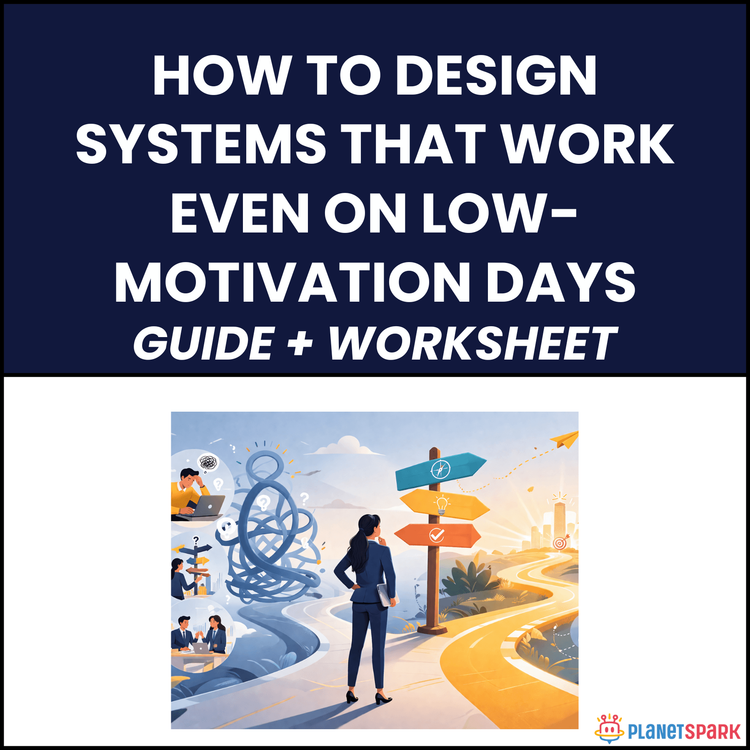
How to Design Systems That Work Even on Low-Motivation Days
Design Systems That Work Even on Low-Motivation Days: A Practical Guide for Working Professionals
Every working professional has faced that moment — the to-do list is long, energy is low, and the gap between what you want to do and what you can actually do feels enormous. Motivation, that powerful force that often drives us, is unreliable. It spikes, dips, and disappears entirely at the worst possible times.
This guide exists to help you build systems that can carry you through those low-motivation days and still keep you productive and consistent. It's not just about motivation — it's about creating sustainable systems that can work even when willpower fails.
Who Is This Resource For?
This guide is ideal for:
- Career switchers feeling overwhelmed by new responsibilities and uncertainties
- Managers juggling competing demands and struggling with low energy
- Consultants facing constant pressure to deliver results
- Professionals who know they can do more but are hindered by low motivation at times
If you’re a working professional who needs to stay productive even when motivation dips, this guide is made for you.
What Does This Resource Contain?
This resource offers a proven framework for building systems that will carry you through the toughest days. Inside, you will find:
- An explanation of why low-motivation days happen and what’s really going on in your brain
- A breakdown of the four pillars that make up a motivation-proof system: Anchors, Defaults, Guardrails, and Recovery Loops
- Step-by-step guidance for designing each of these pillars, ensuring they function even when motivation is low
- Worksheets to help you design your system
- Practical advice for dealing with common mistakes that derail systems
- Real-world applications and examples of how professionals like you implement these strategies
- A 30-day plan for turning your new system into a habit
This guide is all about practical, actionable steps. You’ll find real tools you can apply right away.
Summary of the Resource
"How to Design Systems That Work Even on Low-Motivation Days" is a roadmap for professionals who want to maintain productivity and consistency without relying on motivation alone. It teaches you how to design systems that work automatically, even when you feel drained, distracted, or unmotivated. The guide helps you build a solid foundation, eliminate decision fatigue, protect your energy, and recover quickly when things go off track.
By following the steps in this guide, you’ll create a system that works, regardless of how you feel.
How Will This Resource Be Useful?
This resource helps you:
- Understand why low-motivation days happen and what you can do about it
- Build systems that reduce your reliance on motivation and create more consistent output
- Identify your energy levels and match tasks to them, reducing overwhelm
- Prevent burnout by implementing guardrails to protect your time and energy
- Establish recovery loops to bounce back from unproductive days without shame or guilt
- Use the provided tools, templates, and worksheets to create a custom system that works for you
By designing your system with these tools, you’ll stop relying on motivation alone and instead create reliable habits and routines that drive progress every day.
How Should You Use This Resource?
To make the most of this guide, follow the structured approach:
1. Start with the foundational concepts: Understand how low-motivation days affect your brain and productivity.
2. Design your system in stages: Focus first on building anchors (small rituals that signal productive work), then move on to defaults (pre-set tasks), guardrails (boundaries to protect your energy), and recovery loops (to reset after tough days).
3. Fill out the worksheets: Apply the worksheets actively to map out your system. These are where the real work happens.
4. Set a 30-day implementation plan: Use the weekly phases to track progress and ensure your system becomes a habit.
Once you’ve designed your system, revisit it regularly to ensure it’s working and adapt as needed.
Action Steps
1. Fill out the worksheets: Begin by completing the Anchor Design Worksheet and the Energy-Task Matrix.
2. Pre-decide your tasks: During high-energy moments, set your energy-matched defaults to guide your low-energy days.
3. Install your guardrails: Identify distractions and design your environment to reduce them.
4. Set up a recovery loop: Define a simple, guilt-free recovery process for when you fall behind.
5. Schedule a weekly review: Block 25 minutes each week to review, assess, and update your system.
These action steps will ensure that your system is built for sustainability, not perfection.
Your system will not be perfect right away. But by focusing on continuity rather than excellence, you will develop a process that works even on your hardest days.