
How to Develop Faster Recovery Cycles Through Iteration

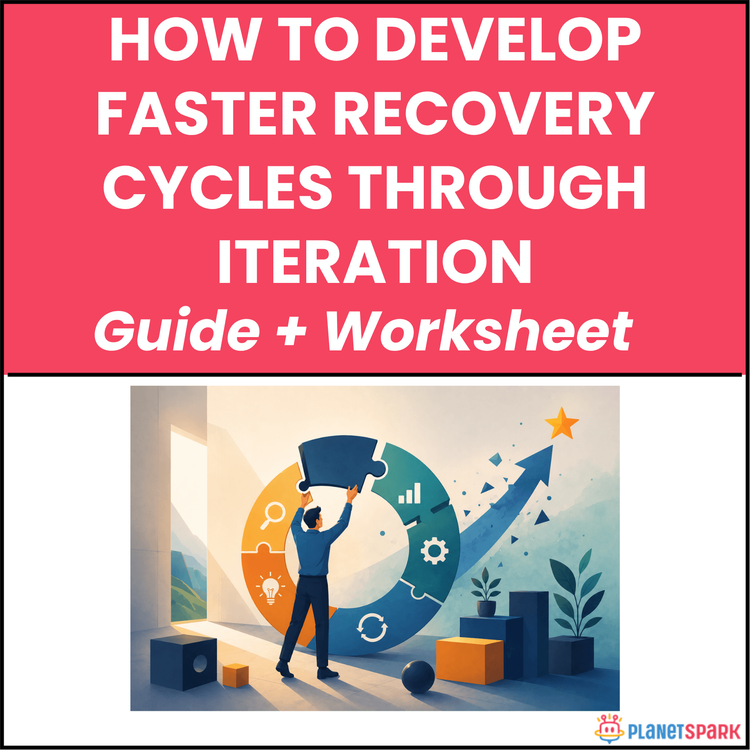
How to Develop Faster Recovery Cycles Through Iteration
Building Adaptive Systems to Learn, Adjust, and Recover More Effectively From Career Setbacks
Every professional experiences setbacks at some point in their career. A presentation that doesn’t land well. A project that misses expectations. A strategy that fails despite significant effort. Yet the professionals who grow the fastest are rarely the ones who avoid failure completely — they are the ones who recover, adapt, and improve faster than others.
The challenge is that most professionals were never taught how to recover effectively. Instead, they either overanalyse mistakes, blame themselves harshly, or move on too quickly without learning anything meaningful. Over time, this creates repeated patterns, slower growth, and reduced confidence.
That’s exactly why the resource “How to Develop Faster Recovery Cycles Through Iteration” exists. It is designed to help working professionals build a practical system for recovering from setbacks with clarity, speed, and resilience.
Rather than treating failure as something personal, this guide helps you view setbacks as valuable data that can improve your next iteration. Through structured reflection exercises, actionable frameworks, and practical recovery systems, the resource teaches you how to bounce back stronger and smarter after every challenge.
Who Is This Resource For?
This resource is especially valuable if you are:
- A working professional with 0–15 years of experience
- A manager handling high-pressure responsibilities and deadlines
- A consultant navigating client expectations and complex projects
- A career switcher adapting to unfamiliar roles or industries
- Someone who struggles to recover quickly after setbacks
- A professional who tends to repeat similar mistakes across projects
- Someone looking to build resilience, adaptability, and long-term career growth
- A professional who wants a structured way to learn from failures instead of avoiding them
If you want to become more adaptable, self-aware, and action-oriented in your professional life, this guide is built for you.
What Does This Resource Contain?
This is not a motivational guide filled with vague advice. It is a structured, practical framework designed for immediate professional application.
Inside the resource, you’ll find:
- A complete explanation of why recovery cycles matter in professional growth
- The 5-phase Iteration Recovery Framework
- Guidance on recognising setbacks clearly without emotional distortion
- The 5-Layer Root Cause Method for deeper diagnosis
- Worksheets to analyse setbacks objectively
- Reflection exercises to extract transferable lessons
- Frameworks to redesign processes, systems, and behaviours
- A structured approach for re-launching with confidence
- Minimum Viable Action (MVA) techniques to reduce hesitation
- Real-world examples showing the framework in action
- Common recovery-cycle mistakes professionals make
- Advanced practices for accelerating iteration speed
- Weekly review systems for continuous learning
- A professional readiness self-assessment scorecard
- A quick-reference recovery cheat sheet
- A complete 30-day implementation plan
- Mindset frameworks for building resilience through iteration
Everything inside the guide is designed to help professionals apply the concepts immediately in real workplace situations.
Summary of the Resource
“How to Develop Faster Recovery Cycles Through Iteration” is a practical professional development guide that helps professionals recover from setbacks faster, think more strategically, and improve continuously through structured iteration.
The guide provides a repeatable framework for recognising problems, diagnosing root causes, extracting lessons, redesigning approaches, and re-launching with better execution.
Instead of getting stuck in frustration or self-doubt, professionals learn how to turn setbacks into momentum and improvement.
If you want to improve resilience, adaptability, execution quality, and long-term career growth, this resource gives you a practical system to do exactly that.
How Will This Resource Be Useful?
This resource helps you build one of the most valuable long-term professional advantages: adaptive resilience.
You’ll gain:
- Greater clarity during difficult professional situations
- Faster recovery after setbacks and failures
- Better problem-solving and reflective thinking skills
- Stronger self-awareness and emotional control
- A system for identifying root causes instead of surface problems
- Increased confidence through structured action
- Faster learning and continuous improvement habits
- Reduced fear of failure and professional mistakes
- Better execution and decision-making under pressure
- Long-term resilience that compounds across your career
Most importantly, this guide helps you stop treating setbacks as personal failures and start treating them as opportunities for intelligent growth.
How Should You Use This Resource?
To get the best results, approach this guide as a practical implementation tool rather than passive reading material.
Start by reading through the full framework once to understand how each recovery phase connects together.
Then choose a recent professional setback and work through the worksheets step-by-step. Begin with the Recognition phase to describe the situation objectively. After that, move into diagnosis using the 5-Layer Root Cause Method to identify the deeper issue behind the setback.
Once the root cause becomes clear, use the extraction exercises to identify transferable lessons and preserve what worked well. Then redesign your approach using the framework’s structured redesign process.
Finally, define a Minimum Viable Action and apply it quickly within the recommended 48-hour window.
You can also revisit this resource whenever you:
- Experience a professional setback
- Complete a major project
- Receive difficult feedback
- Prepare for leadership responsibilities
- Enter a new role or industry
- Want to improve execution and adaptability
Over time, repeated use of the framework helps recovery become faster, calmer, and more effective.
Action Steps
After accessing this resource, take these steps immediately:
1. Identify one recent professional setback to analyse
2. Complete the Recognition Worksheet honestly and factually
3. Apply the 5-Layer Root Cause framework step-by-step
4. Write one clear transferable lesson from the experience
5. Identify one process or behaviour to redesign
6. Define a Minimum Viable Action within the next 48 hours
7. Create a Lessons Log to track future insights
8. Schedule a weekly 15-minute Iteration Review session
9. Follow the 30-day implementation plan included in the guide
10. Revisit your progress after completing multiple recovery cycles
Small improvements repeated consistently create powerful long-term professional growth.
Professional success is not built by avoiding mistakes entirely. It is built by recovering faster, learning better, and improving continuously through experience.
“How to Develop Faster Recovery Cycles Through Iteration” gives you a practical system to transform setbacks into insight, action, and long-term resilience. Instead of staying stuck in frustration or self-doubt, you learn how to respond with clarity, structure, and forward momentum.
The professionals who grow the fastest are not the ones who never fail — they are the ones who iterate better than everyone else.
Book your free session today!