
How to Eliminate Low-Value Tasks

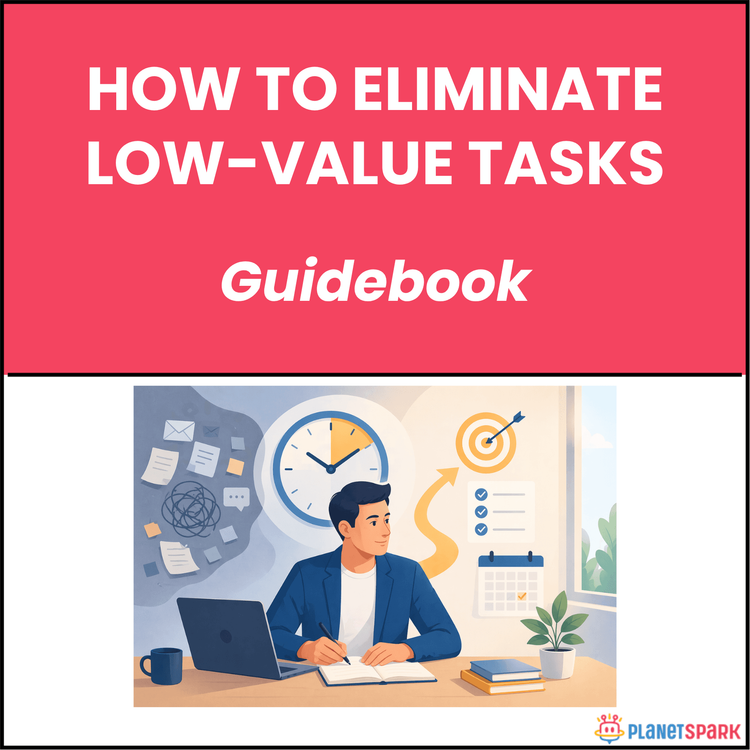
How to Eliminate Low-Value Tasks
Identifying and Eliminating Low-Value Tasks to Focus on What Truly Matters: A Practical Guide for Working Professionals
If you end most workdays feeling busy but not productive, you’re not alone. Many professionals spend hours in meetings, emails, and routine tasks—only to realize that the work that truly matters keeps getting pushed aside.
The real issue isn’t lack of effort. It’s misdirected effort.
“How to Eliminate Low-Value Tasks” is designed to solve exactly this problem. It helps you identify where your time is actually going, eliminate work that doesn’t move the needle, and create space for high-impact, meaningful work that drives real results.
This guide is built for professionals who want to work smarter—not harder—and take back control of their time, energy, and career trajectory.
Who Is This Resource For?
This resource is especially valuable if you are:
- A working professional with 0–15 years of experience
- A manager or team lead overwhelmed with meetings and coordination work
- A consultant juggling multiple clients and priorities
- A career switcher trying to focus on skill-building and strategic work
- Someone who feels constantly busy but not making meaningful progress
- A professional experiencing early signs of burnout due to low-return tasks
If you’re outcome-driven but stuck in reactive work, this guide is built specifically for you.
What Does This Resource Contain?
This is not a generic productivity guide. It’s a structured, action-oriented system designed for immediate application.
Inside the resource, you’ll find:
- A Five-Phase Low-Value Task Elimination System (Audit → Classify → Eliminate → Protect → Review)
- A practical Time Audit framework to track where your hours actually go
- A Value Matrix to classify tasks based on impact and energy
- A detailed classification checklist to identify high-value vs low-value work
- The “Drop, Delegate, Automate” framework to remove unnecessary tasks
- A delegation brief template to ensure effective task handoffs
- An automation toolkit with simple tools for everyday workflows
- Time-blocking strategies to protect deep work and focus time
- Reflection exercises to help you build sustainable boundaries
- A Weekly Reset ritual to maintain long-term productivity
- A real-world case study showing measurable results in 4 weeks
- Common mistakes professionals make—and how to fix them
- A self-evaluation tool to assess your current work patterns
- A quick-reference cheat sheet for daily decision-making
- A 7-day action plan to start seeing results immediately
Everything is designed to help you take action—not just consume information.
Summary of the Resource
“How to Eliminate Low-Value Tasks” is a practical system that helps you move from reactive busyness to intentional productivity.
It shows you how to:
- Identify where your time is being wasted
- Make better decisions about what deserves your attention
- Eliminate, delegate, or automate low-impact work
- Build a system that protects your time long-term
If you implement even a part of this framework, you can start reclaiming hours every week—and redirect that time toward work that actually matters.
How Will This Resource Be Useful?
This guide helps you create immediate and long-term improvements in how you work.
You’ll gain:
- Clear visibility into how your time is actually spent
- The ability to distinguish between “busy work” and high-impact work
- A structured approach to reducing unnecessary tasks
- More time for deep work, strategy, and growth-focused activities
- Reduced stress and mental fatigue from constant task-switching
- Stronger control over your calendar and workload
- A repeatable system that prevents low-value tasks from creeping back
Most importantly, it helps you shift from feeling overwhelmed to feeling in control.
How Should You Use This Resource?
To get the best results, follow a phased approach:
Start by reading the guide once to understand the full system. This gives you clarity on how each phase connects.
Next, begin with the Time Audit. Track your work for three days in 30-minute blocks without filtering or judging. This step alone often creates powerful insights.
Once you have your data, move to classification. Use the Value Matrix and checklist to identify which tasks are truly low-value.
Then apply the Three Levers:
- Drop tasks that don’t need to exist
- Delegate tasks that others can handle
- Automate repetitive work using simple tools
After that, focus on protecting your time. Implement time-blocking and boundary-setting practices to ensure high-value work gets priority.
Finally, adopt the Weekly Reset ritual. This 20-minute practice ensures your system stays effective and doesn’t break down over time.
You can revisit this resource whenever your workload starts to feel overwhelming or unfocused.
Action Steps
After accessing this resource, take these steps immediately:
1. Block 30–45 minutes to start your first time audit today
2. Track your tasks for the next three working days
3. Identify your top 3 low-value tasks from the audit
4. Apply one action: drop, delegate, or automate at least one task
5. Block two 90-minute deep work sessions in your calendar for next week
6. Schedule a recurring 20-minute Weekly Reset session
These small, focused steps can quickly create visible improvements in your productivity and clarity.
Most professionals don’t have a time problem—they have a prioritisation problem. When you eliminate low-value tasks, you don’t just free up time. You create space for better thinking, better work, and better outcomes.
Use this resource to redesign how you work—not just to get more done, but to get the right things done consistently.
Book your free session today!