
How to Explain Non-Traditional Career Paths Professionally

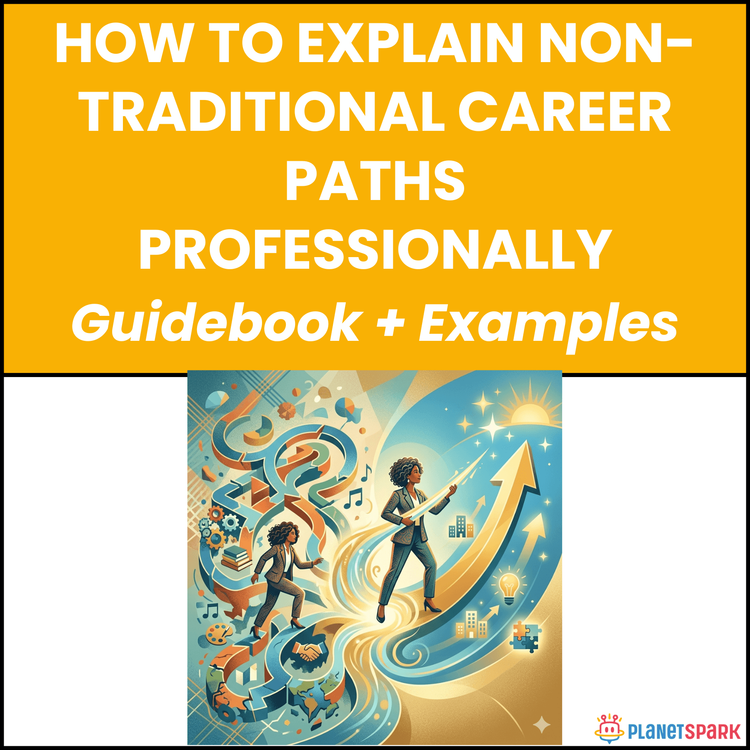
How to Explain Non-Traditional Career Paths Professionally
How to Explain Non-Traditional Career Paths Professionally
If you’ve ever hesitated when someone asked, “Can you walk me through your career?”—you’re not alone. Many professionals with diverse, non-linear career paths struggle with one common challenge: their experience is rich, but their story feels scattered.
In today’s evolving job market, career pivots, breaks, and cross-functional moves are increasingly common. Yet, without a clear narrative, these experiences can be misunderstood—or worse, undervalued.
That’s exactly why the resource “How to Explain Non-Traditional Career Paths Professionally” exists. It helps you transform what may feel like a “messy” career journey into a clear, confident, and compelling story that opens doors instead of raising doubts.
Who Is This Resource For?
This guide is especially valuable if you are:
- A professional with a non-linear or unconventional career path
- A career switcher moving across industries or functions
- A consultant, freelancer, or portfolio professional
- Someone with career gaps, sabbaticals, or diverse experiences
- A mid-career professional repositioning for growth or leadership roles
- Anyone who struggles to confidently explain their career journey in interviews or networking situations
If you’ve ever felt the need to justify your career choices, this resource will help you replace hesitation with clarity and confidence.
What Does This Resource Contain?
This is not a generic career advice guide. It is a structured, action-oriented system designed to help you build a strong professional narrative.
Inside the resource, you’ll find:
- A powerful mindset shift to reframe non-traditional careers as strengths, not weaknesses
- A step-by-step career audit framework to uncover your story’s “through-line”
- A detailed guide to identifying and articulating transferable skills
- The ACE Framework (Anchor → Connect → Elevate) to structure your career narrative
- Practical methods to craft strong transition statements for career shifts
- A complete worksheet to build your own career narrative
- Guidance on adapting your story for interviews, LinkedIn, networking, and client conversations
- Strategies to confidently handle tough questions (gaps, relevance, commitment, progression)
- LinkedIn optimization tips tailored for non-linear careers
- A real-world case study demonstrating the framework in action
- Common mistakes to avoid—and how to fix them
- Reflection exercises to deepen clarity and self-awareness
- Delivery techniques to improve confidence, clarity, and impact
- A final checklist to prepare for career conversations effectively
Everything is designed for immediate application, not passive reading.
Summary of the Resource
“How to Explain Non-Traditional Career Paths Professionally” is a practical guide that helps you turn a complex career journey into a structured, confident narrative.
It equips you with frameworks, language, and tools to connect your experiences, highlight your unique value, and communicate your story in a way that resonates with recruiters, hiring managers, and clients.
If you’ve ever struggled to “make your career make sense,” this resource gives you a clear, repeatable way to do exactly that.
How Will This Resource Be Useful?
This guide helps you move from confusion to clarity—and from hesitation to confidence.
You’ll gain:
- A clear understanding of how your experiences connect
- Confidence in explaining career pivots and transitions
- Strong, structured answers to “Tell me about yourself”
- The ability to position your background as a competitive advantage
- Better performance in interviews and networking conversations
- A more compelling LinkedIn profile and professional presence
- Reduced anxiety around career-related questions
Most importantly, it helps you stop apologising for your journey—and start owning it with purpose.
How Should You Use This Resource?
To get the best results, follow a structured approach:
Start by reading the guide from beginning to end to understand the overall philosophy and framework. This will help you shift your mindset before you start building your narrative.
Next, complete the career audit exercise. Take time to map your roles, skills, and experiences—especially those that feel “non-traditional.” This step is critical for uncovering your story.
Then, identify your transferable skills. Translate your experience into universal, professional language that applies across industries.
Once you have clarity, use the ACE Framework to build your core narrative. Focus on creating a strong 60–90 second version that you can use in interviews.
After that, craft transition statements for each major career move. This ensures you are prepared for deeper questions and can explain your decisions with confidence.
Finally, adapt your narrative for different contexts—interviews, LinkedIn, networking, and client conversations—and practise your delivery to ensure it feels natural and confident.
Revisit this resource whenever you:
- Prepare for interviews or networking conversations
- Update your LinkedIn profile or professional bio
- Plan a career move or transition
- Reflect on your career direction and growth
Action Steps
After accessing this resource, take these steps immediately:
1. Set aside 2–3 focused hours without distractions
2. Complete your career audit and identify key patterns
3. List your top transferable skills across roles
4. Build your 60–90 second narrative using the ACE Framework
5. Write transition statements for each major career shift
6. Practise your narrative out loud (record yourself if possible)
7. Update your LinkedIn summary using your refined story
Small, focused effort here can significantly improve how others perceive your professional value.
Your career path does not need to be linear to be powerful. What matters is how clearly and confidently you communicate it. When you connect your experiences into a meaningful narrative, you make it easier for others to understand your value—and say yes to opportunities.
Use this resource not just to prepare for your next conversation, but to fundamentally strengthen how you think about your career and the unique perspective you bring.
Book your free session today!