
How to Handle Conflicting Inputs During Decision-Making

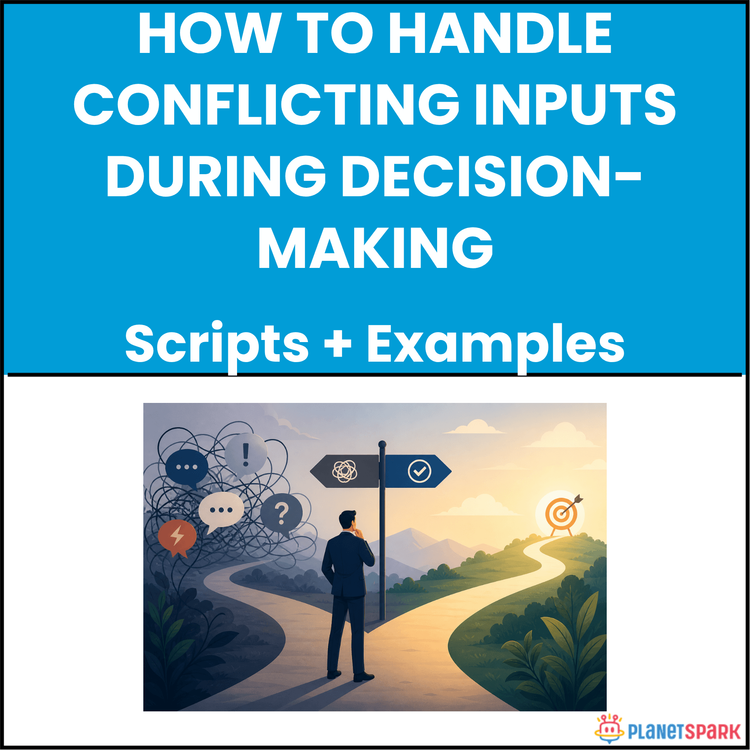
How to Handle Conflicting Inputs During Decision-Making
Handling Conflicting Inputs in Decision-Making: A Practical Playbook for Professionals
In today’s complex work environments, professionals often face situations where conflicting inputs can create confusion, indecision, or even paralysis. When you're presented with multiple opinions, data points, and perspectives, how do you decide the best course of action? This playbook offers a structured approach to cut through the noise, align competing voices, and make confident decisions — even when the signals point in different directions.
Who Is This Resource For?
This guide is designed for professionals who need to navigate the intricacies of decision-making in environments with conflicting inputs:
- Career changers adjusting to new roles with differing expectations
- Managers and consultants balancing multiple stakeholder demands
- Early- to mid-career professionals seeking to sharpen their decision-making skills in high-pressure environments
- Outcome-oriented, time-poor professionals who need clear, actionable strategies to make decisions efficiently
If you find yourself overwhelmed by competing inputs or unsure which direction to take when everyone has a different opinion, this resource will help you structure your approach.
What Does This Resource Contain?
This playbook provides a 5-phase framework for handling conflicting inputs, each phase with tools, scripts, and real-world examples:
1. Detect: Recognize that a conflict exists and prepare to address it.
2. Diagnose: Identify the root causes and perspectives behind the conflict.
3. Deliberate: Weigh the competing inputs using a systematic approach.
4. Decide: Commit to a direction, even with conflicting opinions.
5. Debrief: Reflect on the decision and refine your process for next time.
In addition, the resource includes ready-to-use scripts for each decision scenario, a 4-Dimension Weighting Matrix to assess inputs, reflection worksheets, and real-world examples to guide your decision-making process.
Summary of the Resource
This playbook is designed to help you handle conflicting inputs with clarity and confidence. It provides a step-by-step framework, from recognizing conflicts to making a clear decision and learning from it. The included scripts and diagnostic tools will enable you to move through the decision-making process without hesitation, improving the consistency and quality of your decisions.
How Will This Resource Be Useful?
- Improved Decision-Making: With the 5-phase framework, you'll be able to systematically assess conflicting opinions and make more informed decisions.
- Reduced Stress and Doubt: By using proven scripts and tools, you’ll feel more confident in your ability to navigate ambiguity and handle pressure.
- Better Stakeholder Management: The ability to align competing voices and communicate your decisions clearly will strengthen your leadership skills and build trust.
- Practical Tools for Real-World Application: The resource provides templates, tracking sheets, and reflection protocols that you can apply immediately to your ongoing decisions.
How Should You Use This Resource?
1. Read Through Once: Familiarize yourself with the 5-phase framework to understand the overall structure.
2. Diagnose Conflicts: Use the diagnostic scripts to analyze the type of conflict you’re facing — whether it’s a data, perspective, priority, or values conflict.
3. Deliberate Using the 4-Dimension Weighting Matrix: Apply the weighting matrix to assess the relevance, evidence, alignment, and recency of each input you receive.
4. Use Decision Scripts: Refer to the scripts provided for various decision scenarios to communicate your decision clearly to others.
5. Debrief After Each Major Decision: Use the reflection worksheet to review the decision and identify what worked, what didn’t, and how you can improve your process for future decisions.
Action Steps
- Step 1: Identify an upcoming decision with conflicting inputs. Map the inputs using the Context Mapping Worksheet from page 8.
- Step 2: Use the 5-Phase Framework to process the conflict and deliberate on the best course of action.
- Step 3: Choose one of the decision scripts (e.g., Scenario A or B) and practice saying it out loud before your next meeting.
- Step 4: Schedule a debrief session 30 days after your decision to evaluate how well you handled the conflicting inputs and refine your approach.
With the tools and strategies provided in this playbook, you’ll be better equipped to navigate complex decision-making scenarios with confidence. Don’t just make decisions — make them with clarity, purpose, and insight.
Book your free session today!