
How to Handle Criticism Without Triggering Defensive Reactions

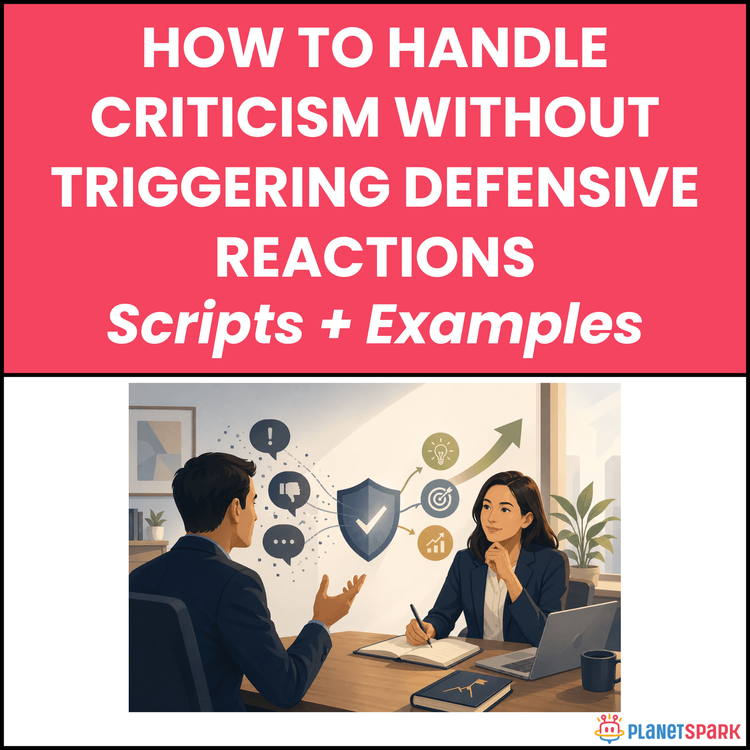
How to Handle Criticism Without Triggering Defensive Reactions
Staying Open and Constructive When Receiving Criticism: A Practical Guide
If you’ve ever received feedback and immediately felt the urge to explain, justify, or shut down—you’re not alone. For most professionals, criticism isn’t just uncomfortable; it feels personal. And in those moments, even the most capable individuals can react in ways that unintentionally damage their credibility.
The reality is simple: it’s not the criticism that holds professionals back—it’s how they respond to it.
That’s exactly why the resource “How to Handle Criticism Without Triggering Defensive Reactions” exists. It’s designed to help working professionals build the ability to receive feedback with composure, clarity, and confidence—turning even difficult conversations into opportunities for growth and stronger professional relationships.
Who Is This Resource For?
This resource is especially valuable if you are:
- A working professional with 0–15 years of experience
- A career switcher navigating new expectations and feedback environments
- A consultant or client-facing professional handling high-stakes conversations
- A manager or team leader responsible for giving and receiving feedback
- Someone who tends to feel defensive, overwhelmed, or silent during criticism
- A professional aiming to build emotional intelligence and executive presence
If you want to be seen as mature, coachable, and leadership-ready, this guide is built for you.
What Does This Resource Contain?
This is not just a communication guide—it’s a complete system for handling criticism effectively in real-world situations.
Inside the resource, you’ll find:
- A neuroscience-backed explanation of why criticism triggers defensive reactions
- A deep dive into common defensive patterns like explaining, deflecting, or shutting down
- A personal trigger audit to identify your own response patterns
- A 3-phase framework (Before, During, After) to handle feedback strategically
- Ready-to-use scripts for real workplace scenarios (managers, peers, clients)
- Advanced scripts for high-stakes situations like performance reviews or public criticism
- The LEARN framework (Listen, Acknowledge, Ask, Reflect, Next Step) for structured responses
- A practical checklist to guide your behaviour before, during, and after feedback conversations
- Real-world case examples showing how professionals handle criticism effectively
- A breakdown of common mistakes and how to fix them immediately
- Clear next steps to build this skill consistently over time
Everything is designed to help you respond better in the moment—not just understand the theory.
Summary of the Resource
“How to Handle Criticism Without Triggering Defensive Reactions” is a practical, action-oriented guide that helps professionals transform how they respond to feedback.
It equips you with the mindset, language, and frameworks needed to stay composed under pressure, engage constructively, and turn criticism into a tool for growth rather than a source of stress.
If you want to improve how others perceive your professionalism, maturity, and leadership potential, this resource gives you a clear path forward.
How Will This Resource Be Useful?
This resource helps you move from reaction to control.
You’ll gain:
- Awareness of your personal defensive triggers and patterns
- The ability to pause and respond instead of reacting impulsively
- Clear, professional language for handling criticism in any situation
- Stronger relationships with managers, peers, and clients
- Increased trust and credibility in high-stakes conversations
- Improved emotional intelligence and executive presence
- Faster professional growth through better feedback integration
Most importantly, it helps you turn criticism into a career advantage instead of a career risk.
How Should You Use This Resource?
To get the best results, follow a structured approach:
Start by reading the full guide once to understand the overall system—especially the psychology behind defensive reactions.
Next, identify your personal patterns using the trigger audit. This step is critical because awareness drives change.
Then, focus on the 3-phase framework. Practice preparing before feedback conversations, using scripts during them, and reflecting after them.
Memorise 2–3 key scripts that feel natural to you. These will act as anchors in high-pressure moments when your instinct is to react.
Use the LEARN framework as your default mental model whenever you receive criticism.
Finally, apply the checklists and revisit the resource after real feedback situations to continuously improve your response.
This is a skill built through repetition—not one-time learning.
Action Steps
After accessing this resource, take these steps immediately:
1. Identify your most common defensive pattern (explainer, deflector, silencer, or over-apologiser)
2. Reflect on one recent feedback situation and what triggered your reaction
3. Memorise one response script you can use in your next feedback conversation
4. Apply the 3-second pause rule before responding to any criticism
5. Use the LEARN framework in your next real feedback interaction
6. Follow up on one piece of feedback within 24–48 hours with a clear action
Small changes in how you respond can significantly change how others perceive you.
Criticism is unavoidable—but defensiveness is not. When you learn to respond with composure and curiosity, you signal something powerful: that you are someone who can grow, adapt, and lead.
That’s what managers trust. That’s what clients respect. And that’s what accelerates careers.
Use this resource to build that capability—not just for your current role, but for every stage of your professional journey ahead.