
How to Handle Energy Slumps Without Losing Productivity

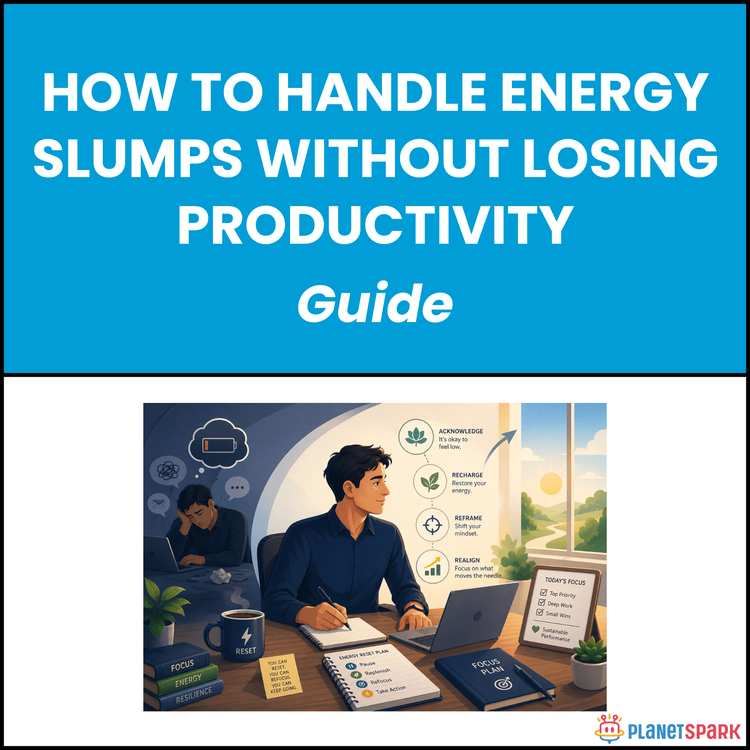
How to Handle Energy Slumps Without Losing Productivity
Handle Energy Slumps at Work Without Losing Productivity: A Practical Guide for Busy Professionals
It’s 2:30 PM. You have deadlines approaching, emails piling up, and important decisions waiting—but your brain feels slow, unfocused, and drained. You try to push through, maybe grab another coffee, but your productivity keeps dropping.
If this feels familiar, you’re not alone.
Most working professionals don’t struggle with time management—they struggle with energy management. And when energy dips, performance, focus, and confidence follow.
That’s exactly why the resource “How to Handle Energy Slumps Without Losing Productivity” exists. It’s designed to help you understand, manage, and recover from energy crashes using practical, science-backed strategies that actually work in a real workday.
Who Is This Resource For?
This resource is especially valuable if you are:
- A working professional with 0–15 years of experience managing demanding workloads
- A manager or team lead making frequent decisions throughout the day
- A consultant or freelancer whose output directly impacts income
- A job seeker or career switcher juggling preparation, learning, and applications
- Someone who experiences frequent mid-day fatigue, brain fog, or lack of focus
- A high performer who feels “on and off” during the day and wants consistency
If you’re outcome-driven but often feel drained or inconsistent, this guide is built for you.
What Does This Resource Contain?
This is not a generic productivity guide. It’s a structured playbook that helps you manage your energy like a professional asset.
Inside the resource, you’ll find:
- A clear breakdown of what energy slumps actually are and why they happen
- The concept of personal energy architecture (your natural daily energy rhythm)
- An Energy Mapping Worksheet to identify your peak and low performance windows
- The Four Pillars of Sustainable Energy: sleep, nutrition, movement, and mental recovery
- The RESET Framework — a 5-step, under-15-minute recovery protocol for immediate slumps
- A Mid-Day Slump Survival Checklist for quick, in-the-moment action
- Task architecture strategies to align your work with your energy levels
- A daily energy-aligned planner template for smarter scheduling
- Micro-recovery methods like the 90/10 sprint method and Pomodoro technique
- Nutrition and hydration strategies to prevent energy crashes
- Emotional energy management techniques and reflection worksheets
- A real-world case study showing measurable productivity improvements
- Common energy management mistakes and how to fix them
- A complete Personal Energy Operating System (PEOS) framework
- A self-assessment tool to evaluate your current energy habits
- A 7-day action plan to start implementing immediately
Everything is designed for real-world application—not passive reading.
Summary of the Resource
“How to Handle Energy Slumps Without Losing Productivity” is a practical, action-oriented guide that helps professionals stop losing hours to fatigue and start working with their energy—not against it.
Instead of relying on willpower or caffeine, it teaches you how to design your day, habits, and work patterns to maintain consistent performance.
Even if you only spend a few hours with this resource, you’ll walk away with systems that improve how you work every single day.
How Will This Resource Be Useful?
This resource helps you move from reactive work habits to intentional performance.
You’ll gain:
- Clear understanding of why your energy drops—and how to prevent it
- Better focus and decision-making during critical work hours
- A reliable system to recover quickly when slumps hit
- Higher-quality output without working longer hours
- Improved consistency across your workday
- Better emotional control and reduced frustration during low-energy periods
- Stronger alignment between your effort and actual results
Most importantly, it helps you stop blaming yourself for low productivity—and start managing the real driver behind it: your energy.
How Should You Use This Resource?
To get the best results, follow a structured approach:
First, read through the entire guide once to understand the big picture—especially how energy, tasks, and habits are interconnected.
Next, complete the Energy Mapping Worksheet over a few days. This step is critical because it helps you identify when you naturally perform best.
Then, start applying the frameworks:
- Use the RESET method when a slump hits
- Align your tasks with your energy levels using task architecture
- Introduce micro-recovery breaks into your workday
After that, implement the foundational habits:
- Improve sleep consistency
- Adjust your nutrition and hydration
- Add movement into your routine
Finally, build your Personal Energy Operating System gradually. Start with one change (like protecting your peak hours), then layer in others over time.
You can revisit this resource whenever you:
- Feel burned out or mentally exhausted
- Take on more responsibilities at work
- Want to improve productivity without increasing hours
- Prepare for a demanding project or role transition
Action Steps
After accessing this resource, take these steps immediately:
1. Block 30–60 minutes to read the guide fully
2. Track your energy levels for at least one full workday
3. Identify your peak and low energy windows
4. Apply the RESET framework during your next slump
5. Restructure at least one part of your day based on your energy (not urgency)
6. Introduce one micro-recovery habit (like a 10-minute break or walk)
7. Follow the 7-day action plan to build consistency
Small adjustments here can recover hours of lost productivity every week.
Energy is not just a health concern—it’s a professional advantage. When you learn to manage it intentionally, your work improves, your stress reduces, and your confidence grows.
This resource is not about doing more. It’s about working smarter, sustaining your performance, and showing up at your best—even on demanding days.
Book your free session today!