
How to Handle Passive-Aggressive Behavior Professionally

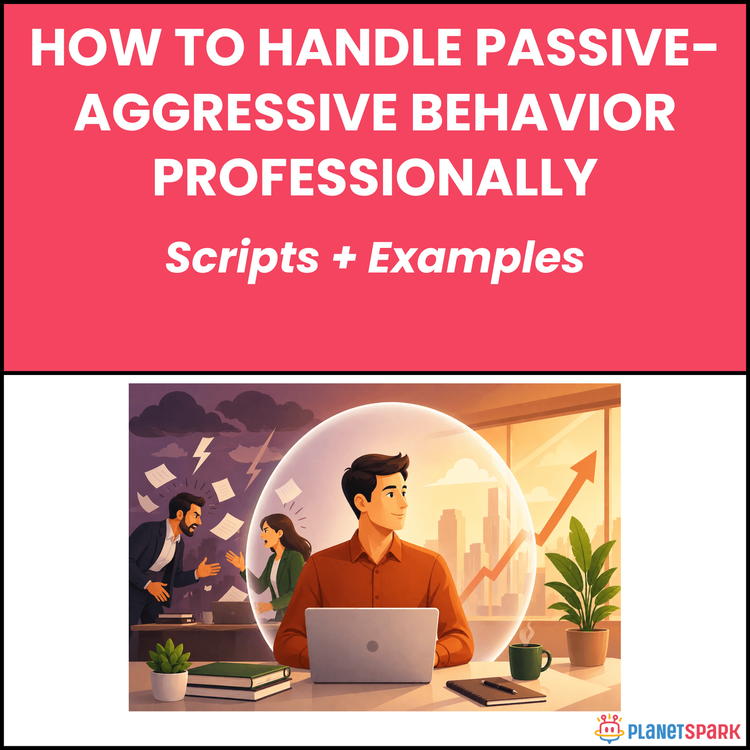
How to Handle Passive-Aggressive Behavior Professionally
Managing Indirect Workplace Hostility: A Practical Playbook for Working Professionals
In any professional environment, you’ll likely encounter passive-aggressive behavior. It’s the colleague who says “It’s fine,” but their tone says otherwise, the manager who gives you a vague response, or the team member who undermines your ideas with a smile. Passive-aggressive behavior can drain your productivity and make it difficult to maintain good working relationships. More importantly, it leaves you uncertain about how to respond without escalating the situation.
That’s why the resource “How to Handle Passive-Aggressive Behavior Professionally” exists. This practical playbook equips you with clear strategies and word-for-word scripts to handle passive-aggressive situations with clarity, confidence, and control. Designed for time-poor, outcome-driven professionals like you, this guide gives you actionable tools that work in real-world situations—no fluff, no theory.
Who Is This Resource For?
This resource is valuable for any professional who faces passive-aggressive dynamics in the workplace. It’s particularly useful if you are:
- A working professional with 0–15 years of experience
- A manager or team leader navigating team conflicts
- A consultant dealing with difficult clients
- A career changer adjusting to new workplace cultures
- Someone who wants to maintain professionalism while addressing indirect communication
If you want to handle these situations effectively without confrontation, and with the emotional intelligence to build better working relationships, this playbook is for you.
What Does This Resource Contain?
This is not just another theoretical guide. It’s a step-by-step framework that equips you with the tools to recognize passive-aggressive behavior and respond effectively. Here’s what you’ll find inside:
- Awareness: Recognize passive-aggressive behavior for what it is, identifying specific signs like silent treatment, chronic lateness, subtle undermining, and more.
- Preparation: A pre-conversation checklist to help you approach passive-aggressive situations thoughtfully, with clarity about your objective and a plan to stay calm.
- Application: Word-for-word scripts you can use to address passive-aggressive behavior directly and constructively.
- Handling Defensiveness: Scripts for dealing with common defensive responses, such as denial, minimization, or counter-attacks.
- Real-World Application: A case study demonstrating how to apply the frameworks and scripts in practice, showing you exactly how to approach these difficult situations.
- Mastery: Techniques for building lasting communication habits that reduce passive-aggressive behavior in your workplace, including regular check-ins and explicit modeling of directness.
Summary of the Resource
“How to Handle Passive-Aggressive Behavior Professionally” provides a practical framework for recognizing and responding to passive-aggressive behavior in a way that maintains your professionalism and emotional control. The resource covers everything from awareness and preparation to real-world scripts for application, ensuring that you feel equipped to handle these situations whenever they arise. With this playbook, you’ll no longer have to second-guess yourself in the face of passive aggression; you’ll be ready to respond with confidence.
How Will This Resource Be Useful?
This resource helps you:
- Identify passive-aggressive behavior: Learn to spot the subtle signs and patterns that often go unnoticed, so you can address them before they escalate.
- Respond effectively: Gain confidence in how to approach difficult conversations, using scripts that keep the conversation constructive and forward-looking.
- Maintain control: Equip yourself with tools to handle defensiveness and keep the conversation on track, even when faced with resistance.
- Build long-term communication habits: Establish norms for open, direct communication within your team or organization, reducing the likelihood of passive-aggressive behavior recurring.
Ultimately, this resource helps you transform how you approach passive-aggressive behavior—seeing it not as something to fear, but as an opportunity to lead with clarity and emotional intelligence.
How Should You Use This Resource?
To get the most from this guide, follow a phased approach:
1. Read Through the Entire Playbook: Familiarize yourself with the framework and the tools you’ll use to address passive-aggressive behavior.
2. Complete the Awareness Section: Start by recognizing the signs of passive-aggressive behavior. Document any patterns you’ve observed in your workplace to get clarity.
3. Prepare for Difficult Conversations: Use the pre-conversation checklist to identify your goals for the conversation and plan your approach.
4. Use the Application Scripts: Adapt the provided word-for-word scripts to your own situation and practice them so you can confidently address passive-aggressive behavior in the moment.
5. Review and Reflect: After a conversation, use the reflection prompts to evaluate what worked and how you can improve for the next situation.
You can also revisit this resource whenever a new passive-aggressive situation arises or if you want to strengthen your communication habits over time.
Action Steps
After accessing this resource, take the following steps immediately:
1. Block out 15 minutes to read the playbook and understand the framework.
2. Document specific passive-aggressive behaviors you’ve noticed, using the “Recognizing the Signs” section.
3. Prepare for your next difficult conversation by using the pre-conversation checklist and identifying your objective.
4. Use the scripts in real situations where passive-aggressive behavior arises.
5. Follow up after the conversation to ensure that any resolutions are reinforced.
By taking these immediate actions, you’ll start handling passive-aggressive behavior with more clarity and confidence, ensuring you maintain control and professionalism.
Addressing passive-aggressive behavior is an essential skill for navigating the complexities of the modern workplace. By using this playbook, you’ll develop the ability to engage directly, assertively, and respectfully with colleagues, clients, and managers—even in the most challenging situations.