
How to Handle Social and Peer Pressure After Career Setbacks

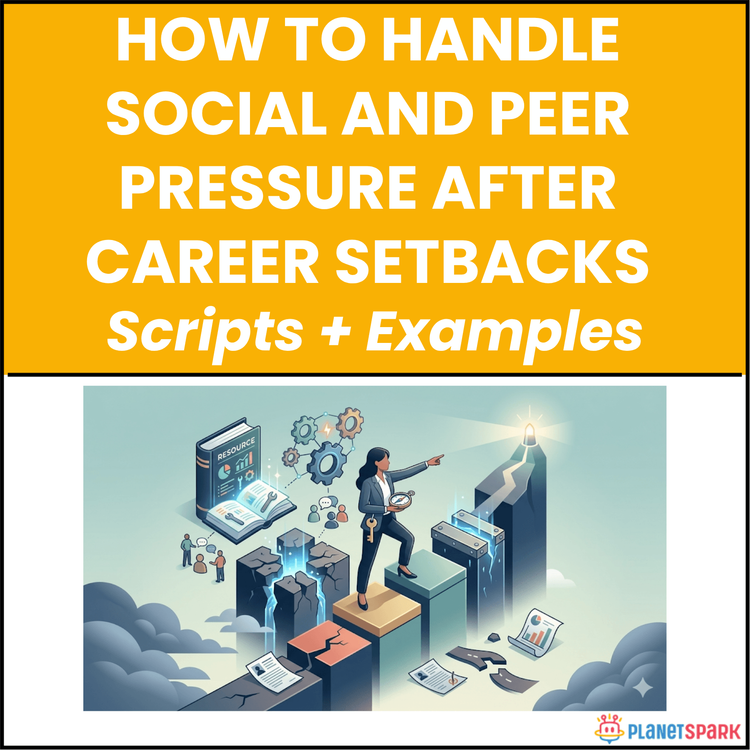
How to Handle Social and Peer Pressure After Career Setbacks
Managing External Expectations, Comparison, and Judgment During Difficult Career Transitions
Career setbacks are rarely just about work. A layoff, career break, failed business, unexpected transition, or professional pause often comes with something much heavier: social pressure.
Suddenly, conversations feel different. Friends ask uncomfortable questions. Family members offer constant advice. LinkedIn becomes emotionally exhausting. Watching peers move forward while you feel uncertain can quietly impact your confidence, identity, and sense of direction.
What makes this even harder is that most career advice focuses only on practical next steps — updating resumes, applying for jobs, networking, or learning new skills. Very few resources help professionals navigate the emotional and interpersonal reality of setbacks.
That is exactly why the resource “How to Handle Social & Peer Pressure After Career Setbacks” was created.
This practical playbook helps working professionals manage difficult conversations, reduce internal pressure, protect their confidence, and navigate social environments with more clarity and control. Instead of generic motivation, it provides real-world scripts, frameworks, reflection exercises, and actionable tools designed for real professional situations.
Who Is This Resource For?
This resource is especially useful for:
- Working professionals navigating layoffs, job loss, or career uncertainty
- Career changers transitioning into a new industry or role
- Consultants, freelancers, or entrepreneurs facing inconsistent career phases
- Mid-career professionals experiencing burnout or restructuring
- Job seekers dealing with social comparison and interview pressure
- Managers or leaders rebuilding confidence after professional setbacks
- Professionals who feel emotionally drained by constant questions, expectations, or comparisons
If you are trying to stay confident while handling external opinions, internal self-doubt, and career uncertainty simultaneously, this resource is designed specifically for you.
What Does This Resource Contain?
This is not a motivational ebook filled with vague advice. It is a structured, practical toolkit created for immediate real-life application.
Inside the resource, you’ll find:
- A deep breakdown of the different types of pressure professionals experience after setbacks
- Frameworks to distinguish external pressure, internal amplification, and structural pressure
- The “Three Anchors Model” to rebuild internal stability and professional identity
- Worksheets to strengthen confidence and self-definition beyond job titles
- Practical scripts for handling difficult social and professional conversations
- Ready-to-use responses for family gatherings, networking events, peer comparisons, and intrusive questions
- Guidance for navigating high-pressure environments like LinkedIn, alumni groups, and professional events
- The STOP-SHIFT-STEER framework to manage negative thought spirals and inner criticism
- Reflection prompts to challenge comparison-based thinking
- A detailed real-world case study showing how one professional applied the frameworks successfully
- Boundary-setting frameworks for protecting emotional energy without damaging relationships
- Relationship audit tools to identify energisers, drainers, and neutral connections
- Action-oriented summaries and practical implementation steps
Everything inside the resource is designed to help professionals remain grounded, socially confident, and emotionally resilient during difficult career phases.
Summary of the Resource
“How to Handle Social & Peer Pressure After Career Setbacks” is a practical career resilience playbook for professionals navigating uncertainty, comparison, and social pressure after professional setbacks.
Instead of focusing only on career mechanics, this guide addresses the human side of career transitions — difficult conversations, confidence management, emotional regulation, networking pressure, and social expectations.
Through structured frameworks, scripts, worksheets, and practical exercises, the resource helps professionals regain clarity, maintain momentum, and communicate their situation with confidence rather than anxiety.
For professionals who feel overwhelmed by external pressure or internal self-doubt, this guide provides both emotional grounding and actionable direction.
How Will This Resource Be Useful?
This resource helps professionals move from emotional overwhelm to practical control.
You’ll gain:
- Greater clarity about the real sources of pressure affecting you
- Better emotional stability during uncertain career phases
- Confidence in difficult social and professional conversations
- Practical scripts that reduce anxiety and over-explaining
- Healthier ways to navigate networking events and social environments
- Stronger boundaries without damaging important relationships
- Reduced comparison spirals and negative self-talk
- Better management of LinkedIn and online professional spaces
- A healthier internal narrative around career transitions
- More emotional bandwidth to focus on meaningful action instead of constant stress
Most importantly, this resource helps you stop allowing social pressure to dictate your decisions — and start responding from a place of clarity, preparation, and confidence.
How Should You Use This Resource?
To get the best results, use this resource in phases rather than rushing through it.
Start by reading the introduction and pressure frameworks carefully. Understanding the difference between external pressure, internal amplification, and structural pressure creates the foundation for everything else.
Next, complete the “Three Anchors” worksheet. This section helps rebuild professional confidence and creates a stable internal narrative before entering difficult conversations or environments.
After that, focus on the scripts section. Read the scripts aloud and adapt them to your own communication style. Preparation reduces emotional pressure significantly during real interactions.
Then move into the sections on networking environments, LinkedIn usage, boundaries, and relationship management. These tools are especially useful during active career transitions.
Finally, work through the STOP-SHIFT-STEER framework and reflection exercises whenever comparison spirals or self-doubt become overwhelming.
This resource is also highly valuable to revisit whenever you:
- Attend networking events
- Prepare for family gatherings
- Experience professional uncertainty
- Navigate layoffs or restructuring
- Feel emotionally affected by peer comparison
- Begin a career transition or job search
- Need to rebuild confidence after setbacks
Action Steps
After accessing this resource, take these steps immediately:
1. Identify the primary source of pressure affecting you right now
2. Complete the Three Anchors worksheet fully
3. Write your own directional narrative sentence
4. Prepare and practise at least 2–3 conversation scripts aloud
5. Audit your relationships using the Energiser–Drainer framework
6. Set healthier boundaries around LinkedIn and passive scrolling
7. Use the STOP-SHIFT-STEER framework the next time self-doubt appears
8. Save the scripts and frameworks for quick reference before social or professional events
Small shifts in preparation and mindset can significantly reduce emotional exhaustion during career transitions.
Career setbacks are not just professional disruptions — they are deeply personal experiences that affect confidence, identity, relationships, and emotional wellbeing. But setbacks are not permanent definitions of who you are or what your future will become.
The professionals who navigate these periods successfully are rarely the ones who avoid pressure completely. They are the ones who prepare for it, manage it intentionally, and continue moving forward despite it.
This resource helps you do exactly that.
Use it to protect your confidence, strengthen your narrative, and stay connected to opportunities instead of withdrawing from them. The pressure you feel today is temporary — but the resilience, clarity, and self-awareness you build through this process can shape your career for years to come.
Book your free session today!