
How to Influence Without Triggering Defensive Biases

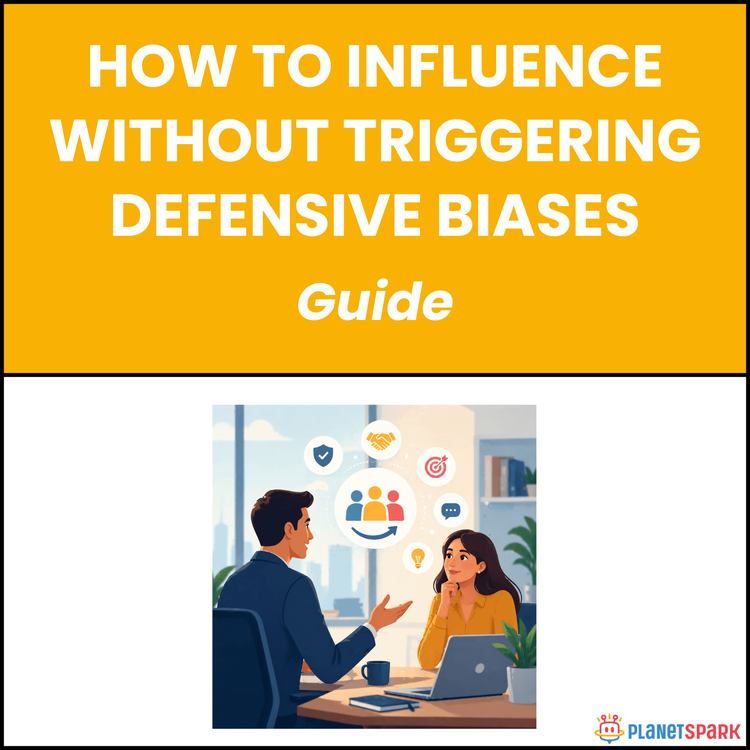
How to Influence Without Triggering Defensive Biases
Influence Without Resistance: A Practical Guide to Getting Buy-In at Work
If you’ve ever walked into a meeting with a solid idea—only to face pushback, silence, or subtle resistance—you’ve experienced one of the most frustrating realities of professional life: being right isn’t enough.
Many working professionals assume that better data, stronger logic, or clearer arguments will naturally lead to agreement. But in reality, most influence attempts fail long before the idea is even evaluated. Why? Because people don’t just respond to what you say—they respond to how it makes them feel.
When conversations unintentionally trigger defensiveness—threatening someone’s autonomy, status, or identity—rational thinking shuts down. And once that happens, even the best ideas struggle to gain traction.
This is exactly why the resource “How to Influence Without Triggering Defensive Biases” exists. It’s a practical, structured playbook designed to help professionals communicate ideas in a way that reduces resistance, builds alignment, and drives real outcomes—without conflict or manipulation.
Who Is This Resource For?
This resource is especially valuable if you are:
- A working professional who needs to influence stakeholders, managers, or clients
- A manager or team lead navigating difficult conversations or pushback
- A consultant or specialist presenting recommendations or ideas
- A mid-career professional aiming to build leadership and communication skills
- Someone who struggles with resistance despite having strong ideas
- A professional who wants to improve persuasion without sounding aggressive or forceful
If your role requires influencing decisions, aligning teams, or gaining buy-in—this guide is built for you.
What Does This Resource Contain?
This is not a generic communication guide. It’s a structured, psychology-backed system that breaks influence into clear, actionable phases.
Inside the resource, you’ll find:
- A deep explanation of why most influence attempts fail (and how defensive biases work)
- The four key defensive biases: Reactance, Confirmation Bias, Identity Protection, and Status Threat
- A practical “Defensive Bias Trigger Audit” to prepare for high-stakes conversations
- The 3-Layer Preparation Model (Intellectual, Emotional, Social) to understand your audience deeply
- Influence profiling to adapt your communication style to different personality types
- The Non-Defensive Communication Framework for structuring conversations effectively
- The SAFE Opening Formula to start conversations with clarity and psychological safety
- A library of defensive vs non-defensive language examples
- Real conversation scripts for pitching ideas, giving feedback, and handling pushback
- A step-by-step approach to navigating live defensiveness (Detect–Pause–Name–Re-anchor)
- Strategies to handle common defensive reactions like dismissal, shutdown, and counter-attacks
- A real-world case study demonstrating how these techniques work in practice
- A list of common influence mistakes and how to avoid them
- A weekly practice routine to build long-term influence skills
- Self-evaluation and reflection worksheets for continuous improvement
- A quick-reference cheat sheet for real-time use
Everything is designed for immediate application in real workplace scenarios.
Summary of the Resource
“How to Influence Without Triggering Defensive Biases” is a practical, results-focused playbook that helps you communicate ideas in a way that people are open to hearing.
Instead of pushing harder, it teaches you how to reduce resistance before it even begins—by understanding human psychology, adjusting your language, and structuring conversations strategically.
If you apply even a few of the frameworks inside, you’ll notice an immediate shift in how people respond to you.
How Will This Resource Be Useful?
This resource helps you move from frustration to influence.
You’ll gain:
- A clear understanding of why people resist—even when your ideas are strong
- The ability to anticipate and prevent defensive reactions
- Practical tools to structure conversations more effectively
- Stronger communication that builds trust instead of tension
- Greater confidence in high-stakes discussions
- Faster alignment and decision-making in teams
- Improved relationships with stakeholders, peers, and managers
Most importantly, it helps you influence outcomes without damaging relationships—a critical skill for long-term career growth.
How Should You Use This Resource?
To get the best results, follow a phased approach:
Start by reading through the entire guide once to understand the overall framework and how the phases connect—Awareness, Preparation, Delivery, Navigation, and Mastery.
Next, begin applying the Awareness phase by identifying the four defensive biases in your day-to-day interactions. This builds your foundational understanding.
Then, move into Preparation. Use the Defensive Bias Trigger Audit before any important conversation. This step alone can dramatically improve your outcomes.
Once prepared, practise the Delivery frameworks—especially the SAFE Opening Formula and non-defensive language patterns. Start small and build consistency.
As you gain confidence, apply the Navigation techniques in real-time situations when defensiveness arises.
Finally, use the reflection worksheets and weekly practice routine to continuously improve your influence skills over time.
You can revisit this resource whenever you:
- Prepare for important meetings or presentations
- Handle difficult conversations or feedback discussions
- Work on stakeholder alignment or negotiations
- Aim to strengthen your leadership communication skills
Action Steps
After accessing this resource, take these steps immediately:
1. Identify one upcoming high-stakes conversation this week
2. Run the Defensive Bias Trigger Audit for that conversation
3. Write your opening using the SAFE formula
4. Replace at least one defensive phrase you commonly use
5. Practise one non-defensive response strategy in real-time
6. Reflect after the conversation on what worked and what didn’t
Consistent small actions here will significantly improve your influence over time.
The ability to influence without triggering defensiveness is one of the most valuable professional skills you can build. It’s not about being persuasive in a forceful way—it’s about making it easier for others to hear you, trust you, and align with you.
When you create psychological safety in conversations, you don’t just communicate better—you lead better.
Use this resource not just to improve how you speak, but to transform how you approach every important interaction in your professional life.
Book your free session today!