
How to Maintain Energy During Long Workdays Without Crashing

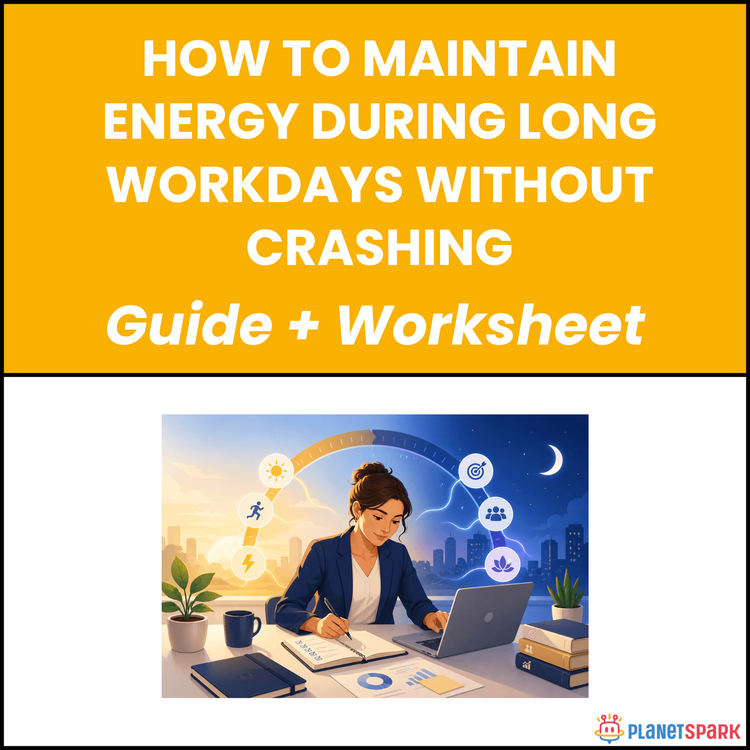
How to Maintain Energy During Long Workdays Without Crashing
Maintaining Energy During Long Workdays Without Crashing: A Practical Guide for Working Professionals
If your workday often starts with focus and momentum but ends in exhaustion, brain fog, or complete burnout—you’re not alone. Many professionals experience a sharp drop in energy as the day progresses, leading to reduced productivity, poor decision-making, and a constant feeling of being behind.
The problem isn’t a lack of discipline or motivation. It’s a lack of structure around how energy is managed throughout the day. Most people rely on caffeine, willpower, or pushing through fatigue—but those are short-term fixes that eventually lead to bigger crashes.
That’s exactly why the resource “How to Maintain Energy During Long Workdays Without Crashing” exists. It is designed to help you build a sustainable energy system so you can stay focused, productive, and mentally sharp from start to finish.
Who Is This Resource For?
This resource is especially valuable if you are:
- A working professional with long or demanding work hours
- A consultant or manager juggling multiple responsibilities throughout the day
- A remote worker struggling with inconsistent energy and focus
- A high performer who starts strong but fades by afternoon
- Someone who relies heavily on caffeine or breaks down late in the day
- A professional looking to improve consistency, not just peak performance
If you want to feel more in control of your energy—not just your time—this guide is built for you.
What Does This Resource Contain?
This is not generic productivity advice. It is a structured, science-backed system focused specifically on energy management across the workday.
Inside the resource, you’ll find:
- A clear explanation of why energy crashes happen during long workdays
- The concept of energy rhythms and how they affect focus and output
- A breakdown of physical, mental, and emotional energy—and how each impacts performance
- A daily energy mapping framework to identify your peak and low periods
- Practical strategies to design your workday around energy, not just tasks
- Structured work-rest cycles to maintain sustained focus
- Micro-recovery techniques you can apply between tasks
- Nutrition and hydration guidelines to stabilise energy levels
- Movement-based strategies to prevent fatigue and stiffness
- A simple system to manage cognitive load and avoid mental overload
- A “midday reset” protocol to recover quickly without losing momentum
- A realistic daily energy plan template you can customise
- Common mistakes that lead to energy crashes
Everything is designed for immediate implementation in a real work environment.
Summary of the Resource
“How to Maintain Energy During Long Workdays Without Crashing” is a practical, system-based guide that helps professionals manage their energy intelligently throughout the day.
Instead of pushing through fatigue, it teaches you how to align your work with your natural energy cycles, incorporate recovery strategically, and maintain consistent performance without burnout.
If you want to end your workday with the same clarity you started with, this resource provides a clear path.
How Will This Resource Be Useful?
This resource helps you move from reactive fatigue to controlled, consistent energy.
You’ll gain:
- More stable focus and productivity throughout the day
- Reduced dependence on caffeine and quick fixes
- Better mental clarity for decision-making
- Improved task execution with less fatigue
- Greater awareness of your personal energy patterns
- The ability to structure your workday more effectively
- Increased consistency in performance without burnout
Most importantly, it helps you stop working against your body—and start working with it.
How Should You Use This Resource?
To get the best results, follow a simple, structured approach:
Start by reading the full guide once to understand how energy works and why crashes happen.
Next, map your current energy levels across a typical workday. Identify when you feel most focused, and when your energy drops.
Then, redesign your workday:
- Schedule high-focus tasks during peak energy periods
- Use structured breaks and micro-recovery techniques during dips
- Apply the midday reset to recover quickly
Implement small changes first, such as:
- Adjusting your break timing
- Improving hydration and nutrition habits
- Introducing short movement breaks
Finally, use the daily energy plan template to build a repeatable system you can follow consistently.
This resource becomes more powerful the more you apply and refine it.
Action Steps
After accessing this resource, take these steps immediately:
1. Track your energy levels for one full workday
2. Identify your peak and low-energy windows
3. Reschedule one high-priority task into your peak energy slot
4. Introduce at least two structured breaks into your day
5. Apply one micro-recovery technique between tasks
6. Try the midday reset once this week
7. Reflect on what improved at the end of the day
Small changes in energy management can create a significant difference in performance.
Your productivity is not just about how much time you put in—it’s about how well you manage your energy during that time. When you learn to stabilise your energy, you unlock better focus, better output, and a much more sustainable way of working.
Use this resource to take control of your workday, so you can perform consistently—without the crash.
Book your free session today!