
How to Make Trade-Off Decisions Without Regret

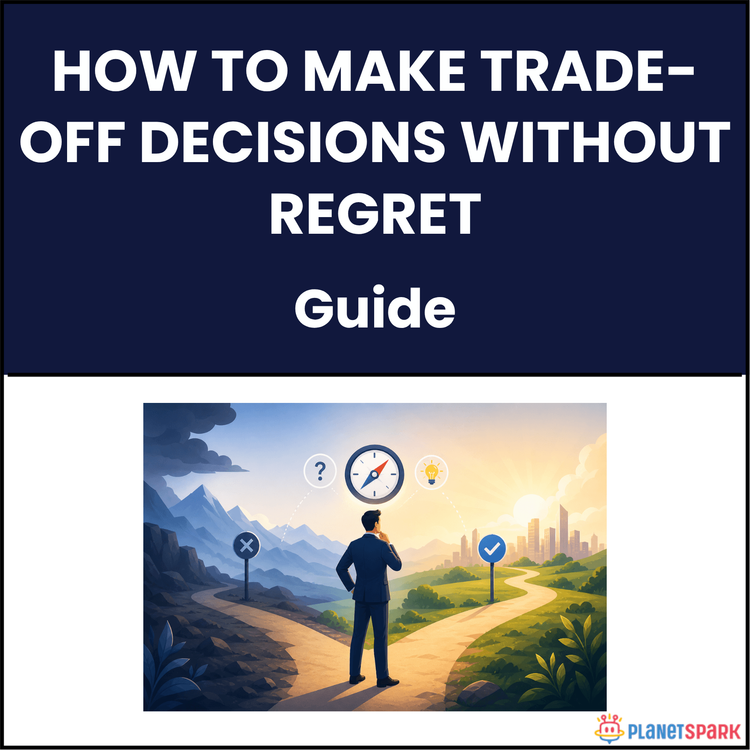
How to Make Trade-Off Decisions Without Regret
Making Smart Trade-Off Decisions with Confidence: A Practical Guide for Professionals
In the fast-paced world of modern work, professionals frequently face decisions that have no perfect answer. Should you take that new job offer that demands more travel, or stay where you are for the sake of stability? Should you invest in growth now or focus on security? Trade-off decisions are part of every professional's journey, and making these choices wisely can determine career success. This guide offers a structured approach to making trade-off decisions without second-guessing, providing a practical framework that allows professionals to choose confidently and move forward with clarity.
Who Is This Resource For?
This resource is specifically designed for:
- Career switchers seeking clarity as they pivot into new fields
- Job seekers who need a methodical approach to choosing among offers
- Consultants and managers who regularly make high-stakes decisions with significant impacts
- Professionals at all stages of their careers (from early to senior) who face complex decisions that impact their future
Whether you’re deciding between career paths, job offers, or business investments, this guide is a practical toolkit that can be applied immediately.
What Does This Resource Contain?
The guide provides a 5-step framework for making trade-off decisions that include:
- Clarifying the real decision (getting to the root of the issue)
- Naming trade-offs (honestly evaluating both gains and losses)
- Weighting your priorities (understanding what truly matters to you)
- Stress-testing your options (putting your decision under scrutiny)
- Committing to the decision (and following through confidently)
Each step is paired with worksheets, templates, and real-world case studies to ensure you can apply the framework to your current decisions and avoid regrets in the future.
Summary of the Resource
The guide helps professionals clarify the decision at hand, identify hidden biases, evaluate competing priorities, and stress-test their options before committing. It also includes tools like the "Priority Weighting Worksheet" and the "10/10/10 Test" to help make decisions that align with your core values and long-term goals.
Whether you’re facing a career crossroads or a business dilemma, this resource offers a proven method to navigate those tough trade-offs confidently.
How Will This Resource Be Useful?
- Boosts Decision Confidence: By following the structured framework, professionals can move beyond second-guessing to take confident action.
- Reduces Regret: The clear methodology helps professionals minimize the emotional toll and regret that often follows a tough decision.
- Improves Communication: A key component of the guide is how to articulate your decisions clearly to others, ensuring alignment and buy-in from stakeholders.
How Should You Use This Resource?
1. Read Through Once: Familiarize yourself with the entire framework so you understand the decision-making process.
2. Use as a Reference: When in the middle of a live decision, refer back to specific steps as needed.
3. Fill In the Worksheets: Apply the worksheets and reflection prompts to your current decisions to guide your thought process.
4. Share with Your Team: Use the frameworks in group settings to align on priorities together, especially for collaborative decisions.
Action Steps
- Step 1: Define the decision you are facing and frame it clearly. Ask yourself what the decision is really about and identify the root tension.
- Step 2: List the trade-offs involved, naming both what you gain and what you give up.
- Step 3: Rank your priorities for the present moment to guide your decision.
- Step 4: Use the stress-testing tools (such as the 10/10/10 Test) to evaluate how your choice will hold up over time.
- Step 5: Commit to your decision with clarity and confidence. Write down your commitment statement and set a review date.
Making trade-off decisions doesn’t have to be a stressful, regret-filled process. By applying this structured approach, you can make confident decisions that align with your values and long-term goals. The decision-making process itself is just as important as the decision itself, and with this framework, you can avoid second-guessing your choices.
Book your free session today!