
How to Manage Anxiety in High-Stakes Work Environments

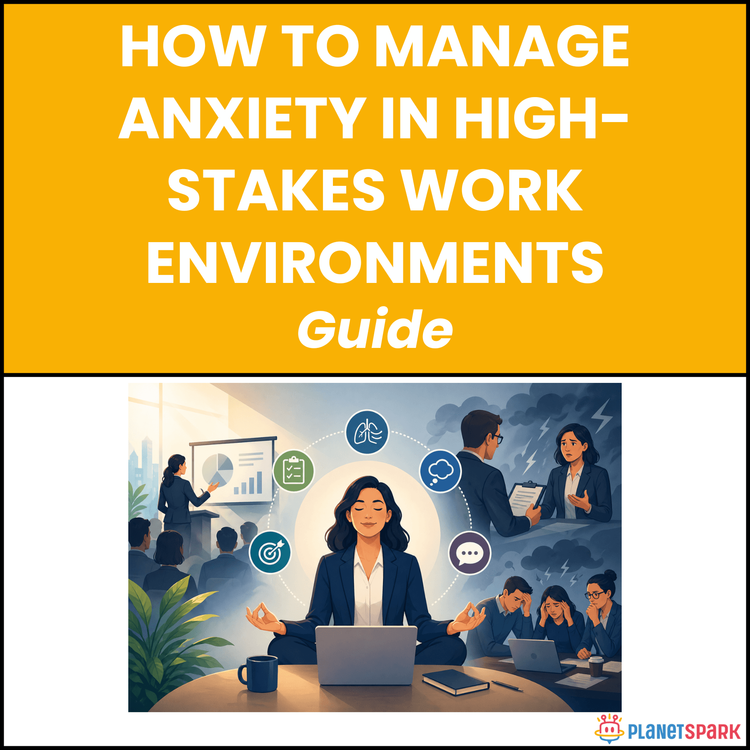
How to Manage Anxiety in High-Stakes Work Environments
Dealing with Anxiety in High-Stakes Work Settings: A Practical Handbook for Professionals
If you’ve ever walked into an important meeting, presentation, or interview feeling your heart race, your thoughts spiral, or your confidence drop—you’re not alone. Anxiety in high-stakes work situations is one of the most common yet least addressed challenges professionals face.
The problem isn’t anxiety itself. In fact, a certain level of anxiety can sharpen your focus and improve performance. The real challenge begins when it crosses into overwhelm—when it disrupts your thinking, affects your communication, and holds you back in moments that truly matter.
That’s exactly why the resource “How to Manage Anxiety in High-Stakes Work Environments” exists. It’s designed for working professionals who need practical, real-world tools to stay composed, confident, and effective—especially when the pressure is high.
This guide helps you move from reactive stress to structured control, using proven frameworks, actionable techniques, and repeatable systems that you can apply immediately.
Who Is This Resource For?
This resource is especially valuable if you are:
- A working professional navigating high-pressure meetings, presentations, or reviews
- A manager or leader responsible for making decisions under pressure
- A job seeker preparing for interviews or evaluation panels
- A consultant or client-facing professional handling critical conversations
- A mid-career professional stepping into more visible, high-stakes roles
- Someone who feels anxious in important moments and wants to manage it effectively
If you’re outcome-driven, time-poor, and want practical strategies that actually work in real situations, this guide is built for you.
What Does This Resource Contain?
This is not a theoretical guide on stress or emotions. It’s a structured, step-by-step playbook designed for immediate application in real work scenarios.
Inside the resource, you’ll find:
- A clear explanation of how anxiety works in the brain and body—and why it shows up at work
- A breakdown of helpful vs harmful anxiety to help you stay in the optimal performance zone
- A framework to identify your personal anxiety triggers and behavioural patterns
- The Three-Phase Model (Before, During, After) to manage anxiety across the full performance cycle
- Practical pre-event preparation strategies to reduce anxiety before it starts
- A detailed preparation checklist covering mental, physical, content, and environmental readiness
- Real-time anxiety regulation tools like breathing techniques, grounding methods, and deliberate pauses
- Cognitive reframing techniques to manage unhelpful thoughts under pressure
- A structured post-event debrief system to build long-term confidence
- A personal “Evidence Bank” approach to reinforce past success and reduce future anxiety
- The CALM Framework (Clarity, Activation, Language, Mastery) for sustained anxiety management
- A real-world case study showing how these techniques work in practice
- Common anxiety management mistakes and how to avoid them
- A self-assessment tool to evaluate your current anxiety resilience
- A 30-day action plan to build consistency and long-term improvement
Everything is designed to help you take action immediately—not just understand the problem.
Summary of the Resource
“How to Manage Anxiety in High-Stakes Work Environments” is a practical, performance-focused guide that helps professionals understand, regulate, and leverage anxiety effectively.
It shows you how to prepare before critical moments, stay composed during them, and build confidence afterward—turning anxiety from a limitation into a manageable, even useful, part of your professional toolkit.
If you invest just a few focused hours, this resource can significantly improve how you show up in the moments that define your career.
How Will This Resource Be Useful?
This resource helps you move from overwhelm to control.
You’ll gain:
- A clear understanding of what triggers your anxiety and how it shows up
- Practical tools to manage anxiety before, during, and after high-stakes situations
- Greater confidence in presentations, meetings, and difficult conversations
- Improved communication and clarity under pressure
- Reduced overthinking, avoidance, and self-doubt
- A structured system to build long-term emotional resilience
- The ability to perform consistently—even when stakes are high
Most importantly, it helps you stop being controlled by anxiety—and start managing it with intention and skill.
How Should You Use This Resource?
To get the best results, follow a structured approach:
Start by reading the guide fully to understand the overall framework and how each part connects. This builds clarity and context.
Next, identify your personal anxiety signature—how anxiety shows up for you physically, mentally, and behaviourally.
Then, begin applying the Three-Phase Framework. Focus first on pre-event preparation, since that’s where most anxiety can be managed proactively.
Use the checklists before real work situations, and apply the in-the-moment techniques during high-pressure interactions.
After each significant event, complete the post-event debrief to reinforce learning and build your confidence over time.
Finally, use the 30-day action plan to turn these tools into consistent habits rather than one-time efforts.
You can revisit this resource whenever you:
- Prepare for an important presentation or meeting
- Face a high-stakes conversation or decision
- Feel overwhelmed or stuck in anxiety cycles
- Want to improve your professional confidence
- Aim to build long-term emotional resilience
Action Steps
After accessing this resource, take these steps immediately:
1. Block 60–90 minutes to review the full guide
2. Identify your personal anxiety triggers and patterns
3. Use the pre-event checklist for your next important meeting
4. Practise one breathing or grounding technique daily
5. Apply at least one in-the-moment tool during a real scenario
6. Complete a post-event “Three Wins” debrief after your next high-stakes moment
7. Start building your personal Evidence Bank with past successes
Small, consistent actions here can significantly improve how you perform under pressure.
Anxiety is not a weakness—it’s a signal. When understood and managed well, it becomes a source of focus, energy, and growth. The difference between professionals who struggle under pressure and those who thrive isn’t the absence of anxiety—it’s the ability to work with it effectively.
Use this resource not just to manage anxiety, but to strengthen your confidence, presence, and performance in every high-stakes moment that shapes your career.