
How to Manage Decision Pressure From Deadlines and Expectations

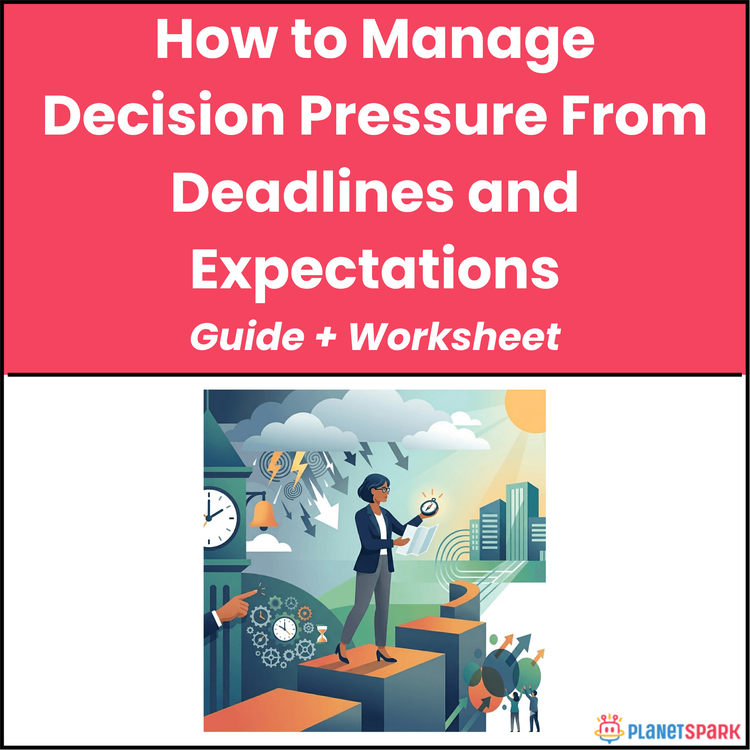
How to Manage Decision Pressure From Deadlines and Expectations
Managing Decision Pressure From Deadlines and Expectations with a Practical Guide for Working Professionals
If you’ve ever found yourself scrambling to make decisions under tight deadlines, with the weight of others’ expectations pressing down on you, you’re not alone. Decision pressure is a common experience for working professionals, but it’s also a hidden performance killer. It saps your confidence, increases stress, and often leads to poor outcomes. The good news? You can manage decision pressure and perform better under it.
“How to Manage Decision Pressure From Deadlines and Expectations” is a practical guide that provides you with structured, repeatable strategies to handle decision pressure without burning out. It’s specifically designed for professionals like you—whether you’re a career changer, early-career professional, consultant, or manager—who often face high-stakes decisions with real-time pressure. This resource offers both immediate tools and long-term strategies to build your decision-making resilience.
Who Is This Resource For?
This guide is for:
- Career switchers who need to make confident, fast decisions about a new career path
- Early to mid-career professionals navigating decision pressure at work
- Consultants and managers handling high-pressure decisions for clients or teams
- Professionals in roles with frequent deadlines and high expectations who want to improve decision-making under pressure
If you’re someone who faces constant decision-making challenges and struggles to stay calm and collected under pressure, this resource is for you.
What Does This Resource Contain?
The guide breaks down decision pressure into manageable components and provides you with tools for each stage of decision-making:
1. Understanding the Anatomy of Decision Pressure
Learn about the three core drivers of decision pressure—temporal pressure, expectation pressure, and consequence uncertainty—and how they affect your decision-making process. This foundational understanding helps you separate real urgency from perceived pressure.
2. Pressure Profile Self-Assessment
Identify your dominant decision pressure profile (e.g., perfectionist, reactive decider, consensus seeker) and understand how it impacts your decisions. This insight allows you to tailor your approach to decision-making in a way that works for your unique patterns.
3. The Decision Triage Framework
Apply this framework to sort your decisions by impact and reversibility, ensuring you allocate your cognitive resources appropriately. This helps you avoid decision fatigue and focus on high-stakes choices.
4. The RAPID Clarity Check
A five-question framework that enables you to make decisions quickly without sacrificing quality. This framework forces clarity on key elements like available information, priority criteria, and potential impact, ensuring that you make confident, reasoned decisions.
5. Managing Expectation Pressure
Proactively manage stakeholder expectations by setting clear decision timelines and using structured language that signals competence, even when you’re uncertain. This ensures that expectation pressure doesn’t derail your decision-making process.
Summary of the Resource
This guidebook provides actionable tools to:
- Recognize and understand the three key drivers of decision pressure
- Identify your personal pressure profile and tailor your approach accordingly
- Sort decisions by their urgency and impact using the Decision Triage Framework
- Apply the RAPID Clarity Check to make high-quality decisions in under five minutes
- Communicate confidently to manage others' expectations
By using these tools, you’ll be equipped to make confident decisions without succumbing to stress or burnout.
How Will This Resource Be Useful?
Here’s how this toolkit can help:
- Increases decision-making speed and clarity by providing a structured, repeatable system.
- Reduces stress by teaching you how to separate perceived pressure from real deadlines.
- Improves stakeholder management by giving you the language to handle expectation pressure proactively.
- Builds long-term decision resilience so you can perform well under pressure consistently, not just once in a while.
This guide won’t eliminate decision pressure, but it will give you the tools to handle it confidently and effectively.
How Should You Use This Resource?
You can use this guide in several ways:
1. Read-Through: If you want a complete understanding of decision pressure and how to manage it, read the guide from start to finish. This will give you a solid mental framework.
2. Reference Mode: Use the specific sections or frameworks when you’re in the heat of a decision-making moment.
3. Worksheet Mode: Use the fill-in worksheets to work through your live decision-making situations. These exercises will help you apply the tools immediately.
Action Steps
After accessing the toolkit, here’s what you should do:
1. Start by identifying your dominant pressure profile using the self-assessment worksheet.
2. Review your current decision situations and classify them using the Decision Triage Framework.
3. Use the RAPID Clarity Check on any Type 1 or Type 2 decisions you need to make.
4. Communicate with confidence by applying the Expectation Pressure Management strategies.
5. Choose one Nervous System Tool (e.g., 4-7-8 Breath, The Naming Interrupt) to use before making your next high-pressure decision.
Book your free session today!