
How to Manage Your Reactions in High-Pressure Workplace Situations

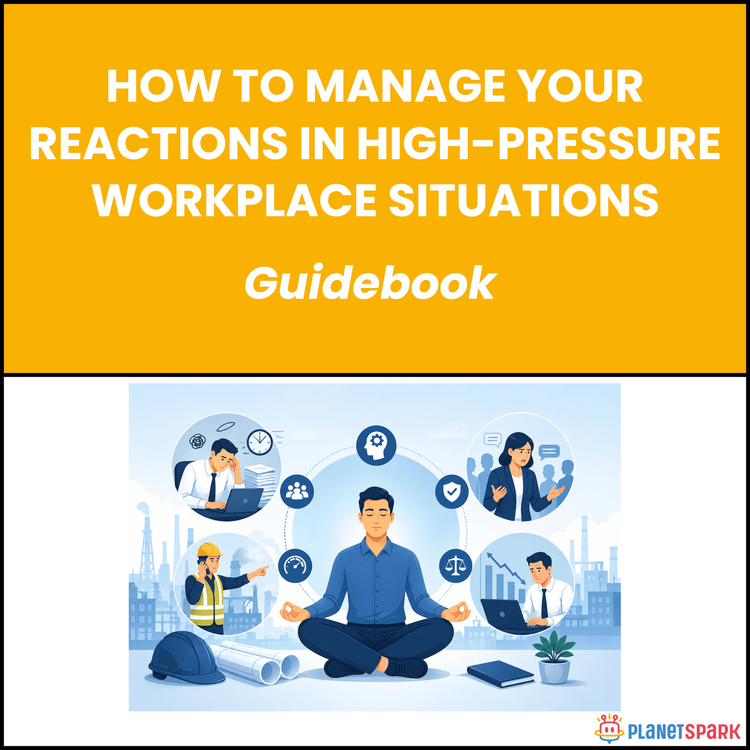
How to Manage Your Reactions in High-Pressure Workplace Situations
Staying Composed Under Pressure: A Practical Guide to Responding Effectively in Challenging Workplace Moments
Pressure doesn’t usually announce itself politely.
It shows up as sharp feedback in a meeting. A tense stakeholder escalation. A difficult client call. A deadline that suddenly moves. And in those moments, many professionals don’t struggle because they lack capability — they struggle because pressure hijacks clarity.
A single reactive moment can damage trust, communication, and confidence far faster than most people realize.
That’s why this resource, How to Manage Your Reactions in High-Pressure Workplace Situations, was created. It gives working professionals a practical system for staying composed, regulating emotions, communicating effectively, and responding with intention when stakes are high.
Rather than offering vague advice to “stay calm,” this guide gives you tools you can apply immediately in real workplace moments.
Who Is This Resource For?
This resource is especially useful for:
- Professionals navigating demanding, high-pressure work environments
- Managers and team leads handling conflict, feedback, or escalation
- Consultants and client-facing professionals managing difficult conversations
- Career switchers adjusting to unfamiliar workplace dynamics
- Early- and mid-career professionals building executive presence
- Anyone who wants to improve emotional regulation, resilience, and professional composure
If you’ve ever replayed a workplace reaction afterward and thought, “I wish I had handled that differently,” this resource is for you.
What Does This Resource Contain?
This guidebook combines emotional intelligence, practical psychology, and workplace communication into an actionable system.
Inside, you’ll find:
- A practical explanation of the pressure-reaction cycle and why people react under stress
- A framework to understand and interrupt “amygdala hijack” responses
- Phase 1 preparation tools for building a pressure-proof foundation
- A Personal Trigger Map worksheet to identify emotional triggers before pressure hits
- The 5-Second Intervention framework for pausing before reacting
- The STOP technique for in-the-moment emotional resets
- An In-the-Moment Composure Checklist for reflection and improvement
- Practical tools for assertive communication under pressure
- The DEAR Framework for navigating difficult conversations constructively
- Reflection tools and resilience-building practices for long-term growth
It is structured not as theory, but as a toolkit you can return to repeatedly.
Summary of the Resource
How to Manage Your Reactions in High-Pressure Workplace Situations is a practical guide to helping professionals stay steady when pressure rises.
It teaches you how to recognize triggers, regulate reactions, pause before responding, communicate assertively, and build emotional resilience over time.
If you want clearer thinking, stronger communication, and more control in stressful moments, this resource gives you a repeatable process to build those skills.
How Will This Resource Be Useful?
This resource can help you improve both performance and professional presence.
You’ll learn how to:
- Respond thoughtfully instead of reacting impulsively
- Stay composed in conflict, criticism, or high-stakes conversations
- Communicate with confidence without becoming aggressive or withdrawn
- Build emotional resilience under sustained workplace pressure
- Strengthen professional relationships through mature, measured responses
- Improve credibility and leadership presence in challenging situations
These are not “soft skills.” They are career-defining skills.
Often, what differentiates professionals in pressure-filled environments is not technical ability alone — it is how they behave when tension rises.
This guide helps you strengthen exactly that.
How Should You Use This Resource?
Use this resource in phases rather than trying to absorb everything at once.
Start by reading through the guide end-to-end once to understand the full framework and how the pieces connect.
Then work through the tools in sequence:
Begin with the foundation section and complete the Personal Trigger Map worksheet to build self-awareness.
Next, practice the 5-Second Intervention and STOP technique in lower-stakes situations first, so they become natural under real pressure.
Then apply the assertive communication tools and DEAR framework to challenging workplace conversations.
Finally, use the composure checklist after difficult interactions to reflect, refine, and strengthen the habit over time.
This resource is especially valuable to revisit before:
- High-stakes meetings
- Difficult feedback conversations
- Conflict-heavy stakeholder discussions
- Performance reviews
- Client escalations
- Leadership transitions or new responsibilities
Think of it as a professional operating manual for pressure.
Action Steps
After accessing this resource, take these steps immediately:
1. Identify three workplace situations that reliably trigger strong reactions for you
2. Complete the Personal Trigger Map worksheet honestly and specifically
3. Practice the 5-Second Intervention in one low-stakes situation this week
4. Use the STOP technique in your next stressful interaction
5. Apply one assertive communication framework in a real conversation
6. Review the composure checklist after a challenging moment and note one improvement for next time
Small adjustments in moments of pressure create outsized professional returns.
Composure is not something a few people are born with. It is a skill built through awareness, practice, and repetition.
This resource helps you build that skill in a practical way — so pressure no longer dictates your reactions, and difficult moments become opportunities to demonstrate maturity, judgment, and leadership.
Use this guide not just to manage stressful situations better, but to strengthen a professional capability that compounds over an entire career.