
How to Navigate Career Transitions During Economic Uncertainty

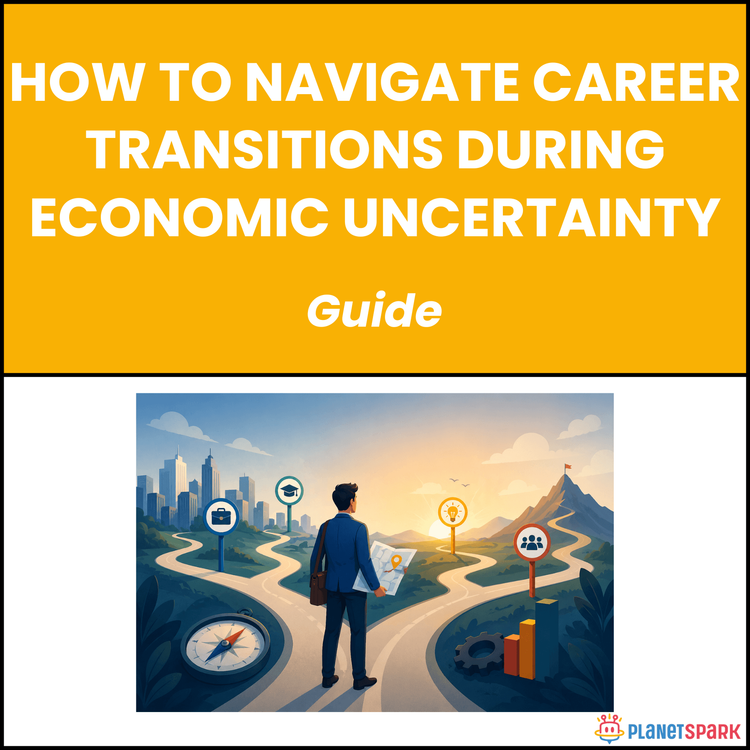
How to Navigate Career Transitions During Economic Uncertainty
Navigate Career Transitions During Economic Uncertainty: A Practical Template Pack for Job Seekers, Career Switchers, and Professionals in Transition
Economic uncertainty doesn’t just affect businesses — it directly impacts careers. Hiring slows down, layoffs increase, and opportunities become harder to access. In these moments, most professionals make the same mistake: they react instead of strategising.
If you’ve ever felt unsure about what to do after a layoff, confused about how to pivot industries, or overwhelmed by where to start — this resource exists for you.
The “How to Navigate Career Transitions During Economic Uncertainty” template pack is designed to replace uncertainty with structure. Instead of guessing your next move, you get a clear, scenario-based system to take action with confidence.
Who Is This Resource For?
This resource is built specifically for working professionals navigating change in a challenging economic environment, including:
- Professionals facing layoffs or anticipating job loss
- Career switchers moving into a new industry or role
- Mid to senior professionals negotiating exits or compensation
- Freelancers or consultants exploring income through fractional work
- Professionals re-entering the workforce after a gap
- Job seekers struggling to stand out in competitive markets
If your career feels uncertain right now, this resource gives you structure, clarity, and direction.
What Does This Resource Contain?
This is not a generic guide — it’s a scenario-driven template pack built for real-world situations. It includes 10 highly practical templates, each designed for a specific career transition challenge:
- Recession-Resilient Resume: Highlights impact, adaptability, and cost-efficiency
- Industry Pivot Cover Letter: Helps position transferable skills effectively
- Layoff-to-Launch 90-Day Plan: A structured roadmap from job loss to new opportunity
- Severance Negotiation Brief: Prepares you to negotiate exit terms professionally
- Transferable Skills Inventory: Maps your skills to new roles or industries
- Fractional Consulting Proposal: Helps you generate income through consulting
- Economic Gap Explanation Letter: Frames career gaps strategically
- Network Reactivation Script: Reconnects you with valuable contacts
- Compensation Recalibration Tracker: Evaluates job offers beyond salary
- Personal Brand Statement Template: Sharpens your professional positioning
Each template is designed to be immediately usable, editable, and tailored to your specific situation — not theoretical or generic.
Summary of the Resource
At its core, this resource is a structured toolkit for navigating career transitions during uncertain times.
Instead of asking “What should I do next?”, it gives you:
- A clear plan (what to do)
- Ready-made documents (how to do it)
- Strategic frameworks (why it works)
It transforms career transitions from a reactive process into a deliberate, step-by-step system.
How Will This Resource Be Useful?
This resource delivers practical, real-world value in ways most career guides don’t:
Clarity in Uncertainty
You stop guessing your next step and start following a structured path.
Better Positioning in Competitive Markets
With only a small percentage of applications converting to interviews during downturns, document quality becomes critical — and this resource directly improves that.
Stronger Decision-Making
From evaluating offers to negotiating compensation, you make informed choices instead of emotional ones.
Faster Career Transitions
Professionals using structured tools and strategies can reduce their transition time significantly compared to those reacting without a plan.
Increased Confidence
You move from uncertainty to control — with clear communication, preparation, and strategy.
How Should You Use This Resource?
To get the most value, approach this resource strategically — not passively.
Step 1: Identify Your Current Situation
Are you laid off, switching industries, or exploring consulting? Start with the template that directly matches your situation.
Step 2: Select the Relevant Template
Each template is scenario-specific. Using the right one ensures your communication is targeted and effective.
Step 3: Customize Thoughtfully
Replace placeholders, but also adapt the content to reflect your real experience, achievements, and goals.
Step 4: Apply Strategically
Use the outputs in real situations — job applications, networking outreach, interviews, or negotiations.
Step 5: Iterate and Improve
Refine your documents based on feedback, responses, and results.
The resource is designed for repeated use — not one-time consumption.
Action Steps
If you’re ready to take control of your career transition, here’s what to do next:
1. Identify your current career situation clearly
2. Start with one high-impact template (resume, action plan, or outreach script)
3. Spend 30–60 minutes customizing it properly
4. Use it immediately in real-world scenarios (applications, networking, etc.)
5. Build momentum by moving to the next relevant template
Consistency and structured action — not intensity — will drive your results.
Economic uncertainty is unpredictable. Your response to it doesn’t have to be.
This resource gives you something most professionals lack during transitions: a system. When you combine structured tools with intentional action, you don’t just survive uncertainty — you navigate it strategically.
Start with one template. Use it well. Then move forward with clarity and confidence.