
How to Navigate Identity Shifts During Career Changes

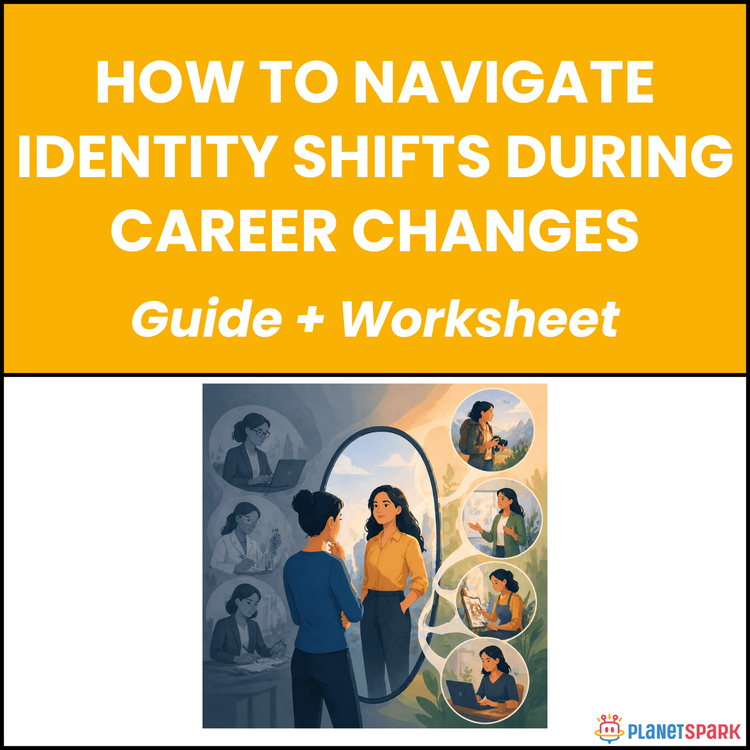
How to Navigate Identity Shifts During Career Changes
Handling Identity Shifts During Career Changes: A Practical Guide for Professionals Reinventing Their Careers
If you’ve ever felt unexpectedly lost, uncertain, or even disconnected during a career change, you’re not alone. Most professionals assume that switching roles, industries, or career paths is primarily a skills challenge. In reality, the biggest hurdle is often internal—figuring out who you are when your job title, environment, and sense of familiarity change.
This is where many capable professionals get stuck. You may have the experience, the qualifications, and even the opportunity—but without clarity around your evolving professional identity, progress feels slow, confusing, and emotionally draining.
That’s exactly why the resource “How to Navigate Identity Shifts During Career Changes” exists. It is designed to help working professionals move through this invisible but critical phase with clarity, structure, and confidence—without stepping away from real-world responsibilities.
Who Is This Resource For?
This guide is especially valuable if you are:
- A working professional with 0–15 years of experience navigating change
- A career switcher moving into a new industry or function
- A professional stepping into leadership for the first time
- Someone feeling imposter syndrome in a new role or environment
- A consultant or specialist redefining their professional direction
- Anyone experiencing uncertainty around “what comes next” in their career
If you’re ambitious but feel internally misaligned during a transition, this resource is built specifically for you.
What Does This Resource Contain?
This is not a generic career-change guide. It is a structured, deeply practical system focused on the identity side of professional growth.
Inside the resource, you’ll find:
- A clear explanation of why identity—not skills—is the hidden challenge in career transitions
- A breakdown of the “identity gap” and the liminal phase professionals experience
- A complete Identity Asset Framework covering cognitive, relational, reputational, and values-based strengths
- Worksheet 1: Identity Asset Inventory to uncover transferable strengths and defining experiences
- A four-part Transition Narrative Framework (Root, Thread, Pivot, Direction) to articulate your career story
- Worksheet 2 to build and refine your personal transition narrative
- Practical strategies to manage imposter syndrome and internal self-doubt
- The Inner Critic Audit tool to reframe limiting beliefs into constructive thinking
- A structured approach to rebuilding your professional network in a new field
- Worksheet 3: Network Mapping for intentional relationship building
- A clear three-phase model of identity reconstruction: Exploration, Integration, and Ownership
- A real-world case study demonstrating how identity assets translate across careers
- Common identity-related mistakes and how to fix them immediately
- A 90-day transition checklist with step-by-step actions
- The Identity Compass decision-making framework for uncertain moments
- A self-evaluation tool to track your identity transition progress
- A quick-reference summary for ongoing use
Everything is designed for reflection, clarity, and immediate application—not passive reading.
Summary of the Resource
“How to Navigate Identity Shifts During Career Changes” is a practical, action-oriented guide that helps professionals move through the internal uncertainty of career transitions with structure and confidence.
It shows you how to identify what you already bring, reframe your career story, manage self-doubt, build the right relationships, and take phase-appropriate action—so you can evolve your identity without feeling like you’re starting from scratch.
How Will This Resource Be Useful?
This resource helps you move from confusion to clarity during one of the most critical phases of your career.
You’ll gain:
- A clear understanding of your transferable identity assets
- Confidence in how you present yourself in a new professional context
- A strong, coherent career narrative that makes sense to others
- Tools to manage imposter syndrome without losing momentum
- A structured approach to building relevant professional relationships
- Clarity on what to focus on at each stage of your transition
- Better decision-making during uncertain career moments
Most importantly, it helps you stop questioning your place—and start building your next chapter with intention.
How Should You Use This Resource?
To get the best results, follow a structured, phased approach:
Start by reading the entire guide once to understand the overall framework. This will help you see how each module connects to the bigger picture of identity transformation.
Next, complete the worksheets in sequence. Begin with the Identity Asset Inventory to uncover your existing strengths. Then move to building your transition narrative and reframing your internal dialogue.
As you gain clarity, apply the networking and relationship strategies to actively build your presence in your new field.
Follow the 90-day checklist to stay consistent and focused. This ensures you are not just reflecting—but also taking visible, real-world action.
Finally, revisit the guide regularly. Use it when making career decisions, updating your narrative, or navigating moments of doubt.
Action Steps
After accessing this resource, take these steps immediately:
1. Block 2–3 hours of uninterrupted time for focused reflection
2. Complete the Identity Asset Inventory worksheet honestly and thoroughly
3. Draft your four-part transition narrative (Root, Thread, Pivot, Direction)
4. Identify 3–5 key identity strengths you will lead with in your new direction
5. Map your current network and identify at least 3 “bridge” connections
6. Take one visible action this week (post, conversation, or outreach)
7. Start tracking small wins to build confidence and momentum
Small, consistent actions will help you move through uncertainty faster than overthinking ever will.
Career transitions are not just about changing what you do—they are about evolving who you are. The discomfort you feel is not a sign of failure; it is a sign of growth in progress.
This resource gives you the structure to move through that growth intentionally—so you don’t just adapt to change, but actively shape it.
Use it not just to navigate your current transition, but to build a repeatable system for every future career move.