
How To Read Unspoken Power Dynamics In Workplace Interactions

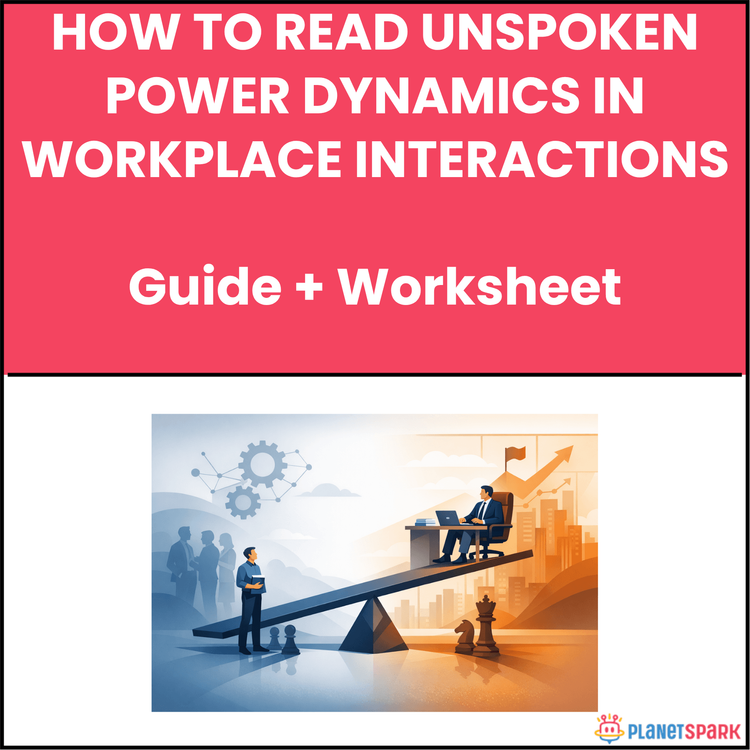
How To Read Unspoken Power Dynamics In Workplace Interactions
How to Read Unspoken Power Dynamics in Workplace Interactions: A Practical Guide
Workplace success isn’t just about tasks—it’s about influence. The “Power Dynamics Guide” helps professionals decode invisible signals, navigate politics, and build legitimate influence.
Who Is This Resource For?
This guide is designed for:
- Career switchers needing sharper situational awareness
- Early-to-mid career professionals (0–15 years experience)
- Consultants navigating client organisations
- Managers preparing for leadership roles
- Anyone puzzled by why good ideas get sidelined or overlooked
If you want to read the room and respond strategically, this resource is built for you.
What Does This Resource Contain?
Inside the guide, you’ll find:
- Introduction: Why power dynamics matter
- Chapter 1: Foundations of power (formal, informal, situational, gatekeeping)
- Chapter 2: Five signals of unspoken power (glances, interruptions, attribution, silence, positioning)
- Room-Reading Worksheet for live observation
- Chapter 3: Mapping invisible workplace architecture
- Chapter 4: Decoding body language and subtext
- Chapter 5: Recognising common workplace power plays
- Power Play Detection Checklist
- Chapter 6: Strategic response strategies and scripts
- Chapter 7: Building legitimate power pillars (expertise, relationships, visibility, reputation, network)
- Chapter 8: Navigating high-stakes scenarios (reviews, negotiations, conflicts, skip-levels)
- Chapter 9: Identity and power intersections
- Chapter 10: Case study showing hidden dynamics
- Key takeaways and next steps
Summary of the Resource
The “Power Dynamics Guide” is a structured toolkit that reframes workplace politics as observable and navigable. It ensures professionals can detect signals, respond strategically, and build influence that lasts.
How Will This Resource Be Useful?
By applying this guide, you’ll gain:
- Clarity on hidden power structures
- Confidence in reading rooms and relationships
- Awareness of recurring power plays
- Tools to respond without burning bridges
- Strategies to build portable, legitimate influence
- Long-term resilience through visibility and sponsorship
How Should You Use This Resource?
Follow a phased approach:
1. Observe signals in your next meeting.
2. Use the Room-Reading Worksheet to capture cues.
3. Map invisible relationships and gatekeepers.
4. Decode subtext in high-stakes conversations.
5. Recognise and respond to power plays strategically.
6. Build your own influence pillars deliberately.
7. Apply scripts in reviews, negotiations, and conflicts.
Action Steps
After accessing this resource, take these immediate steps:
1. Identify one meeting to observe power signals.
2. Note who gets credit, interrupted, or deferred.
3. Map one invisible influencer in your workplace.
4. Document one recurring power play you’ve experienced.
5. Draft a strategic response script for it.
6. Share one visible update to build your own influence.
Power is rarely announced—it’s signalled. With this guide, you can move from confusion to clarity, ensuring your career trajectory reflects both competence and influence.
Book your free session today!