
How to Stay Decisive When Facing Conflicting Priorities

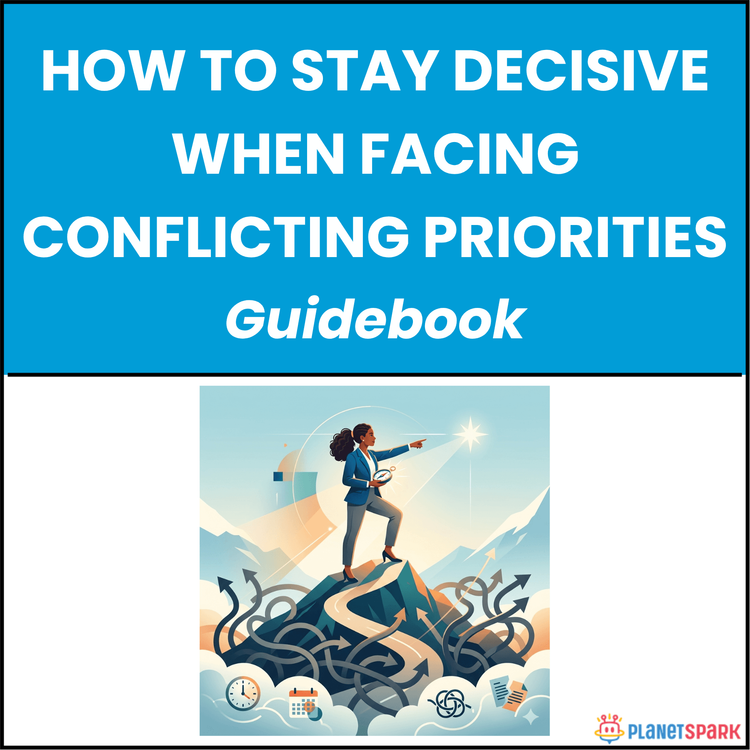
How to Stay Decisive When Facing Conflicting Priorities
How to Stay Decisive When Facing Conflicting Priorities: A Practical Guide for Professionals
Every working professional has experienced the challenge of competing priorities. Whether it’s a client waiting for an urgent proposal, a manager requesting immediate reports, or a team that needs direction, the pressure of trying to address multiple urgent demands can lead to decision paralysis. The result? Stress, procrastination, and reactive work rather than thoughtful, intentional decision-making.
“How to Stay Decisive When Facing Conflicting Priorities” offers a practical guide and framework designed to help you cut through the noise, make confident decisions, and move forward with clarity — even when everything seems equally urgent.
Who Is This Resource For?
This guide is ideal for:
- Career changers navigating the demands of a new role or industry
- Consultants balancing multiple client projects and urgent requests
- Managers who need to juggle team priorities with organizational demands
- Early to mid-career professionals who want to handle competing demands with confidence and focus
If you’re someone who often feels overwhelmed by conflicting priorities or struggles with decision-making when time is tight, this resource is designed for you.
What Does This Resource Contain?
This guide offers a structured approach to help you stay decisive when priorities compete:
1. The Core Problem: Understanding Why Priorities Clash
This section explains the common causes of conflicting priorities, such as organizational misalignment, urgency inflation, and identity-based decision-making. Understanding why priorities clash will help you address the root causes and regain control over your decisions.
2. The CLEAR Decision Framework
A five-step mental model (Clarify, Layer, Eliminate, Act, Review) that you can use to quickly assess and make decisions when multiple priorities are pulling you in different directions. Each step is designed to help you focus on what truly matters, rather than getting lost in the noise.
3. Decision-Making Tools
Practical tools like checklists, reflection prompts, and worksheets that you can use in real-time, during actual decision-making moments. These tools will help you manage your priorities, avoid false urgency, and stay focused on what truly impacts your goals.
4. Real-World Application
A detailed case study showing how a professional used the CLEAR Framework to successfully navigate a day filled with competing priorities. This case study illustrates how to apply the concepts to a real-life scenario and provides actionable insights.
Summary of the Resource
This guide helps you:
- Understand the sources of conflicting priorities and how to address them
- Use the CLEAR Framework to clarify, assess, and act on competing demands
- Implement decision-making tools to prioritize effectively and avoid false urgency
- Apply real-world strategies through case studies and templates
By following the CLEAR framework and using the provided tools, you’ll be able to cut through the noise, focus on what truly matters, and make confident decisions, even under pressure.
How Will This Resource Be Useful?
This guide will help you:
- Clarify your priorities by identifying what truly matters in high-pressure situations.
- Manage competing demands with a structured decision-making process that allows you to act quickly and confidently.
- Eliminate false urgency by understanding the difference between manufactured pressure and real deadlines.
- Develop a habit of decisive action, reducing the mental load of constant decision-making and improving your focus.
By consistently applying this framework, you’ll not only make better decisions but also build a more resilient decision-making process that helps you stay calm and focused, even when everything seems urgent.
How Should You Use This Resource?
Here’s how to implement the guide:
1. Understand the causes of conflicting priorities by reviewing the section on why priorities clash. Recognize the patterns in your own decision-making.
2. Use the CLEAR Framework to approach decisions methodically. Start by clarifying the stakes, sorting by impact, eliminating false urgency, acting on the most important task first, and reviewing the decision after a short time.
3. Complete the checklists and worksheets provided in the guide during actual decision-making moments to structure your approach and stay focused.
4. Review and realign your decisions regularly to ensure that your decision-making process is becoming more efficient and less reactive over time.
Action Steps
Here’s what you can do immediately:
1. Complete the Priority Conflict Checklist today for your most pressing tasks. Rank your tasks and identify what really needs immediate attention.
2. Apply the CLEAR Framework to your next conflicting priority decision. Clarify what truly breaks if it doesn’t get done, and act on the most impactful task first.
3. Use the Stakeholder Pressure Map to assess the requests of multiple stakeholders. This will help you identify whose demands are real and whose are inflated.
4. Start your week with the Weekly Priority Reset Template to structure your tasks and avoid decision overload.
Use it consistently, and over time, decision-making becomes faster, clearer, and far more effective.
Book your free session today!