
How to Stay Energized in Repetitive or Routine Work

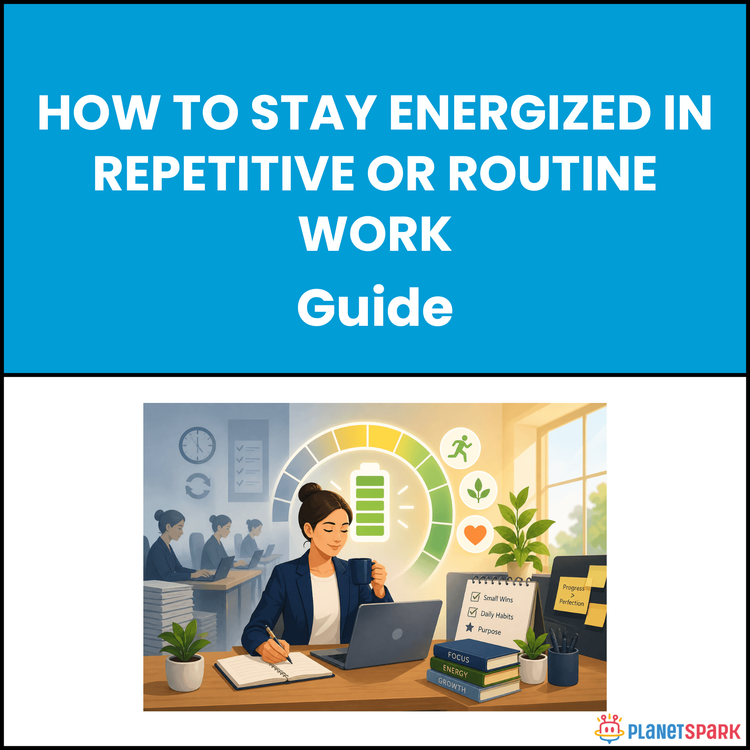
How to Stay Energized in Repetitive or Routine Work
How to Stay Energized in Repetitive or Routine Work: A Practical Guide for Consistent Focus and Motivation
If you’ve ever felt mentally drained halfway through your workday—even when your tasks aren’t particularly difficult—you’re not alone.
Most professionals don’t burn out because of high-pressure decisions or complex projects. They burn out quietly, doing the same tasks over and over again—losing focus, motivation, and eventually, a sense of purpose.
Routine work is unavoidable. In fact, it makes up the majority of your professional life. But what most people don’t realize is this: the problem isn’t the repetition—it’s how you manage your energy within it.
That’s exactly why the resource “How to Stay Energized in Repetitive or Routine Work” exists. It gives you a structured, practical system to maintain focus, motivation, and meaning—without changing your job or waiting for external motivation.
Who Is This Resource For?
This resource is especially valuable if you are:
- A working professional with 0–15 years of experience
- Someone handling repetitive, structured, or process-driven tasks
- A professional who feels mentally drained despite performing well
- A manager or consultant juggling routine and strategic work
- A career switcher doing foundational or entry-level work in a new field
- Anyone struggling with motivation, focus, or engagement during repetitive tasks
If you often feel like your work is “fine” but your energy isn’t, this guide is built for you.
What Does This Resource Contain?
This is not generic advice about staying motivated. It’s a structured playbook built around how energy actually works in real professional environments.
Inside the resource, you’ll find:
- A clear explanation of why routine work drains energy—and how to manage it
- The Routine Energy Cycle to help you understand your current state
- A powerful reframing framework to reconnect your tasks with purpose and impact
- The Purpose Audit and Connection Mapping exercises to make your work meaningful again
- Environment engineering strategies to optimize your physical and digital workspace
- Sensory techniques using sound, light, and rhythm to boost focus
- A Personal Energy Audit worksheet to map your daily energy patterns
- Chronotype-based scheduling to align tasks with your energy levels
- The Gamification Method to turn routine tasks into engaging challenges
- Real-world case studies showing measurable improvements in performance
- A Micro-Recovery system (including the 45-10-45 rhythm) to prevent fatigue
- A structured recovery design plan for consistent energy throughout the day
- Skill layering techniques to turn routine work into a growth opportunity
- A monthly tracker to build long-term professional capability
- Social energy strategies to reduce isolation and improve engagement
- A self-assessment tool to identify your biggest energy gaps
- A quick-reference system for immediate energy resets during the workday
Everything is designed for immediate, real-world application—not passive reading.
Summary of the Resource
“How to Stay Energized in Repetitive or Routine Work” is a practical system that helps you manage your energy, not just your time.
It teaches you how to:
- Stay mentally engaged during repetitive tasks
- Maintain consistent focus throughout the day
- Reconnect with the meaning behind your work
- Build sustainable productivity without burnout
If you’ve been relying on willpower or motivation to get through routine work, this resource gives you a better approach—one that actually works.
How Will This Resource Be Useful?
This resource helps you move from energy drain to energy control.
- Better focus and consistency during repetitive tasks
- Reduced mental fatigue across the workday
- Clear understanding of your personal energy patterns
- Higher engagement—even in routine work
- Improved output quality without increasing effort
- A stronger sense of purpose in your day-to-day work
Most importantly, it helps you stop feeling stuck in your work—and start feeling in control of it.
How Should You Use This Resource?
To get the best results, follow a structured approach:
Start with the introduction and energy framework to understand why routine work affects you the way it does.
Next, work through the core modules:
- Begin with meaning: complete the Purpose Audit and reframe your key tasks
- Optimize your environment: make small but deliberate changes to your workspace
- Map your energy: use the Personal Energy Audit to identify your peak and low-energy periods
- Apply scheduling alignment: assign routine work to low-energy windows
- Introduce gamification: create simple challenges to increase engagement
- Design your recovery system: implement micro-breaks and reset routines
- Layer skills: choose one skill to improve within your routine work
Finally, use the self-assessment and quick-reference tools to maintain consistency and adjust your approach over time.
This resource is not meant to be read once—it’s meant to be used repeatedly.
Action Steps
After accessing this resource, take these steps immediately:
1. Spend 15–20 minutes completing the self-assessment
2. Identify your biggest energy drain (meaning, environment, or fatigue)
3. Write one impact statement for your top routine task
4. Track your energy levels for one full workday
5. Introduce one simple change:
- A 45-minute focused work block
- A 5-minute micro-recovery break
- A small gamification challenge
6. Choose one skill to practice within your routine work this week
7. Review your progress at the end of the week
Small, consistent changes here can dramatically improve how you feel at work.
Most professionals wait for motivation to show up before they engage with their work. But in reality, energy is not something you wait for—it’s something you design.
When you understand your energy, align your work accordingly, and apply simple systems to maintain it, even repetitive work becomes manageable—and often, surprisingly engaging.
Use this resource to take control of your energy, your focus, and your daily work experience. Because long-term career success isn’t built on occasional bursts of motivation—it’s built on consistent, sustainable performance.
Book your free session today!