
How To Stay Grounded In High-Conflict Workplace Situations

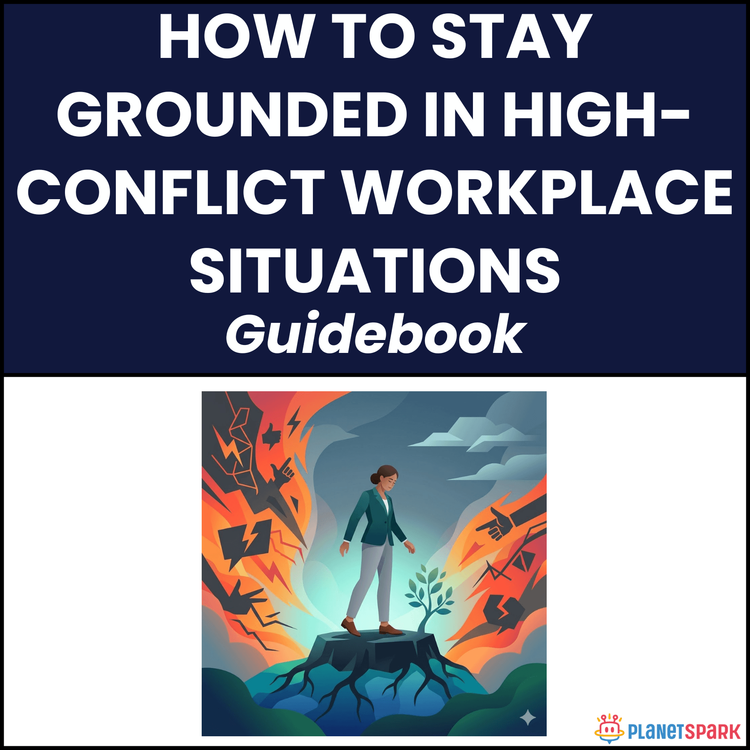
How To Stay Grounded In High-Conflict Workplace Situations
Mastering High-Conflict Situations at Work: A Practical Guide to Staying Grounded, Clear, and in Control
Conflict at work is not rare. It is inevitable. A meeting turns heated. A stakeholder challenges you publicly. A manager gives unexpected criticism. A discussion that started professionally becomes emotionally charged within seconds.
In those moments, most professionals don’t respond — they react. Some become defensive. Some go silent. Some over-explain. Some say things they regret later.
And almost everyone replays the situation afterward, thinking, “I should have handled that better.” This is not a knowledge problem. It is a response problem.
As explained in the resource (page 2), high-conflict situations trigger automatic reactions driven by your nervous system. The gap between how you want to behave and how you actually behave under pressure is what determines your professional impact.
The resource “How to Stay Grounded in High-Conflict Workplace Situations” is designed to close that gap — helping you stay composed, think clearly, and respond intentionally even when the situation becomes intense.
Who Is This Resource For?
This resource is ideal for:
- Working professionals dealing with conflict in meetings or discussions
- Managers handling difficult team dynamics
- Individuals who feel they “lose control” under pressure
- Professionals preparing for high-stakes conversations
- Anyone who wants to improve emotional control and communication
If you’ve ever thought, “I know what to say — but not in that moment,” this guide is for you.
What Does This Resource Contain?
This is a practical playbook focused on real-time response and self-awareness. It includes:
- A clear definition of what it means to be “grounded” (page 3):
- Responding from values and judgment instead of emotion
- A comparison between reactive vs grounded behaviour:
- Reactive: impulsive, defensive, emotional
- Grounded: calm, intentional, controlled
- An explanation of why conflict triggers strong reactions
- Frameworks to understand your personal triggers
- Pre-conflict preparation techniques
- Real-time tools to stay composed during conflict
- Post-conflict reflection methods
- A structured system to improve response over time
Summary of the Resource
This guide helps you shift from reacting to responding.
Instead of being controlled by the situation, you learn how to:
- Pause before reacting
- Stay aligned with your goals
- Communicate clearly under pressure
The result is stronger communication, better decisions, and higher professional credibility.
How Will This Resource Be Useful?
This resource directly improves your behaviour in high-pressure situations.
You will be able to:
- Stay calm even when others are emotional
- Avoid saying things you regret
- Handle conflict without escalating it
- Communicate clearly and confidently
- Build trust and respect in difficult situations
- Recover faster after challenging interactions
As highlighted on page 3, being grounded does not mean being emotionless — it means not letting emotions control your actions.
How Should You Use This Resource?
To get the most value, use it before, during, and after conflict situations.
Step 1: Build Awareness
Understand your typical reactions under pressure.
Step 2: Prepare Before Conflict
Review key strategies before important meetings.
Step 3: Apply in Real Time
Use simple techniques:
- Pause before speaking
- Focus on the issue, not the emotion
- Stay aligned with your goal
Step 4: Reflect After the Situation
Analyse what happened and how you responded.
Step 5: Improve Gradually
Refine your approach through repeated practice.
Step 6: Build Consistency
Apply the same principles across situations.
Action Steps
Start immediately:
- Recall a recent conflict situation
- Identify how you reacted
- Write what you would do differently
- Define one grounding technique you will use
- Apply it in your next meeting
- Reflect on the outcome
- Repeat consistently
Conflict is not the problem.
Your response to it is.
When you learn to stay grounded, you don’t just handle conflict better — you become someone others rely on in difficult situations.
That is a powerful professional advantage.