
How To Stay Rational When Others Are Acting Emotionally

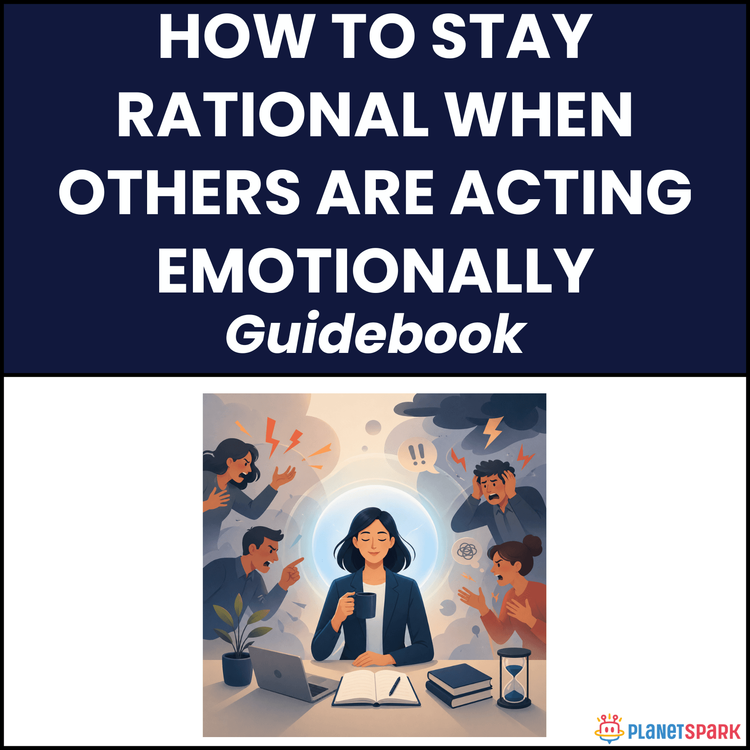
How To Stay Rational When Others Are Acting Emotionally
A Professional’s Playbook for Staying Rational Amid Workplace Emotions
You’ve probably experienced this before.
A meeting suddenly turns tense. A colleague raises their voice. A client sends an aggressive message. Or a decision gets driven by panic rather than logic. In that moment, everything shifts — and how you respond can either build your credibility or damage it.
Most professionals are never trained for these situations. They either react emotionally, shut down, or say something they later regret.
This is exactly why the “How to Stay Rational When Others Are Acting Emotionally” playbook exists — to give you a clear, practical system to stay calm, think clearly, and respond strategically in high-pressure situations.
Who Is This Resource For?
This playbook is designed for professionals who regularly deal with high-stakes interactions, including:
- Managers and team leaders handling difficult conversations
- Consultants and client-facing professionals managing expectations
- Early to mid-career professionals navigating workplace dynamics
- Job seekers and career switchers preparing for professional environments
- Anyone who wants to communicate with clarity under pressure
If your work involves people (which it almost always does), this resource is highly relevant.
What Does This Resource Contain?
This is a practical, action-oriented guide built for real-world application. Inside, you’ll find:
- A clear breakdown of why emotional situations disrupt rational thinking
- The difference between reactive and rational professional behaviour
- A three-phase framework:
- Before (prepare your mindset and triggers)
- During (stay grounded in real-time)
- After (reflect and improve)
- The core 4-step framework: Notice → Pause → Name → Choose
- The PAUSE Protocol with 5 in-the-moment techniques (breathing, delay phrases, grounding, etc.)
- A Personal Trigger Map worksheet to identify emotional patterns
- Ready-to-use response scripts for common workplace scenarios
- A post-interaction debrief worksheet for continuous improvement
- Four core thinking frameworks to handle complex emotional situations
- Scenario-based strategies (meetings, conflicts, emails, clients)
- A 30-day practice plan to build long-term rationality
- A self-evaluation tool to track your progress
Everything is structured to help you act better in the moment — not just understand concepts.
Summary of the Resource
At its core, this playbook helps you:
- Stay calm and composed when others are not
- Avoid reactive decisions and communication mistakes
- Build a clear gap between what happens and how you respond
- Strengthen your thinking in high-pressure situations
- Develop a repeatable system for emotional control and clarity
It turns emotional chaos into a structured opportunity to lead with confidence.
How Will This Resource Be Useful?
This resource delivers immediate and long-term benefits:
- Improves your decision-making under pressure
- Helps you communicate with authority and precision
- Builds trust and credibility in difficult situations
- Reduces stress and emotional exhaustion after interactions
- Prevents conflicts from escalating unnecessarily
- Strengthens your professional presence and leadership image
The biggest advantage? You become the most grounded person in the room — especially when it matters most.
How Should You Use This Resource?
To get the maximum value, follow this structured approach:
Step 1: Read for understanding
Go through the full playbook once to understand the frameworks and flow.
Step 2: Identify your triggers
Complete the Personal Trigger Map to recognise what typically causes your reactions.
Step 3: Practise before high-stakes situations
Use pre-commitment statements and rehearse response scripts in advance.
Step 4: Apply in real-time situations
Use the 4-step sequence (Notice → Pause → Name → Choose) when emotions rise.
Step 5: Use quick techniques
Apply tools like breathing, delay phrases, and grounding during tense moments.
Step 6: Reflect after interactions
Use the debrief worksheet within 24 hours to learn and improve.
Step 7: Follow the 30-day plan
Build consistency through small daily practices that strengthen your control over time.
This is not a one-time read — it is a tool you return to and apply repeatedly.
Action Steps
Start applying this resource immediately with these steps:
- Complete your Personal Trigger Map today
- Choose 1–2 techniques from the PAUSE Protocol to practise daily
- Memorise at least one delay phrase for difficult conversations
- Use the Notice–Pause–Name–Choose method in your next tense interaction
- Reflect on one recent emotional situation using the debrief worksheet
- Begin the 30-day rationality practice plan
- Track your progress using the self-evaluation tool
Small, consistent improvements here will create a major shift in how you show up professionally.
In today’s fast-paced, high-pressure work environments, emotional situations are unavoidable. But reacting to them is optional.
The professionals who grow fastest and lead most effectively are not the ones who avoid emotional moments — they are the ones who handle them with clarity, control, and intention.
This playbook gives you the exact tools to do that. The more you practise, the more natural it becomes — until staying rational is no longer effort, but your default way of operating.