
How to Sustain Focus During Long Execution Cycles

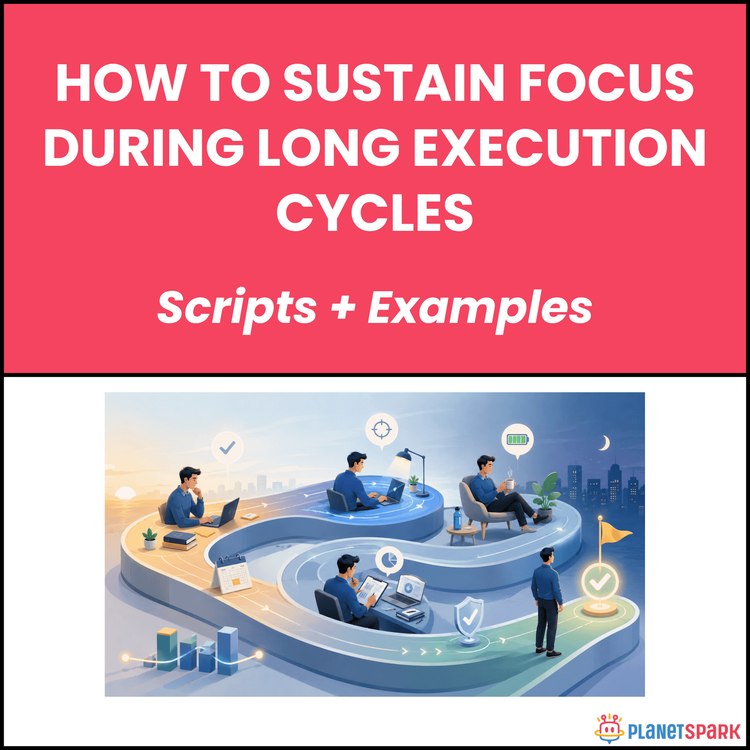
How to Sustain Focus During Long Execution Cycles
Sustain Focus During Long Execution Cycles: A Practical Guide for Professionals Managing Complex Projects
Starting a project is exciting. You have a clear goal, fresh motivation, and a plan that feels manageable.
But sustaining focus over weeks or months is much harder.
Many working professionals do not struggle because they lack skill. They struggle because long projects slowly drain attention, energy, and clarity. The first few weeks may feel productive, but then urgent requests appear, stakeholders interrupt your time, distractions build up, and the finish line still feels far away.
That is where this resource becomes useful.
“How to Sustain Focus During Long Execution Cycles” is a practical guide for professionals who need to stay sharp, consistent, and productive across extended projects. It gives you scripts, examples, worksheets, and simple systems to help you protect your focus before, during, and after long execution cycles.
Instead of relying only on motivation, this resource helps you build repeatable habits that make focus easier to sustain.
Who Is This Resource For?
This resource is useful for working professionals who manage long, complex, or high-responsibility work.
It is especially helpful for:
Project managers leading multi-month initiatives
Consultants working through long client engagements
Product managers handling builds, migrations, or launches
Managers balancing execution, meetings, and stakeholder expectations
Career switchers working through a long transition
Job seekers managing a structured search process
Early and mid-career professionals who want to become more consistent
Professionals who start strong but lose momentum midway through projects
This resource is also helpful for anyone who often feels busy but not truly productive. If you frequently get pulled into reactive work, lose track of your main priorities, or wait for motivation to return, this guide gives you a better system.
What Does This Resource Contain?
This resource is built as a practical focus sustainability toolkit. It includes scripts, examples, frameworks, worksheets, and reflection prompts that can be used during real projects.
Introduction to Focus Sustainability
The guide begins by explaining why sustaining focus is a professional skill that many people are never formally taught.
Most training focuses on starting strong: setting goals, creating plans, and launching initiatives. But the real challenge is sustaining energy and attention across weeks or months.
The resource explains that focus loss is not simply a willpower problem. It is usually a systems problem. This helps professionals stop blaming themselves and start using better structures.
Phase 1: Before the Cycle Begins
The first phase helps you build your focus foundation before the project starts.
It includes three important tools:
Clarity Anchor
This is a single sentence that reminds you why the project matters to you personally. It becomes your reset point when motivation drops.
Energy Baseline
This helps you identify your peak focus hours and protect them for deep execution work instead of meetings, emails, or reactive tasks.
Distraction Protocol
This helps you decide in advance what you will do when new requests or distractions appear. Instead of switching tasks immediately, you create a system for capturing and reviewing them later.
Phase 2: During the Cycle
The second phase introduces the Weekly Focus Reset System.
This system includes:
Monday Intention
Wednesday Check
Friday Reflection
These three checkpoints help you stay connected to what matters throughout the week. The goal is not to feel motivated all the time. The goal is to create a rhythm that helps you return to focused execution again and again.
The Monday Intention helps you decide the most important thing to advance.
The Wednesday Check helps you notice if you have been pulled into reactive mode.
The Friday Reflection helps you recognize what you completed and prepare for the next week.
Scripts for the Mid-Cycle Dip
The guide also gives practical scripts for the difficult middle phase of long projects.
It includes scripts for:
When you feel like quitting
When you feel checked out
When distractions have taken over
When a stakeholder is disrupting your focus
These scripts are useful because they give you ready-to-use language when your energy is low. Instead of overthinking, you can return to a simple next step.
Phase 3: After Each Sprint
The third phase focuses on restoring focus after each sprint, milestone, or project phase.
It introduces a four-step transition ritual:
Close the phase
Recharge deliberately
Re-orient before re-engaging
Launch with intention
This helps professionals avoid carrying mental clutter from one phase into the next. It also reminds readers that recovery is not laziness. It is part of performing well over a long period.
Action Elements and Worksheets
The resource includes reusable tools that can be filled in and revisited.
These include:
Project Focus Blueprint
Weekly Focus Check-In
Reflection Questions
The Project Focus Blueprint helps you define your clarity anchor, peak focus hours, distraction protocol, weekly reset time, dip script, and phase-end ritual.
The Weekly Focus Check-In gives you a simple repeatable structure for Monday, Wednesday, and Friday.
The Reflection Questions help you understand where you lose focus, what drains your energy, who disrupts your workflow, and what finishing strong would look like.
Real-World Application Example
The resource includes a practical case example of a senior consultant leading a six-month digital transformation project.
The example shows how a professional can use the full system in real life. It covers how to set a clarity anchor, protect deep work time, use weekly reset scripts, manage stakeholder requests, and recover between project phases.
This makes the guide easier to understand because it shows the system in action.
Common Mistakes and Fixes
The resource also highlights common mistakes professionals make during long execution cycles.
These include:
Mistaking busyness for progress
Skipping weekly resets when things get busy
Waiting for motivation to return
Letting stakeholders own your calendar
Not closing phases before opening new ones
Relying on willpower instead of systems
Each mistake is paired with a practical fix, making the section easy to apply immediately.
Summary of the Resource
“How to Sustain Focus During Long Execution Cycles” is a practical guide for professionals who want to stay consistent during demanding projects.
It teaches that focus is not a personality trait. Focus is a system.
The resource helps you prepare before a project begins, reset during the middle, manage distractions, protect your best work hours, communicate boundaries, recover between phases, and finish strong.
The biggest message of the guide is simple: do not wait to feel focused. Build systems that help you return to focus.
This makes the resource especially valuable for time-poor professionals who need simple, repeatable tools they can use immediately.
How Will This Resource Be Useful?
This resource is useful because it solves a common professional problem: losing momentum during long projects.
Many professionals know how to start. Fewer know how to sustain.
Here is how this resource helps.
It gives you clarity when work becomes messy
Long projects often become unclear over time. Priorities shift. New requests appear. Stakeholders add pressure. The original purpose can get lost.
The clarity anchor helps you reconnect with why the project matters. This makes it easier to continue when the work becomes difficult or repetitive.
It helps you protect your best thinking time
The energy baseline exercise helps you identify when you are mentally sharpest.
Once you know your peak focus hours, you can protect them for deep work. This helps you spend your best energy on the most important tasks instead of giving it away to meetings, emails, or interruptions.
It reduces distractions and context switching
The distraction protocol helps you handle new requests without immediately losing focus.
This is useful because most focus loss does not happen all at once. It happens through small, repeated interruptions. Having a protocol helps you stay in control of your attention.
It creates a weekly rhythm for staying on track
The Weekly Focus Reset System gives you a simple routine for maintaining direction.
Monday helps you set intention.
Wednesday helps you correct course.
Friday helps you reflect and prepare.
This rhythm helps prevent mid-cycle drift and keeps you connected to the work that matters most.
It helps you handle the mid-cycle dip
Almost every long project has a difficult middle. The resource helps you understand that this dip is normal.
Instead of treating low motivation as a sign of failure, the guide teaches you to use scripts and small actions to restart momentum.
This is especially helpful when you feel stuck, tired, or overwhelmed.
It improves stakeholder management
Stakeholders can unintentionally disrupt focus through frequent updates, unexpected calls, or changing requests.
The stakeholder script helps you protect execution time while still maintaining strong communication. This is useful for consultants, project managers, product managers, and team leads.
It helps you finish strong
The phase-end ritual helps you close each sprint properly before starting the next one.
This improves recovery, reduces mental clutter, and helps you begin each new phase with more clarity.
For professionals working on long execution cycles, this can make a major difference in both performance and confidence.
How Should You Use This Resource?
Use this resource as a working guide, not just a reading document.
Step 1: Read the full guide once
Start by reading the full resource from beginning to end.
This will help you understand the complete system: what to do before the project begins, how to reset during the project, and how to recover after each phase.
Step 2: Choose one current project
Apply the guide to one real execution cycle.
This could be a work project, consulting engagement, job search, career transition, certification plan, or major deliverable.
The system works best when you connect it to something specific.
Step 3: Fill in the Project Focus Blueprint
Use the worksheet to define your focus system.
Write down:
Your project name
Your estimated project duration
Your clarity anchor
Your peak focus hours
Your distraction protocol
Your weekly reset schedule
Your dip script
Your phase-end ritual
This becomes your personal focus plan.
Step 4: Block your peak focus hours
Identify the time of day when you do your best thinking.
Then block that time in your calendar for deep execution work.
Do not leave your best hours unprotected. Treat them as seriously as an important meeting.
Step 5: Use the Weekly Focus Reset
Use the Monday, Wednesday, and Friday prompts every week.
This does not need to take a lot of time. Even a short reset can help you stay aligned and avoid drifting into low-value work.
Step 6: Use the scripts when focus drops
When you feel distracted, stuck, or close to checking out, return to the scripts.
The scripts are designed to help you take the next small action instead of waiting for motivation.
Step 7: Close each phase deliberately
At the end of each sprint or milestone, pause before moving into the next phase.
Write down what was completed, what was learned, and what needs to move forward.
Then recharge before re-engaging.
This helps you return to the next phase with more energy and clarity.
Action Steps
After accessing this resource, take these steps:
1. Choose one long project or execution cycle you are currently managing.
2. Write your clarity anchor in one sentence.
3. Identify your peak focus hours.
4. Block those focus hours in your calendar for the next four weeks.
5. Create a simple distraction protocol for new requests.
6. Schedule your Monday Intention, Wednesday Check, and Friday Reflection.
7. Choose one dip script you will use when motivation drops.
8. Decide how you will close your next sprint or project phase.
9. Revisit the resource at the start of every major project.
10. Share the Weekly Focus Reset system with a colleague who may need it.
The most important step is to use one part of the resource immediately. Focus improves when it becomes a repeated practice.
Long execution cycles are where professional credibility is built.
They test your clarity, discipline, energy, communication, and ability to keep going when the work becomes difficult. This resource gives you a practical system for handling that challenge.
Use the scripts. Fill in the worksheets. Protect your focus hours. Reset each week. Close each phase properly. Then continue with intention.
Sustained focus is not about being perfect every day. It is about knowing how to return to what matters.