
How to Transition From Tactical Decisions to Strategic Judgment
Free DownloadPDF

Noorul Ain FatimaVisit Profile
I’m a passionate public speaking educator who has guided hundreds of students in building confidence, clarity, and impactful communication skills. With hands-on experience in mentoring learners of different age groups, I focus on making learning engaging, practical, and result-driven. I truly enjoy helping students find their voice and express themselves with confidence in every situation.
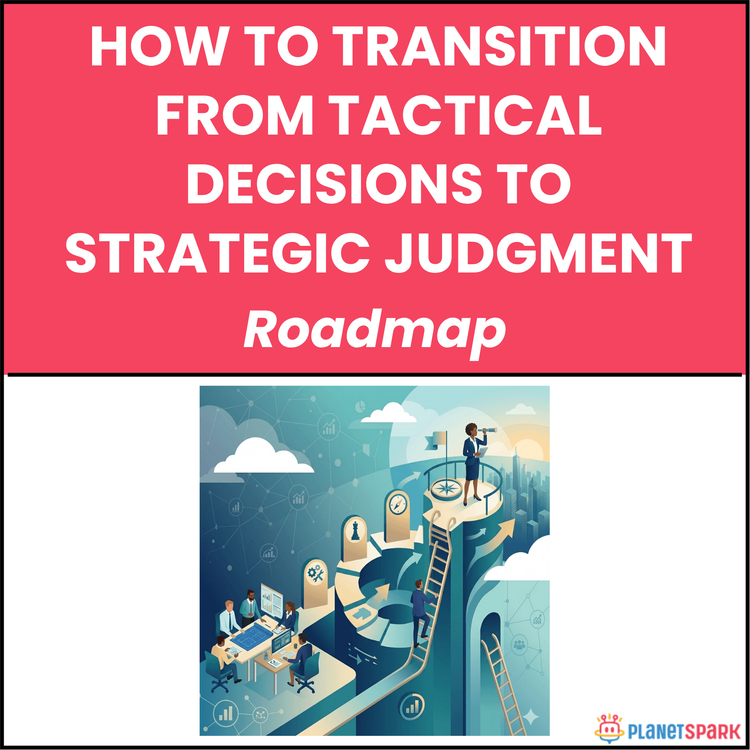
How to Transition From Tactical Decisions to Strategic Judgment
Free DownloadPDF
Noorul Ain FatimaVisit Profile
I’m a passionate public speaking educator who has guided hundreds of students in building confidence, clarity, and impactful communication skills. With hands-on experience in mentoring learners of different age groups, I focus on making learning engaging, practical, and result-driven. I truly enjoy helping students find their voice and express themselves with confidence in every situation.
How to become From Tactical to Strategic: A Practical Guide for Professionals
As you advance in your career, you’ll likely hit a ceiling where tactical execution—focusing on the “how” of getting things done—is no longer enough. You’ll be asked to shape direction, influence outcomes, and think strategically about your work. This shift from tactical to strategic thinking is often the key to unlocking greater professional opportunities, yet it’s rarely discussed openly. The transition can be difficult, but it’s a necessary step for anyone looking to move beyond the “doer” role to a position of leadership.
“From Tactical to Strategic: A Career Elevation Roadmap” is a step-by-step guide designed to help you navigate this crucial career shift. By following the structured roadmap, you’ll develop the strategic judgment needed to move up, stand out, and make a bigger impact in your professional life.
Who Is This Resource For?
This guide is designed for:
- Career changers looking to build strategic judgment as they step into a new role or industry
- Managers looking to transition from task-oriented leadership to driving strategic outcomes
- Consultants who want to enhance their ability to think beyond the task at hand and influence larger business strategies
- Early to mid-career professionals who want to build strategic thinking habits and elevate their impact
If you're feeling like you're stuck at a professional ceiling despite your strong performance in tactical roles, this roadmap will help you build the strategic thinking skills necessary to break through and advance.
What Does This Resource Contain?
This guide provides a comprehensive, practical framework to help you move from tactical execution to strategic leadership:
1. Phase Diagnostic: Where Are You Right Now? The Thinking Level Diagnostic
Before making the shift, it’s essential to understand where you currently stand in your thinking. This diagnostic tool helps you assess whether you're operating mostly tactically or strategically and provides a baseline to guide your next steps.
2. Phase 1 — Expand Your Context Window
Strategic thinkers consider the broader picture before making decisions. This phase teaches you to look beyond the immediate task to include long-term consequences, a larger group of stakeholders, and a wider range of data points. Techniques like reading industry reports, mapping stakeholder ecosystems, and extending your time horizon will help you expand your context window.
3. Phase 2 — Master the Art of Problem Reframing
Tactical thinkers focus on solving the problem they’re given, while strategic thinkers question whether they’re solving the right problem. Reframing is one of the most powerful tools for strategic decision-making. This module introduces the 5 Whys technique and provides a toolkit to help you reframe problems before jumping to solutions.
4. Phase 3 — Develop Your Decision-Making Framework
One of the hallmarks of strategic judgment is the ability to make decisions deliberately and systematically. The SCOPE method (Situation, Criteria, Options, Priorities, Execution Risk) helps you make informed decisions that consider both short- and long-term factors. This section provides a clear, easy-to-use framework to guide your decision-making.
5. Phase 4 — Communicate at the Level You Want to Operate
Strategic thinking needs to be communicated clearly to have an impact. This phase focuses on adapting your communication style to the level at which you want to operate. Learn how to lead with the “So What” and focus on business outcomes rather than just task completion.
6. Phase 5 — Build Strategic Visibility Without Waiting for Permission
To be seen as a strategic thinker, you need to actively demonstrate your strategic judgment. This phase outlines how to build strategic visibility through consistent action, whether by owning a strategic perspective, seeking cross-functional exposure, or creating strategic artifacts like briefs or decision memos.
Summary of the Resource
This guide helps you:
- Diagnose your current thinking level and determine where you stand in the shift from tactical to strategic thinking
- Expand your context window to consider broader and longer-term implications before making decisions
- Master problem reframing to ensure you’re solving the right problem, not just the one in front of you
- Use the SCOPE framework to make faster, more informed decisions
- Communicate your strategic thinking effectively, regardless of your current role
- Build strategic visibility through deliberate actions that demonstrate your growing judgment
By following this roadmap, you’ll be able to transition from tactical execution to strategic leadership with confidence.
How Will This Resource Be Useful?
This guide will help you:
- Build strategic judgment by helping you shift from executing tasks to shaping decisions and outcomes.
- Expand your decision-making skills through structured methods like the SCOPE framework and 5 Whys.
- Communicate strategically to demonstrate your value to senior leaders and stakeholders.
- Increase your professional visibility by consistently demonstrating strategic thinking in your work.
By implementing these strategies, you’ll be able to position yourself for career advancement and greater leadership opportunities.
How Should You Use This Resource?
Here’s how to implement the roadmap:
1. Complete the Thinking Level Diagnostic to assess whether you are currently operating from a tactical or strategic mindset.
2. Use the techniques in Phase 1 to expand your context window. Start reading industry reports, mapping stakeholder relationships, and extending your time horizon when making decisions.
3. Apply the problem reframing techniques from Phase 2 to your current challenges. Practice asking yourself the right questions before jumping to conclusions.
4. Use the SCOPE framework to guide your decisions. Make sure to document your decision-making process so you can reflect and refine it over time.
5. Start communicating at the level you want to operate at by focusing on business outcomes and strategic priorities.
6. Build strategic visibility by taking consistent actions that demonstrate your strategic thinking, like writing a one-page brief or seeking cross-functional exposure.
Action Steps
Here’s what you can do immediately:
1. Complete the Thinking Level Diagnostic and identify your current mode (tactical or strategic).
2. Map your stakeholder ecosystem for your next project, identifying who benefits, who loses, and who has influence.
3. Reframe a current problem using the 5 Whys method and share your new framing with a colleague.
4. Use the SCOPE framework to guide your next decision and document the rationale for future reflection.
5. Start communicating your decisions in terms of business impact, not just task completion.
Book your free session today!