
Identifying Decision Patterns That Lead to Suboptimal Outcomes

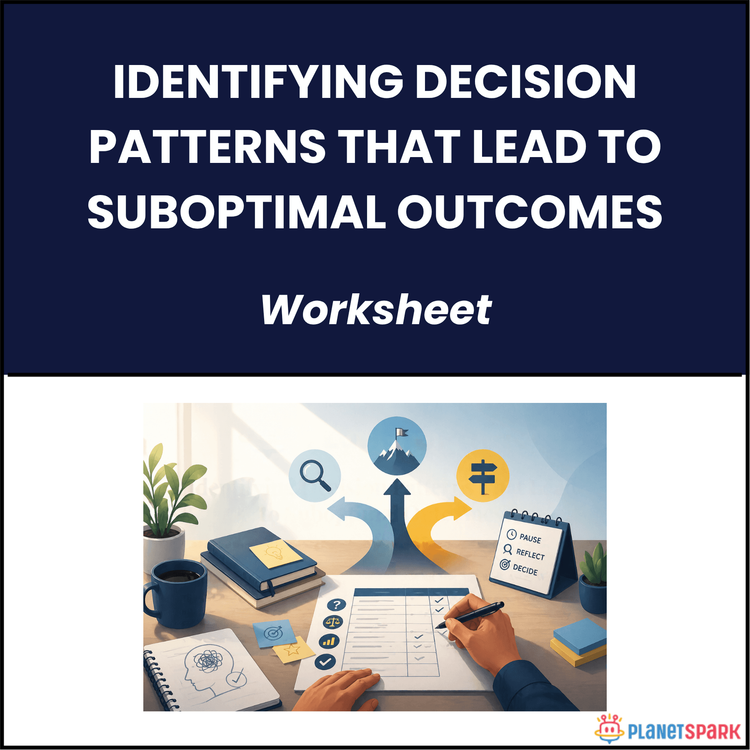
Identifying Decision Patterns That Lead to Suboptimal Outcomes
How to Break Free from Suboptimal Decision Patterns and Make Smarter, More Confident Choices
Have you ever made a decision you later regretted, only to find yourself making similar mistakes again and again? You're not alone. Many professionals face the challenge of making suboptimal decisions without realizing the patterns driving them. The constant cycle of second-guessing, redoing work, or missing key opportunities can be frustrating. If you feel stuck in a pattern of decision-making that holds you back from success, this resource is exactly what you need to regain control and make sharper, more confident decisions moving forward.
Who Is This Resource For?
This practical worksheet is specifically designed for:
- Career changers looking to make decisions that align with their new path
- Early-to-mid career professionals feeling the pressure of high-stakes decisions
- Consultants and managers who find themselves caught in repetitive decision mistakes
- Professionals who often second-guess their decisions or end up with suboptimal outcomes
Whether you're in a leadership role or still finding your way, this resource helps you identify, address, and change the decision patterns that may be limiting your potential.
What Does This Resource Contain?
"Identifying Decision Patterns That Lead to Suboptimal Outcomes" is more than just a typical decision-making guide. It's a structured, interactive worksheet designed to help you spot the decision traps that undermine your professional choices. Here’s what’s inside:
- The Decision Pattern Inventory: A tool to help you identify your recurring decision-making traps, such as the Confirmation Collector, Sunk Cost Defender, or the Urgency Reactor.
- PAUSE Framework: A five-step audit process to evaluate your decisions before and after the fact, giving you a structured method to ensure better outcomes.
- Real-World Case Example: A detailed case study that walks you through how decision patterns manifest in professional scenarios, helping you spot them in your own life.
- Common Mistakes & Fixes: Actionable tips on how to avoid key pitfalls like journaling without tracking or treating all decisions with the same level of scrutiny.
- Self-Evaluation Sheet: A personalized tool to track and evaluate your decision patterns over time, helping you deepen your self-awareness.
Summary of the Resource
In just a few hours, this resource helps you uncover the hidden decision patterns that are likely causing you to make suboptimal choices. Through a series of exercises and frameworks, you’ll gain the clarity to identify which patterns are affecting your decisions, and learn how to disrupt them to improve your professional outcomes. With its structured approach, this worksheet is perfect for professionals who need to make quick, confident decisions—without second-guessing.
How Will This Resource Be Useful?
This resource will give you:
- Clear Insight into your personal decision traps, which allows you to stop making decisions on autopilot and start making them intentionally.
- Confidence in your decision-making process, knowing that you can assess and adjust your choices based on clear, structured steps.
- Stronger Decision-Making by applying the PAUSE Framework, you’ll be able to examine your decisions from multiple perspectives, improving both your current and future choices.
- More Effective Career Moves as you learn to break free from patterns like the Sunk Cost Defender or the Urgency Reactor, which are commonly found in career and project decisions.
How Should You Use This Resource?
Follow a phased approach to maximize the benefits of this resource:
1. Read through the entire guide to understand the overall framework and get familiar with the patterns and steps.
2. Complete the Decision Pattern Inventory: Identify your dominant decision-making traps.
3. Apply the PAUSE Framework to current or past decisions to assess how different steps could have impacted your outcomes.
4. Use the Self-Evaluation Sheet: Track your progress and patterns over time.
5. Revisit the resource periodically as your decision-making skills improve.
Action Steps
Here’s what you should do immediately after accessing this resource:
1. Set aside 30 minutes to go through the Decision Pattern Inventory and rate your behaviors.
2. Complete the PAUSE Framework on a current decision, and challenge yourself to think beyond your default patterns.
3. Review your decision-making log to spot recurring patterns and blind spots.
4. Reach out to a trusted colleague or mentor who can act as your "decision sparring partner" to help you identify blind spots.
Mastering your decision-making habits is a journey, but it’s one worth starting today. By identifying the patterns that consistently lead to suboptimal outcomes, you’ll gain the self-awareness to make smarter, more confident decisions in the future. These insights not only help you avoid mistakes but also set the foundation for career growth, stronger leadership, and clearer thinking in all areas of your professional life.