
Identifying Identity Blind Spots Through Structured Feedback Loops

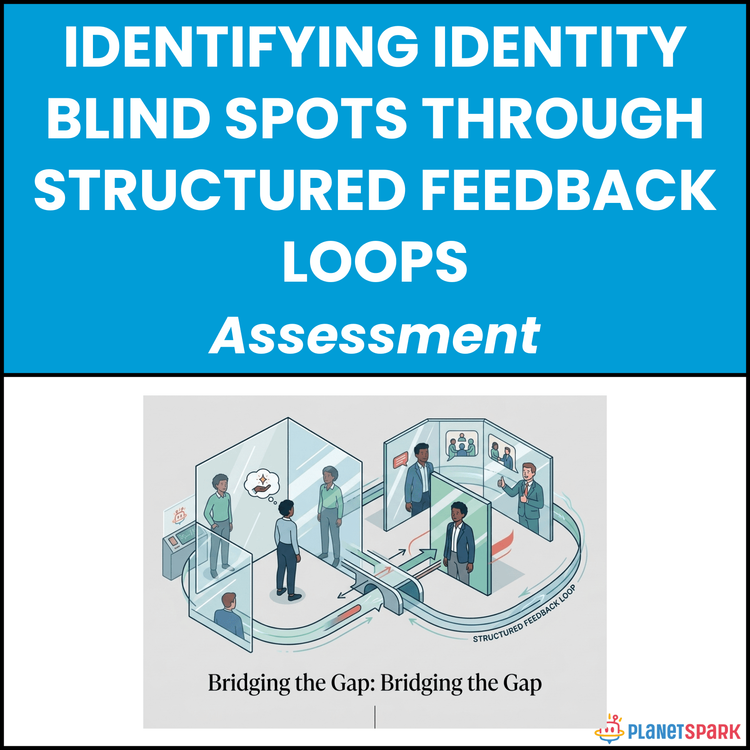
Identifying Identity Blind Spots Through Structured Feedback Loops
How to Identify and Close Your Professional Identity Blind Spots
Have you ever walked out of a high-stakes meeting feeling like you nailed your presentation, only to find out later that your team felt you were "unclear" or "dismissive"? Or perhaps you've been passed over for a promotion despite having the technical skills, because leadership cited a vague lack of "presence"?
This friction is caused by an identity blind spot—the gap between how you see yourself and how others actually experience you. Most professionals wait for this gap to be surfaced during an annual review when it might already be too late. To truly own your career trajectory, you need to stop waiting for feedback to find you and start building systems to seek it out.
Our latest resource, "Identifying Identity Blind Spots Through Structured Feedback Loops," is a practical assessment guide designed to help you engineer repeatable, low-friction processes to see yourself as the world sees you.
Who Is This Resource For?
This guide is built specifically for outcome-oriented professionals who value clarity over theory. It is especially beneficial for:
Career Changers: Ensure your transferable skills are being signaled correctly in a new industry.
New Managers & Leaders: Align your leadership intent with the impact you have on your team.
Consultants & Freelancers: Understand how clients assign trust and evaluate your fit.
Early-to-Mid Career Professionals: Identify the "hidden" behaviors that might be plateauing your growth.
What Does This Resource Contain?
This isn't just a reading exercise; it is a structured toolkit designed for action. Inside, you will find:
The Identity Blind Spot Map: A framework to categorize misalignments in communication style, perceived competence, social presence, and values signaling.
Baseline Identity Audit: A 5-dimension worksheet to articulate your internal self-perception before seeking outside data.
Feedback Source Planner: A tool to help you identify the right mix of close colleagues, peripheral observers, and "comparative mirrors."
The Structured Feedback Question Bank: A curated list of behaviorally anchored questions that move beyond "Do you have any feedback for me?" to unlock honest, precise insights.
The Identity Gap Map Template: A comparison grid to help you visualize where your perception and reality diverge.
Quarterly Feedback Cadence: A sustainable, 3-month rhythm to keep your professional identity in alignment as your role evolves.
Summary of the Resource
At its core, this guide helps you move from passive feedback to active identity management. It provides a step-by-step system to conduct a baseline audit of your professional self, gather high-quality data through structured conversations, and integrate that data into a single "Gap Map." The goal is precision: identifying the exact behavioral shifts needed to ensure your professional impact matches your intent.
How Will This Resource Be Useful?
By working through this assessment, you will gain more than just data—you will gain a competitive edge. Closing your identity blind spots leads to:
Increased Confidence: Know exactly how you are being perceived in the room, removing the guesswork from high-stakes interactions.
Better Decision Making: Understand your "recurrent friction points" so you can navigate office dynamics with more tact.
Faster Career Progression: Identify and fix the minor "surface blind spots" that might be holding back major opportunities. Stronger Trust: Align your "Values Signal" (your actions) with your internal values to build deeper professional relationships.
How Should You Use This Resource?
To get the most value out of this toolkit, we recommend a phased approach:
1. The Deep Dive (90 Minutes): Set aside a dedicated block to read the guide and complete your "Step 1: Baseline Identity Audit."
2. The Collection Phase: Over the next week, use the Source Planner and Question Bank to schedule two 15-minute "structured feedback" coffee chats.
3. The Integration: Within 48 hours of your conversations, use the Identity Gap Map to compare your notes against your baseline.
4. The Experiment: Choose one—and only one—active blind spot to address through a specific behavioral change over the next 30 days.
5. The Maintenance: Revisit the Quarterly Cadence section to build this practice into your regular professional rhythm.
Action Steps
Ready to close the gap? Start with these three immediate steps:
1. Download the Guide: Keep it on your desktop as a live working document.
2. Complete Section 4: Fill out the 5-dimension Baseline Identity Audit to get your internal baseline on paper.
3. Identify Three Sources: Look at your calendar for the past 30 days. Pick three people (one close colleague, one client/peer, and one mentor) you can approach for a structured 15-minute conversation.
The professionals who grow the fastest aren't the ones with the fewest blind spots—they are the ones who aren't afraid to look for them. You now have the framework, the questions, and the templates to see yourself clearly.