
Identifying Identity Misalignment In High-Performance Environments

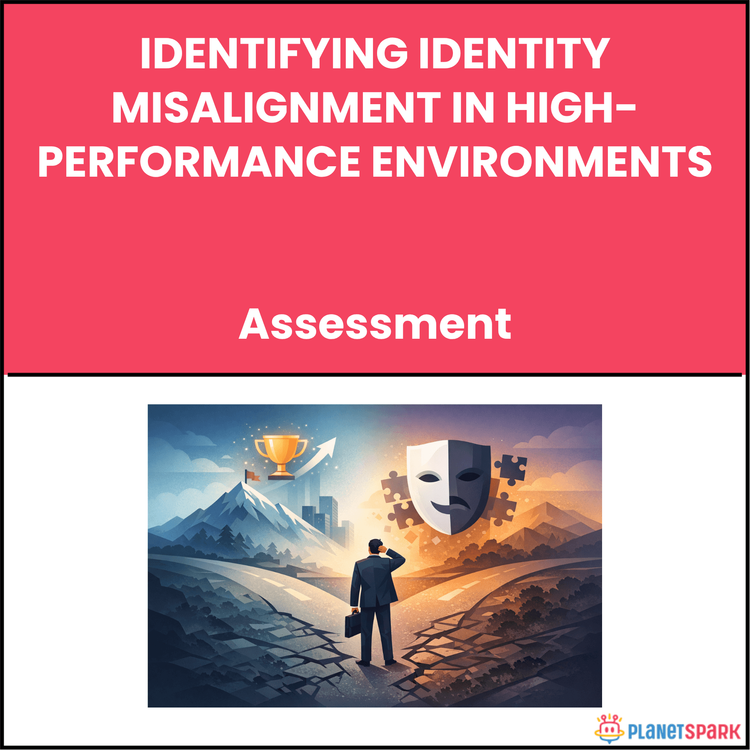
Identifying Identity Misalignment In High-Performance Environments
Identifying Identity Misalignment in High-Performance Environments: A Practical Assessment Guide
Success on paper doesn’t always equal satisfaction. The “Identity Misalignment Assessment” guide helps professionals recognise when outward achievement masks inner disconnect—and provides tools to recalibrate toward authentic alignment.
Who Is This Resource For?
This guide is designed for:
- Career changers navigating demanding environments
- Early-to-mid career professionals (0–15 years experience)
- Consultants balancing client expectations with personal values
- Managers thriving in metrics but feeling misaligned
- Anyone sensing quiet dissatisfaction despite external success
If you want to move from performing a role to inhabiting your authentic identity, this resource is built for you.
What Does This Resource Contain?
Inside the guide, you’ll find:
- A clear definition of identity misalignment and why it hides in plain sight
- The four misalignment patterns: performer gap, values drift, strengths suppression, success trap
- Diagnostic worksheets (Identity Signal Inventory, Dimension-by-Dimension Diagnostic)
- The Identity-Environment Gap Map framework
- Case studies showing targeted recalibration
- Common mistakes professionals make when misaligned
- The Alignment Recalibration Worksheet for actionable steps
- A 30-point Identity Alignment Audit checklist
- Pathways forward: recalibrate within, transition with intention, design a new chapter
- Quick reference self-evaluation sheet
Summary of the Resource
The “Identity Misalignment Assessment” is a structured toolkit that reframes dissatisfaction as a signal of misalignment. It ensures professionals can diagnose their alignment gaps, identify the specific dimensions at play, and take deliberate steps toward recalibration.
How Will This Resource Be Useful?
By applying this guide, you’ll gain:
- Clarity on whether your success is masking misalignment
- Confidence in naming your primary misalignment dimension
- Awareness of subtle signals that indicate deeper disconnect
- Tools to map gaps between identity and environment
- A structured worksheet to move from diagnosis to action
- Long-term resilience through quarterly recalibration
How Should You Use This Resource?
Follow a phased approach:
1. Complete the Identity Signal Inventory honestly.
2. Diagnose your misalignment dimension (values, strengths, purpose, role identity).
3. Map your Identity-Environment Gap.
4. Use the Alignment Recalibration Worksheet to design one targeted change.
5. Apply the 30-point checklist quarterly.
6. Choose your pathway forward (recalibrate, transition, or redesign).
Action Steps
After accessing this resource, take these immediate steps:
1. Write down three signals you’ve been ignoring.
2. Identify your primary misalignment dimension.
3. Map one conflict between your values and your environment.
4. Draft one targeted action to reduce friction this week.
5. Share your diagnostic insights with a trusted peer or mentor.
6. Schedule a 30-day review of your recalibration worksheet.
Identity misalignment isn’t weakness—it’s information. With this guide, you can move from quiet dissatisfaction to deliberate alignment, ensuring your career trajectory reflects both performance and authenticity.
Book your free session today!