
Leading Change Management Initiatives Guide

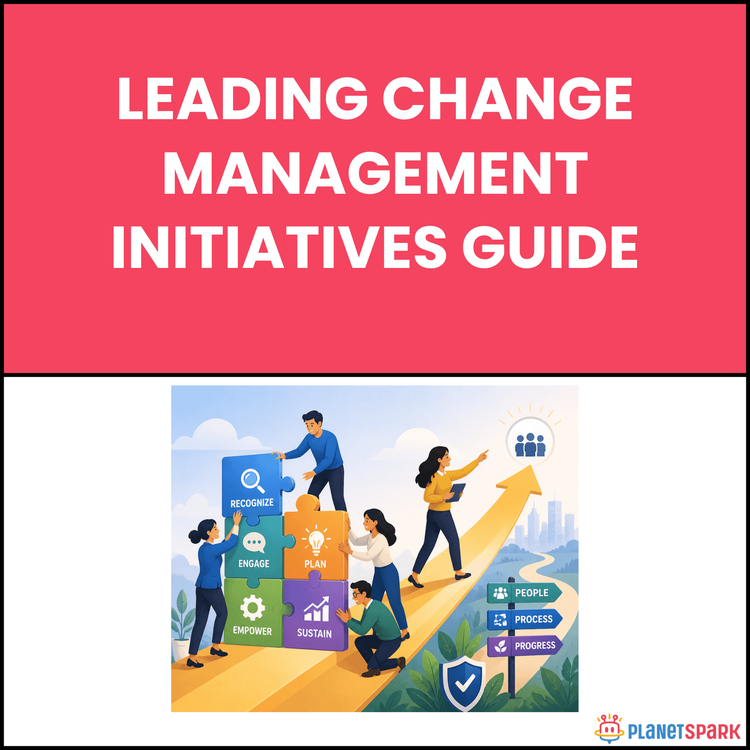
Leading Change Management Initiatives Guide
Spearheading Change Management Efforts: A Practical Step-by-Step Guide for Working Professionals
Have you ever been asked to “lead a change” at work—without clear instructions on where to begin?
Maybe it was a new system rollout, a team restructuring, or a process overhaul. On paper, everything looked solid. But in reality, people resisted, communication broke down, and momentum slowed. This is where most change initiatives fail—not because of poor strategy, but because of poor execution.
In today’s fast-moving professional environment, change is constant. And the ability to lead change effectively is no longer optional—it’s a career-defining skill.
The Leading Change Management Initiatives Guide is designed to bridge this gap. It gives working professionals a structured, practical, and easy-to-apply framework to lead change with clarity and confidence.
Who Is This Resource For?
This guidebook is especially useful for:
- Managers responsible for implementing new processes or systems
- Consultants leading transformation or improvement projects
- Career switchers navigating new roles or industries
- Early to mid-career professionals looking to build leadership capability
- Team leads handling restructuring, digital transformation, or cultural shifts
If you’ve ever struggled with stakeholder buy-in, resistance from teams, or unclear execution plans—this resource is built for you.
What Does This Resource Contain?
This guide is structured into clear, actionable phases and tools that mirror real-world change scenarios:
- Foundations of Change Management
Understand the three dimensions of change: technical, organisational, and people
Learn the change curve and how people respond emotionally
- ADKAR Framework
A globally recognized model to diagnose and fix change challenges
Helps identify gaps in awareness, desire, knowledge, ability, and reinforcement
- Phase 1: Diagnosing and Designing Change
Change impact assessment matrix
Stakeholder mapping and engagement strategies
Readiness assessment
Change charter template for alignment
- Phase 2: Leading and Communicating Change
Communication frameworks (What, Why, Impact, Support, Next Step)
Strategies to handle resistance effectively
Building and activating a change champion network
- Phase 3: Sustaining and Embedding Change
30-60-90 day sustainment checklist
Measurement frameworks (activity, reaction, adoption, business impact)
Continuous improvement strategies
- Leadership Behaviour and Reflection Tools
Self-assessment worksheets
Reflection questions for continuous improvement
- Real-World Case Study
A practical example of a digital transformation initiative and how it was fixed
- Ready-to-Use Toolkit
Templates for impact assessment, stakeholder mapping, communication planning, and more
Summary of the Resource
This guide provides a complete, end-to-end roadmap for leading change—from understanding human behavior to executing and sustaining results.
Instead of overwhelming theory, it focuses on practical tools, diagnostic frameworks, and real-world application. It helps you move from confusion to clarity, and from planning to execution.
How Will This Resource Be Useful?
This guide delivers immediate, real-world benefits:
- Gives you a clear starting point when assigned a change initiative
- Helps you identify why change efforts fail—and how to fix them
- Improves your ability to handle resistance and build trust
- Enables better stakeholder alignment and communication
- Helps you measure actual success—not just activity
- Builds your confidence as a leader who can drive results
Most importantly, it shifts your mindset from “managing tasks” to “leading people through change.”
How Should You Use This Resource?
To get the most value from this guide, follow a structured approach:
Step 1: Read for Context
Go through the guide once to understand the overall framework and flow.
Step 2: Start with Diagnosis
Before taking action, use the change impact assessment and stakeholder mapping tools to understand your situation.
Step 3: Apply the ADKAR Model
Identify where your team or stakeholders are stuck and address the right problem—not just the visible symptom.
Step 4: Build Your Plan
Use the change charter and communication templates to create a clear, structured plan.
Step 5: Execute with Consistency
Communicate frequently, activate your champions, and track adoption—not just activity.
Step 6: Sustain the Change
Use the 30-60-90 day checklist to ensure the change actually sticks.
Step 7: Reflect and Improve
Use the leadership reflection worksheet to evaluate your effectiveness and improve continuously.
Action Steps
If you want to apply this immediately, start here:
1. Identify one ongoing or upcoming change initiative in your work
2. Complete a change impact assessment within the next 5 days
3. Map your top stakeholders using the power-interest grid
4. Run an ADKAR diagnostic to identify current barriers
5. Create a simple communication plan for your team
6. Identify at least 2 potential change champions
7. Define one measurable success metric for your initiative
These small actions will immediately improve your clarity and execution.
Leading change is not about having all the answers—it’s about asking the right questions, using the right frameworks, and taking consistent action. The more you apply these tools, the more confident and effective you become.
In a world where change is constant, professionals who can lead it will always stand out. Start applying this guide today, and turn uncertainty into structured, confident action.