
Long-Term Conflict Management Strategy Guide

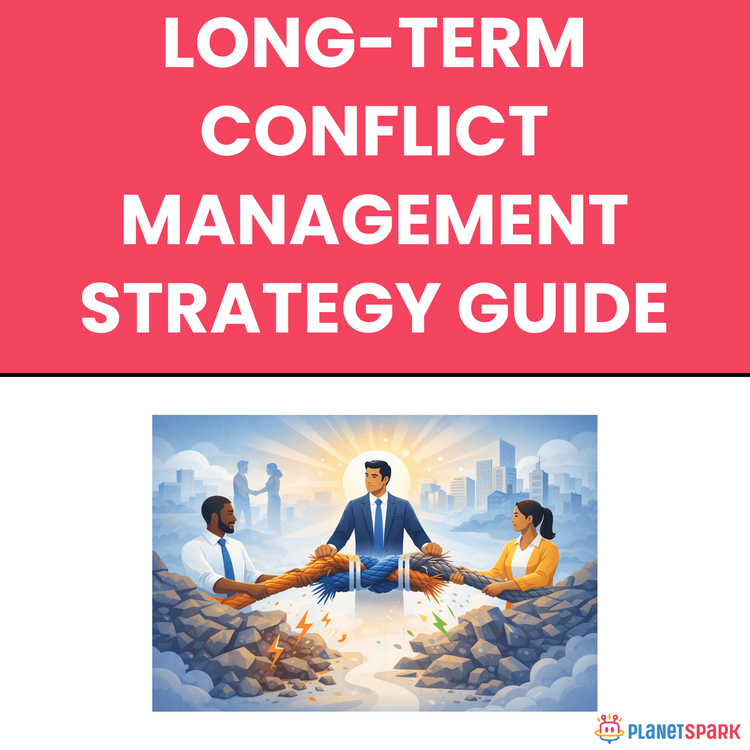
Long-Term Conflict Management Strategy Guide
Long-Term Conflict Management Strategy Guide: A Practical Framework to Resolve Workplace Conflicts Permanently
Most professionals don’t struggle with conflict because they lack intelligence or intent—they struggle because they don’t have a long-term system.
A disagreement gets “resolved,” but resurfaces weeks later. A tense conversation ends politely, but the underlying issue remains. Over time, small unresolved conflicts turn into patterns of frustration, misalignment, and even broken trust.
This is the gap the Long-Term Conflict Management Strategy Guide is designed to solve.
Instead of helping you manage one conversation at a time, this guide gives you a structured, end-to-end system to diagnose, address, and sustainably resolve workplace conflict—so it doesn’t keep coming back.
Who Is This Resource For?
This guide is built for professionals who want to move beyond reactive conflict handling and develop long-term capability.
It is especially valuable for:
- Managers responsible for team dynamics, performance, and cohesion
- Consultants handling high-stakes client relationships and expectations
- Mid-career professionals dealing with recurring workplace tensions
- Career switchers adapting to new team cultures and communication styles
- Individual contributors who want to handle conflict confidently and professionally
If you’ve ever “resolved” a conflict only to see it return later, this resource will help you fix the root—not just the symptoms.
What Does This Resource Contain?
This is a comprehensive, structured playbook—not a surface-level guide.
Inside, you’ll find:
- A complete conflict management system
Covering before, during, and after the conversation—not just the interaction itself
- Conflict diagnosis framework
Learn to identify four core conflict types:
- Task conflict (work-related disagreements)
- Process conflict (how work gets done)
- Relationship conflict (interpersonal tension)
- Status conflict (authority and recognition issues)
- Conflict Diagnosis Worksheet
A structured tool to clarify facts, identify root causes, and define desired outcomes before engaging
- Pre-conversation preparation system
A three-part approach:
- Regulate emotions
- Research context
- Rehearse your opening
- Pre-Conversation Readiness Checklist
A practical checklist to ensure you enter conversations prepared—not reactive
- The CLEAR Framework for live conversations
A five-step structure:
- Clarify the issue
- Listen actively
- Explore underlying interests
- Agree on solutions
- Record commitments
- Active listening techniques
Practical tools to improve understanding, reduce defensiveness, and move conversations forward
- Post-conflict resolution system
A structured follow-through model:
- Document agreements
- Check in regularly
- Review progress over time
- Sustain long-term change
- Post-Conflict Agreement Template
A ready-to-use format to ensure clarity, accountability, and follow-through
- Long-term skill-building modules
Covering emotional intelligence, self-regulation, and difficult conversation fluency
- Conflict escalation framework
Guidance on when and how to involve managers, HR, or third parties
- Manager-specific frameworks
Tools to handle team conflicts, intervene early, and design better systems
- Real-world case study
A practical example showing how structured conflict management leads to lasting resolution
- 30-day action plan
A step-by-step roadmap to apply everything in real situations
Summary of the Resource
This guide helps you stop treating conflict as a one-time event—and start managing it as an ongoing professional skill.
Instead of reacting in the moment, you learn how to:
- Diagnose the real cause of conflict
- Prepare strategically before conversations
- Navigate discussions with structure and clarity
- Document and sustain resolutions over time
- Identify and fix recurring patterns
In short, it gives you a repeatable system to handle conflict effectively—and permanently.
How Will This Resource Be Useful?
The value of this guide lies in its ability to create long-term change, not just short-term fixes.
By applying this resource, you will:
- Resolve conflicts at the root instead of repeatedly addressing symptoms
- Communicate clearly under pressure without escalating tension
- Build stronger professional relationships through structured conversations
- Reduce recurring conflicts caused by misalignment or unclear systems
- Improve your reputation as someone who handles difficult situations effectively
- Increase confidence in high-stakes conversations
- Create alignment within teams and projects
One of the most important insights from this guide is that recurring conflict is rarely a personality issue—it is often a system issue. Once you start identifying patterns, your approach becomes more strategic and far more effective.
How Should You Use This Resource?
To get the most value, use this guide as an ongoing reference—not a one-time read.
1. Start with a full read-through
Understand the complete system and how each module connects.
2. Use the diagnosis tools first
Before reacting to any conflict, complete the Conflict Diagnosis Worksheet.
3. Prepare deliberately
Use the preparation framework and checklist before entering conversations.
4. Apply the CLEAR framework in real time
Use it as your mental structure during difficult discussions.
5. Always document outcomes
Use the agreement template to ensure clarity and accountability.
6. Follow through consistently
Check in, review progress, and address any recurrence early.
7. Build long-term capability
Use the self-assessment and 30-day plan to improve your skills over time.
Action Steps
If you want to start applying this resource immediately, follow these steps:
1. Identify one unresolved or recurring conflict
2. Complete the Conflict Diagnosis Worksheet for it
3. Clarify the type of conflict and desired outcome
4. Prepare your opening statement using the provided structure
5. Schedule and conduct the conversation using the CLEAR framework
6. Document the agreement within 48 hours
7. Schedule a follow-up check-in within two weeks
Even one structured application of this system can significantly change the outcome of a difficult situation.
Conflict is not something you eliminate from your career—it’s something you learn to manage well.
The professionals who grow into leadership roles are not the ones who avoid conflict. They are the ones who handle it with clarity, structure, and consistency—and who ensure that once a problem is solved, it stays solved.
This guide gives you exactly that capability: a long-term system for turning conflict into alignment, trust, and better outcomes.
Book your free session today!