
Managing Cognitive Load at Work

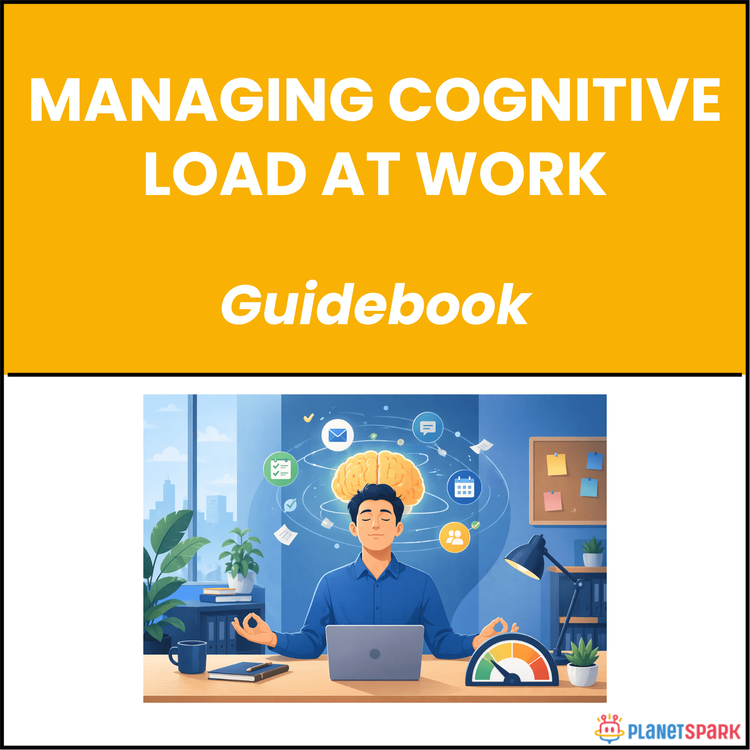
Managing Cognitive Load at Work
Reducing Mental Overload and Improving Focus with Better Cognitive Load Management: A Practical Guide to Improve Focus, Reduce Burnout, and Perform at Your Best
If you often end your workday feeling exhausted—but struggle to explain what actually drained you—you’re not alone. Many professionals mistake long hours and constant busyness for productivity, when in reality, they are operating under hidden cognitive overload.
You start the day with clarity, but by midday, decisions feel harder, focus weakens, and even simple tasks take longer. It’s not a lack of discipline or capability—it’s a capacity problem. Your brain has limits, and most modern work environments unknowingly push those limits every day.
That’s exactly why the resource “Managing Cognitive Load at Work” exists. It is designed to help working professionals understand how their mental energy is being used—and more importantly, how to manage it intentionally to improve performance without burning out.
This guide goes beyond generic productivity advice. It gives you structured frameworks, practical tools, and real-world systems to help you protect your mental bandwidth, reduce unnecessary strain, and consistently do high-quality work.
Who Is This Resource For?
This resource is especially valuable if you are:
- A working professional (0–15 years of experience) juggling multiple responsibilities
- A manager or team lead dealing with constant meetings, decisions, and interruptions
- A consultant or knowledge worker managing multiple clients or projects
- A career switcher adapting to new, cognitively demanding roles
- Someone who feels mentally drained despite being productive
- A professional struggling with focus, decision fatigue, or constant context switching
If you feel busy all day but not truly effective, this guide will help you understand why—and fix it.
What Does This Resource Contain?
This is not a theoretical guide. It is a structured system you can directly apply to your daily work.
Inside the resource, you’ll find:
- A clear explanation of what cognitive load is and how it impacts performance
- The three types of cognitive load (Intrinsic, Extraneous, Germane) and how to manage each
- A Cognitive Load Audit to identify where your mental energy is being drained
- A 5-step system to redesign how you work:
- Protect your peak focus hours (Cognitive Calendar)
- Reduce decision fatigue (Decision Diet)
- Eliminate unnecessary mental clutter (CLEAR Framework)
- Invest in growth-focused thinking (Germane Load strategy)
- Build active recovery into your day (Cognitive Reset Protocol)
- The FOCUS Framework—a complete daily operating system for managing attention and energy
- Ready-to-use templates like:
- Daily Cognitive Planner
- Weekly FOCUS Review
- A 30-action implementation checklist (quick wins, weekly, and monthly actions)
- Real-world case study showing transformation from overload to control
- Common cognitive load mistakes and how to fix them
- A self-evaluation tool to track your progress over time
- Practical guidance for managers to reduce team cognitive overload
Everything is designed for immediate application—not passive reading.
Summary of the Resource
“Managing Cognitive Load at Work” is a practical, action-oriented guide that helps you understand how your mental energy is being consumed—and how to take control of it.
It enables you to reduce unnecessary mental strain, protect your focus, make better decisions, and sustain high performance without burnout. Instead of working harder, you learn how to work with your brain more intelligently.
How Will This Resource Be Useful?
This resource helps you move from constant mental fatigue to structured, sustainable performance.
You’ll gain:
- Clarity on what is actually draining your mental energy
- The ability to distinguish between meaningful work and unnecessary cognitive load
- Better focus by aligning important tasks with peak energy hours
- Reduced decision fatigue through smarter systems and routines
- Higher-quality output with fewer errors and less rework
- Improved consistency in performance across the workday
- Practical strategies to prevent burnout—not just react to it
Most importantly, it helps you shift from reactive work patterns to intentional, controlled execution.
How Should You Use This Resource?
To get the best results, follow a structured approach:
Start by reading the guide once to understand the overall concepts and frameworks. This gives you a complete picture of how cognitive load works.
Next, complete the Cognitive Load Audit. This step is critical—it helps you identify your biggest drains and missed opportunities.
Then, begin implementing the 5-step system:
- Protect your peak hours first
- Reduce unnecessary decisions
- Eliminate environmental and workflow clutter
- Allocate time for growth
- Build recovery into your daily routine
After that, start using the templates like the Daily Planner and Weekly Review to make these practices consistent.
Finally, use the checklist and self-evaluation sheet to track progress and refine your system over time.
You can revisit this resource whenever:
- Your workload increases
- You feel mentally overwhelmed
- You take on a new role or responsibility
- You want to improve performance without increasing effort
Action Steps
After accessing this resource, take these steps immediately:
1. Block 60–90 minutes for focused implementation
2. Complete the Cognitive Load Audit honestly
3. Identify your peak focus hours and protect them in your calendar
4. Eliminate at least 2 sources of unnecessary mental clutter
5. Implement one recovery habit (micro-breaks, brain dump, or transition ritual)
6. Use the Daily Cognitive Planner for the next 3 days
7. Schedule a weekly 15-minute review to refine your system
Small, consistent changes here can significantly improve how you think, work, and perform.
Your ability to perform at a high level is not just about skill or effort—it’s about how well you manage your cognitive resources. When you reduce unnecessary load and protect your mental bandwidth, everything improves: focus, decision-making, output quality, and overall wellbeing.
This resource is not just about productivity—it’s about building a sustainable way of working that allows you to perform at your best without constant exhaustion.
Book your free session today!