
Managing Cognitive Load During Heavy Work Periods

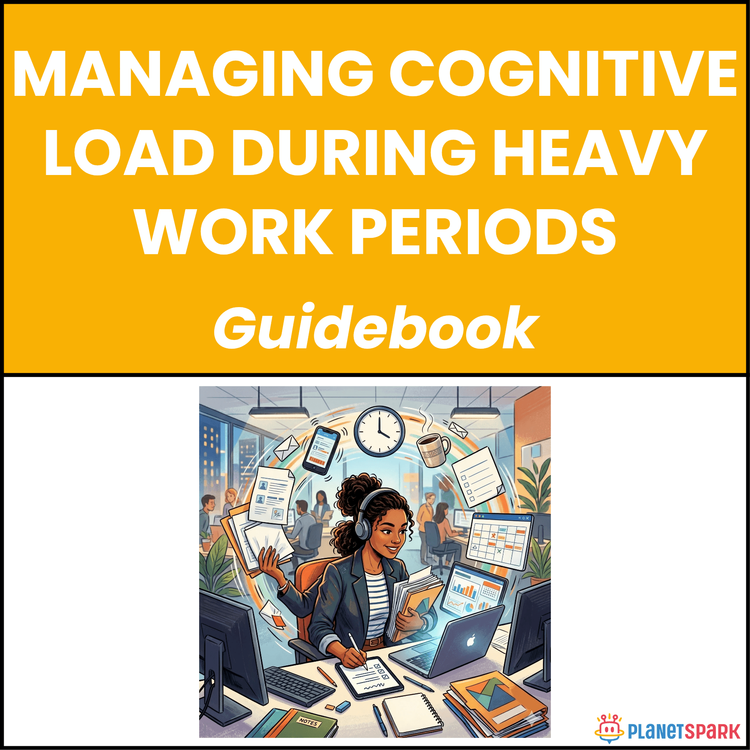
Managing Cognitive Load During Heavy Work Periods
Improve Cognitive Load Management for Peak Performance: A Guide to Thriving During Heavy Work Periods
Have you ever felt mentally overwhelmed, juggling multiple projects, meetings, and deadlines — only to find that your performance is suffering? It’s not your work ethic or time management; it’s your cognitive load. When your brain is overloaded, performance takes a hit. Cognitive overload is a hidden productivity killer, causing slow thinking, mistakes, and decision fatigue. But the good news is, it can be managed. The "Managing Cognitive Load During Heavy Work Periods" guidebook offers a clear, actionable framework for professionals who want to think clearly, decide confidently, and perform at their best — even when everything is happening at once. This guide equips you with tools to optimize your cognitive capacity and tackle demanding periods without burnout.
Who Is This Resource For?
This resource is ideal for:
- Career switchers who need to manage high cognitive demands while transitioning to a new role.
- Early-career professionals who want to build a strong foundation of effective work practices.
- Consultants and managers who are responsible for complex tasks and need to ensure alignment with their teams and stakeholders.
- Anyone who struggles with decision fatigue, mental fog, or feeling overwhelmed during peak work periods.
If you’re looking to handle complex work without burning out, this guide will help you optimize your mental bandwidth and sustain peak performance.
What Does This Resource Contain?
The guidebook offers practical strategies to manage cognitive load across three phases:
1. Before the Sprint: Set up your mental architecture for success. This phase focuses on preparation — including conducting a cognitive audit, pre-deciding priorities, and reducing decision fatigue.
2. During the Sprint: Learn how to protect your mental bandwidth by prioritizing tasks, time-boxing work, and using external memory systems to reduce cognitive overload.
3. After the Sprint: Focus on recovery by closing the loop, celebrating completion, and scheduling active recovery time to rebuild cognitive capacity for the next sprint.
In addition to the strategies, the guide provides worksheets and frameworks like the Cognitive Triage Method, CLEAR Framework, and Pre-Sprint Preparation Checklist to help you manage and optimize cognitive load effectively.
Summary of the Resource
"Managing Cognitive Load During Heavy Work Periods" is not just a guide on time management — it’s a comprehensive framework for protecting your cognitive resources during high-stress work periods. By preparing in advance, making intentional decisions during the sprint, and recovering effectively after it ends, you can maintain high performance without succumbing to burnout. This guide helps you understand cognitive load, identify its causes, and implement strategies to manage it, ensuring that you can perform at your best, even when everything seems urgent.
How Will This Resource Be Useful?
Implementing the strategies in this guide will provide you with several benefits:
- Increased Mental Clarity: By managing cognitive load, you’ll experience less mental fog, enabling clearer thinking and better decision-making.
- Reduced Stress: You’ll avoid cognitive overload by applying practical techniques to prioritize, offload, and protect your mental bandwidth.
- Improved Productivity: By aligning your tasks with your cognitive capacity, you’ll achieve more with less effort, producing higher-quality work in less time.
- Sustained High Performance: This framework allows you to maintain productivity over the long term, avoiding burnout and ensuring you can handle heavy work periods without long-term negative effects.
How Should You Use This Resource?
To make the most of this guide, follow these steps:
1. Read Sections 1–3 Before Your Next Heavy Work Period: Understand the science of cognitive load, its impact on your performance, and the tools to manage it effectively.
2. Use the Tools and Checklists: Implement the Cognitive Triage Method and Pre-Sprint Preparation Checklist to structure your upcoming work period for maximum focus and productivity.
3. During the Sprint: Apply strategies like time-boxing, protecting deep work, and using external memory systems to keep your cognitive load manageable.
4. Post-Sprint Recovery: Once the sprint ends, complete the Post-Sprint Reflection Worksheet to evaluate what worked, what drained you, and how to improve for the next period.
5. Repeat Regularly: Build the habit of cognitive load management. The more consistently you apply these strategies, the more natural they will become.
Action Steps
Here’s what you can do immediately to apply these strategies:
1. Conduct a Cognitive Audit: Write down all tasks, decisions, and open loops competing for your mental attention. This will reduce mental clutter before you dive into the next project.
2. Pre-Decide Priorities: Identify the three most important tasks requiring your deepest thinking and schedule them during your peak energy hours.
3. Implement the Cognitive Triage Method: Prioritize tasks based on their complexity, importance, and urgency to ensure your mental capacity is used efficiently.
4. Schedule Active Recovery: Block time after your sprint to focus on recovery. Use low-stakes tasks, rest, and re-energizing activities to rebuild cognitive resources.
Closing:
Cognitive load is one of the most critical factors in professional performance, yet it’s often overlooked. By applying the strategies in "Managing Cognitive Load During Heavy Work Periods," you can optimize your cognitive capacity, make better decisions, and deliver high-quality work even when the pressure is on. This guide equips you with the tools to navigate demanding periods with clarity, confidence, and a sustainable approach to high performance. Start applying these techniques today to manage your cognitive load and improve your productivity.