
Managing Emotional Reactions at Work Guide

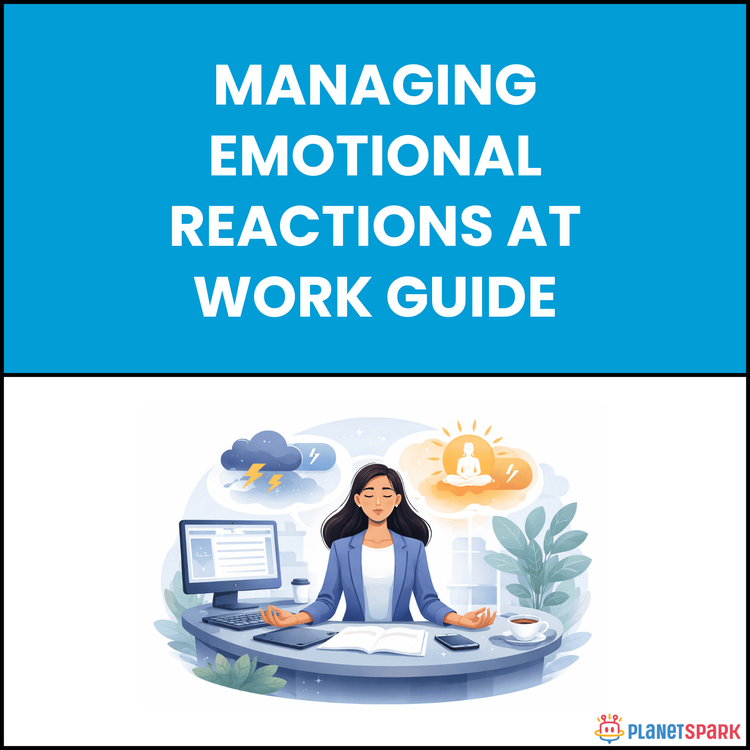
Managing Emotional Reactions at Work Guide
Managing Emotional Reactions at Work: A Practical Guide to Staying Composed, Credible, and in Control
You’re in a meeting. Someone challenges your work. Your heart rate rises. You either react instantly—or say nothing and carry the frustration for hours.
Most professionals have experienced this moment. And yet, very few are taught how to handle it effectively.
The reality is simple: it’s not the emotion that impacts your career—it’s your reaction to it. A single poorly handled moment can damage credibility, while a well-managed response can strengthen your professional presence instantly.
That’s exactly why the resource “Managing Emotional Reactions at Work” exists. It gives you a clear, practical system to recognise, regulate, and respond to emotional triggers—so you can stay composed and in control, even in high-pressure situations.
Who Is This Resource For?
This resource is especially valuable if you are:
- A working professional with 0–15 years of experience
- A manager handling high-stakes conversations or team pressure
- A consultant navigating client expectations and feedback
- A career switcher adapting to new workplace environments
- An early–mid career professional struggling with emotional reactions under stress
- Someone who wants to improve emotional intelligence and professional presence
If you want to respond with clarity instead of reacting impulsively, this guide is built for you.
What Does This Resource Contain?
This is not a theory-heavy emotional intelligence guide. It is a structured, practical toolkit designed for real workplace situations.
Inside the resource, you’ll find:
- A clear explanation of why emotional reactions happen (including the concept of “amygdala hijack”)
- The 3-phase emotional regulation model: Before, During, and After
- A deep-dive into emotional triggers, body signals, and behavioural patterns
- The Emotional Trigger Map worksheet to build self-awareness
- Real-time regulation strategies like:
- STOP framework (Stop, Take a Breath, Observe, Proceed)
- Box breathing technique
- “Name it to tame it” emotional labelling
- Strategic clarifier questions to create pause
- Physical grounding techniques
- A checklist to differentiate emotional regulation vs suppression
- The After-Action Debrief framework for structured reflection
- Emotional vocabulary upgrade to improve emotional clarity
- A real-world case study showing these tools in action
- The 5 most common emotional reaction mistakes—and how to fix them
- Professional communication scripts for expressing emotions effectively
- Scenario-based strategies (feedback, conflict, presentations, organisational change)
- A self-evaluation score to assess your emotional regulation maturity
- A one-page quick reference sheet for easy recall
- A 30-day practice plan to build consistent emotional regulation habits
Every section is designed for immediate application—not passive reading.
Summary of the Resource
“Managing Emotional Reactions at Work” is a practical, step-by-step guide that helps professionals move from reactive behaviour to intentional response.
It combines neuroscience-backed insights with simple, repeatable frameworks that you can use before, during, and after emotionally charged situations.
If you want to improve how you think, respond, and communicate under pressure, this resource gives you a complete system to do so.
How Will This Resource Be Useful?
This resource helps you move from reactivity to control.
You’ll gain:
- Greater self-awareness of your emotional triggers and patterns
- The ability to pause and respond instead of reacting impulsively
- Practical tools to stay calm in high-stakes conversations
- Stronger professional communication during conflict or feedback
- Reduced stress and emotional carryover after difficult situations
- Improved credibility, composure, and leadership presence
Most importantly, it helps you protect and strengthen your professional reputation—especially in moments that matter most.
How Should You Use This Resource?
To get the best results, use this guide in a structured way:
Start by reading through the entire guide once. This gives you a complete understanding of the frameworks and how they connect.
Next, focus on the “Before” phase. Complete the Emotional Trigger Map and identify your top triggers, body signals, and patterns.
Then, practise the “During” tools in low-stakes situations. Use techniques like STOP, box breathing, and emotional labelling so they become natural when pressure rises.
After any emotionally charged situation, apply the “After” phase. Use the After-Action Debrief to reflect, learn, and improve your response for next time.
Finally, follow the 30-day practice plan to turn these tools into habits. Consistency—not intensity—is what builds emotional mastery.
You can also revisit specific sections whenever you’re preparing for or recovering from a difficult workplace situation.
Action Steps
After accessing this resource, take these steps immediately:
1. Identify 2–3 situations that typically trigger emotional reactions for you
2. Complete the Emotional Trigger Map worksheet honestly
3. Memorise the STOP framework and practise it daily
4. Use one real-time regulation technique in your next conversation
5. Complete an After-Action Debrief after your next difficult interaction
6. Commit to the 30-day practice plan for consistent improvement
Small, consistent actions here can significantly improve your professional behaviour and outcomes.
Emotional reactions are not a weakness—they are part of being human. What sets high-performing professionals apart is their ability to manage those reactions with awareness, intention, and control.
This guide gives you the structure to do exactly that. Use it consistently, and you’ll not only handle pressure better—you’ll become someone others trust, respect, and rely on in challenging situations.
Book your free session today!