
Managing High Performers Vs Low Performers

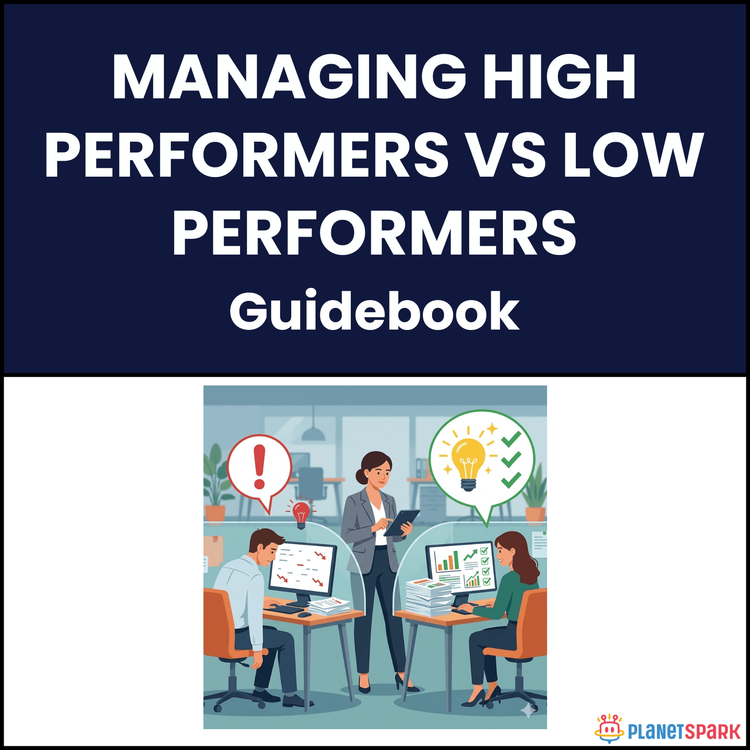
Managing High Performers Vs Low Performers
Managing High Performers vs Low Performers: A Practical Guide for Managers to Improve Team Performance
Most managers don’t struggle because they lack intent—they struggle because they use the same approach for everyone.
You might be running regular check-ins, giving feedback, and setting goals. On the surface, it feels fair. But over time, something starts to break. Your high performers feel underutilised or unnoticed. Your low performers continue to struggle without clear direction. And your core team begins to question what “good performance” actually means.
This is one of the most common—and costly—mistakes in performance management.
That’s exactly why the resource “Managing High Performers vs Low Performers” exists. It helps you move from a one-size-fits-all approach to a structured, differentiated system that improves performance, retention, and team morale—without adding unnecessary complexity to your role.
Who Is This Resource For?
This guidebook is especially valuable if you are:
- A manager or team lead responsible for team performance
- A consultant advising clients on team effectiveness or leadership
- A mid-career professional stepping into people management roles
- A founder or business owner building and managing teams
- Someone struggling to balance high performers and underperformers effectively
- A professional who wants to handle performance conversations with clarity and confidence
If you want to become more intentional, fair, and effective in how you manage people, this resource is built for you.
What Does This Resource Contain?
This is not a theoretical leadership guide. It is a practical toolkit designed for real-world application.
Inside the resource, you’ll find:
- A clear performance tier framework (High, Core, Low performers) to remove subjectivity
- The Will–Skill Matrix to diagnose root causes of performance issues accurately
- Proven strategies to stretch and retain high performers without burnout
- Structured frameworks to support low performers with clarity and accountability
- The SBI (Situation–Behaviour–Impact) feedback model for effective conversations
- A complete 30–60–90 day performance improvement plan template
- High-performer check-in frameworks for meaningful one-on-ones
- Communication strategies tailored for different performance levels
- Reflection worksheets to identify your own management blind spots
- Real-world scenarios showing how effective managers respond in practice
- A 90-day performance management checklist for consistent execution
- A complete performance conversation playbook for structured discussions
- Key metrics to track your effectiveness as a manager
Everything is designed to help you take action immediately—not just understand concepts.
Summary of the Resource
“Managing High Performers vs Low Performers” is a structured, action-oriented guide that helps you differentiate your management approach based on performance levels.
It gives you the tools to:
- Identify performance accurately
- Diagnose the real reasons behind it
- Take the right action with the right people
- Maintain fairness, clarity, and team morale
If you want to improve team outcomes without guesswork, this resource provides a clear system to follow.
How Will This Resource Be Useful?
This guide helps you move from reactive management to intentional leadership.
You’ll gain:
- Clarity on how to identify and define performance levels objectively
- Confidence in handling difficult performance conversations
- Practical tools to support struggling employees effectively
- Strategies to retain and grow your top performers
- Improved team morale through fair and transparent management
- A repeatable system you can use across performance cycles
Most importantly, it helps you avoid the two biggest risks in team management: losing your best people and neglecting those who need support.
How Should You Use This Resource?
To get the best results, use this guide in a structured way:
Start by reading the guide end-to-end once to understand the full performance management system and how each framework connects.
Next, map your current team using the performance tier framework and the Will–Skill Matrix. This step alone will give you immediate clarity.
Then, apply the relevant strategies:
- Use stretch strategies and check-in frameworks for high performers
- Use diagnostic tools and structured plans for low performers
Before any performance conversation, prepare using the SBI model and the conversation playbook to ensure clarity and impact.
Finally, use the 90-day checklist and reflection worksheet to track your consistency and improve your approach over time.
You can revisit specific sections whenever you:
- Prepare for one-on-ones
- Conduct performance reviews
- Handle underperformance issues
- Plan team development strategies
Action Steps
After going through this resource, take these steps immediately:
1. Map your team into High, Core, and Low performers
2. Plot each team member on the Will–Skill Matrix
3. Identify one high performer to invest in and one low performer to support
4. Schedule one focused conversation with each (using the provided frameworks)
5. Prepare one SBI-based feedback example before your next conversation
6. Start building a 30–60–90 day support plan if required
7. Use the 90-day checklist to structure your next performance cycle
Small, consistent actions here can dramatically improve team outcomes.
Great managers don’t treat everyone the same—they treat everyone fairly, based on what they need to succeed. When you differentiate your approach, you create an environment where high performers thrive, struggling employees improve, and the entire team moves forward with clarity and trust.
Use this resource not just to manage performance, but to elevate how you lead, communicate, and build high-performing teams over time.
Book your free session today!