
Managing Interruptions Effectively Framework

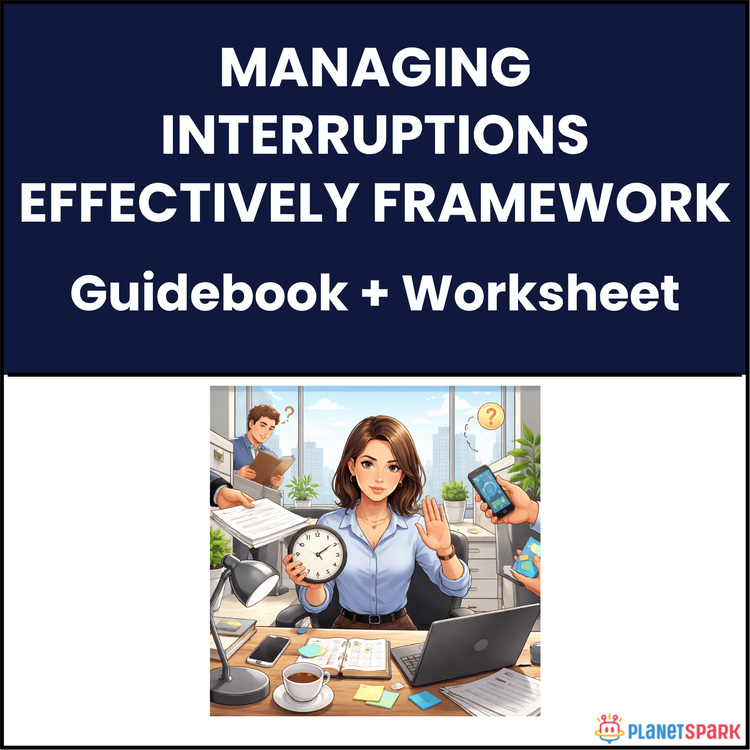
Managing Interruptions Effectively Framework
Stay Focused at Work: A Guide to Managing Interruptions Effectively
If your workdays feel constantly interrupted—messages, meetings, emails, quick “can you just…” requests—you’re not imagining it. Most professionals struggle to stay focused long enough to do meaningful work. And the real cost isn’t just lost time. It’s reduced quality, rising stress, and the frustration of always feeling busy but not productive.
Research shows it can take over 20 minutes to regain deep focus after a single interruption. Multiply that across your day, and it becomes clear why even high performers feel stuck in reactive mode.
That’s exactly why the resource “Managing Interruptions Effectively” exists. It’s designed to help working professionals reclaim control of their time, protect their focus, and respond to interruptions with clarity instead of frustration.
This is not about ignoring people or becoming unavailable. It’s about becoming intentional—knowing when to engage, when to defer, and how to recover quickly when your focus is disrupted.
Who Is This Resource For?
This resource is especially valuable if you are:
- A working professional (0–15 years of experience) struggling with constant distractions - A manager or team lead balancing availability with deep work responsibilities
- A consultant or specialist handling multiple stakeholders and priorities
- A career switcher trying to build credibility through high-quality work
- Someone who feels “busy all day” but struggles to complete meaningful tasks
- A professional who wants better focus without damaging workplace relationships
If you want to do deeper, higher-quality work without becoming unresponsive, this guide is built for you.
What Does This Resource Contain?
This is a structured, practical system—not generic advice. It combines frameworks, worksheets, and real-world strategies you can apply immediately.
Inside the resource, you’ll find:
- The Managing Interruptions Effectively (MIE) Framework built around Before, During, and After phases
- A detailed Interruption Audit to identify where your time is actually going
- A breakdown of internal vs external interruptions (a key blind spot for most professionals)
- A Focus Architecture system to proactively design your work environment
- A Deep Work Calendar Blueprint to structure your week effectively
- Step-by-step strategies to configure your digital environment and reduce distractions
- An Interruption Triage Matrix to make smarter in-the-moment decisions
- Ready-to-use professional response scripts to handle interruptions confidently
- A Notification Reset system to reduce digital overload
- Focus recovery techniques to regain momentum quickly after interruptions
- Practical worksheets to personalise your system
- A 30-day implementation tracker to build consistency
- A 7-day fast-start plan for immediate action
Everything is designed for real-world application, not passive reading.
Summary of the Resource
“Managing Interruptions Effectively” is a practical, action-oriented guide that helps professionals move from reactive workdays to intentional execution.
It gives you a complete system to:
- Understand your interruption patterns
- Prevent unnecessary distractions
- Respond intelligently in the moment
- Recover quickly when focus is broken
If you want to improve your productivity without working longer hours, this resource gives you a clear path to do it.
How Will This Resource Be Useful?
This resource helps you shift from constant interruption to controlled focus.
You’ll gain:
- Clear awareness of where your time and attention are being lost
- Strong systems to protect deep work without relying on willpower
- Confidence in handling interruptions without feeling rude or unavailable
- Faster recovery after distractions, reducing wasted time
- Better quality work output due to sustained focus
- Reduced stress and mental fatigue throughout the day
- Improved professional reputation as someone who delivers thoughtful, high-quality work
Most importantly, it helps you stop reacting to everything—and start working with intention.
How Should You Use This Resource?
To get the best results, follow a structured approach:
First, read through the guide once to understand the full framework. This gives you clarity on how all parts connect.
Next, begin with the Interruption Audit. Track your interruptions for two days without changing anything. This step is critical for building awareness.
Then, design your Focus Architecture. Schedule deep work blocks, adjust your environment, and define your availability.
After that, practice interruption triage. Use the decision framework and scripts to handle real-time interruptions more effectively.
Finally, build your recovery habits. Use techniques like “re-entry notes” and micro-sprints to regain focus quickly after disruptions.
Revisit the guide regularly to refine your system based on real-world experience.
Action Steps
After accessing this resource, take these steps immediately:
1. Block 15–30 minutes to read the framework overview
2. Start your 2-day interruption audit (track everything honestly)
3. Identify your top 3 sources of interruption
4. Schedule at least 2 deep work blocks in your calendar this week
5. Turn off non-essential notifications during focus time
6. Practice one interruption response script daily
7. Use a simple recovery method after every interruption
Small, consistent changes here can dramatically improve your focus and output.
Interruptions are unavoidable—but being controlled by them is not. When you build systems to manage your attention, you don’t just get more done—you do better work, with less stress and more clarity.
Use this resource not just to improve your productivity, but to take ownership of how you work, how you respond, and how you grow in your career.
Book your free session today!