
Managing Remote Teams Effectively

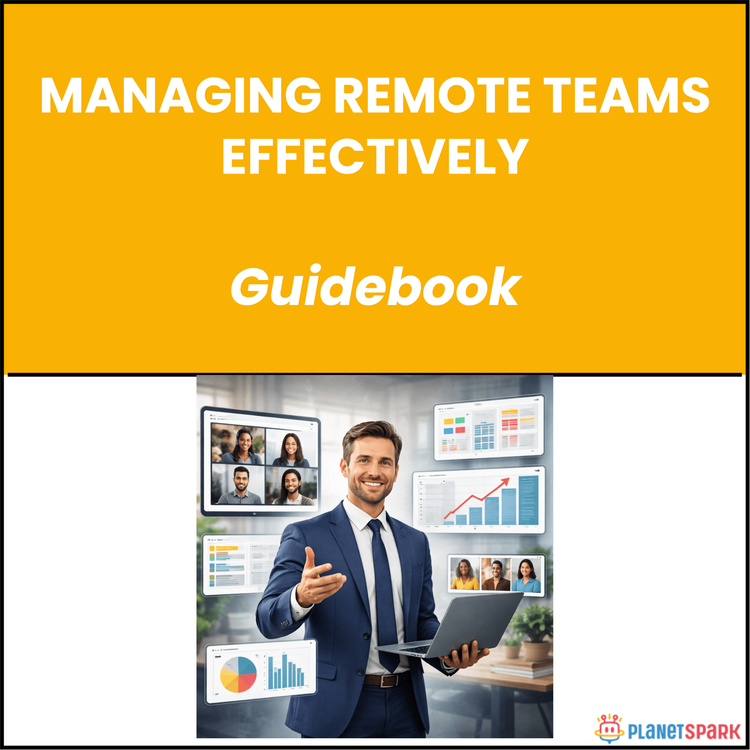
Managing Remote Teams Effectively
Managing Remote Teams Effectively: A Practical Guide for Leaders
Remote leadership is not about replicating office culture online—it’s about designing a distributed environment where clarity, trust, and connection are built into every system. That’s why the resource “Managing Remote Teams Effectively” was created: a structured, action-oriented worksheet that helps leaders reflect, plan, and strengthen their remote leadership practice with practical prompts and tools.
This guide provides a step-by-step framework to help managers lead distributed teams with confidence and measurable impact.
Who Is This Resource For?
This resource is especially valuable if you are:
- A mid- to senior-level professional leading remote or hybrid teams
- A manager struggling with communication, trust, or accountability in distributed settings
- A consultant guiding organisations through remote work transitions
- A leader seeking to prevent burnout and strengthen team wellbeing
- Anyone who wants to build high-performing, connected remote teams
What Does This Resource Contain?
Inside the resource, you’ll find:
- Reflection prompts to assess your remote leadership baseline
- Frameworks for setting clear expectations across time zones
- Communication rhythm design (standups, 1:1s, retrospectives, async updates)
- Trust-building behaviours and pitfalls to avoid
- Goal-setting and performance management using OKRs/SMART goals
- Best practices for running effective remote meetings
- Wellbeing toolkits to prevent burnout and support recovery
- Conflict resolution frameworks tailored for remote environments
- Common mistakes remote leaders make—and how to avoid them
- A remote leadership action plan template
- Quick reference cheat sheets with weekly non-negotiables and red flags
Summary of the Resource
“Managing Remote Teams Effectively” is a practical toolkit that helps leaders move from reactive to intentional remote leadership. It provides structured frameworks for communication, trust, performance, and wellbeing—ensuring distributed teams stay aligned, engaged, and productive. More than a worksheet, it’s a system for building sustainable remote cultures.
How Will This Resource Be Useful?
By applying this resource, you will:
- Gain clarity on your current remote leadership practices
- Set explicit expectations to eliminate ambiguity
- Design communication rhythms that balance sync and async work
- Build trust across distance with consistent behaviours
- Manage performance through outcomes, not presence
- Run meetings that drive decisions and respect time
- Protect team wellbeing and prevent burnout
- Resolve conflicts quickly by escalating the medium
- Avoid common traps like micromanagement or neglecting career development
- Create a concrete action plan for remote leadership improvement
How Should You Use This Resource?
To get the best results:
1. Complete the baseline reflection prompts honestly.
2. Audit and strengthen team expectations using the provided framework.
3. Map your communication cadence and adjust for balance.
4. Adopt trust-building behaviours consistently.
5. Co-create goals with your team using OKRs or SMART.
6. Apply the remote meeting checklist before every session.
7. Use wellbeing check-ins in your 1:1s.
8. Escalate conflicts to video early and document resolutions.
9. Review the cheat sheet weekly to stay sharp.
10. Translate insights into a structured action plan with deadlines.
Action Steps
After accessing this resource, take these immediate steps:
1. Write down your team’s current communication rhythm.
2. Define one SMART goal with a remote team member this week.
3. Introduce a wellbeing check-in question in your next 1:1.
4. Audit your trust-building behaviours and commit to one improvement.
5. Apply the conflict resolution framework to any ongoing tension.
6. Share your top three priorities with your team for alignment.
Remote leadership is not about managing presence—it’s about managing outcomes. With this resource, you’ll have the clarity, systems, and tools to lead distributed teams effectively, building trust, accountability, and sustainable performance.
Book your free session today!