
Managing Workplace Biases and Perceptions

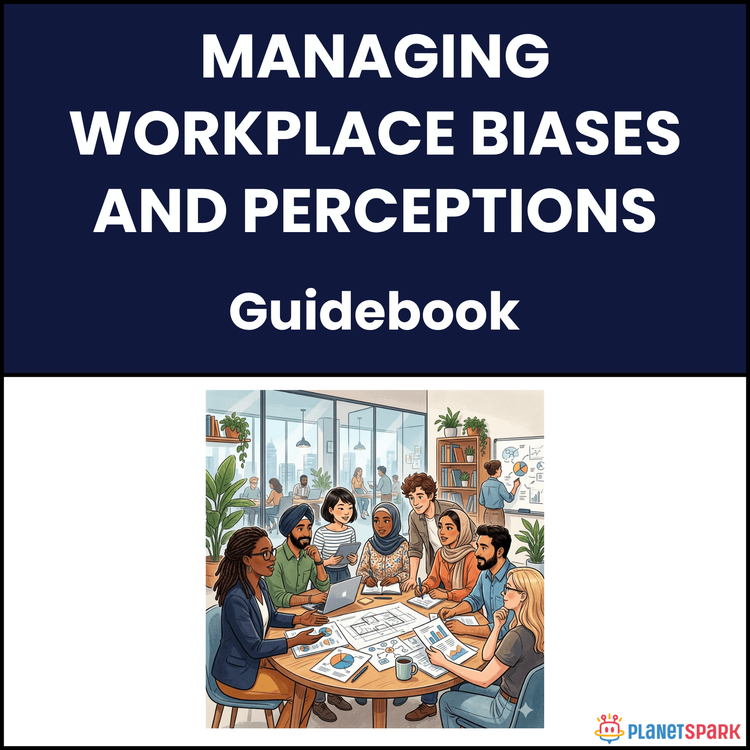
Managing Workplace Biases and Perceptions
Managing Workplace Biases and Perceptions: A Practical Guide to Building Fairer, Smarter Professional Decisions
If you’ve ever felt overlooked in meetings, misjudged in performance reviews, or unsure how to respond when something at work “just doesn’t feel fair,” you’re not imagining it. Workplace bias—often subtle and unintentional—shapes decisions more than most professionals realise.
The challenge is not just that bias exists. It’s that most professionals don’t know what to do about it in real time.
That’s exactly why the resource “Managing Workplace Biases and Perceptions” was created. It goes beyond awareness and gives you practical tools to recognise, manage, and respond to bias—whether you’re making decisions, influencing others, or navigating perceptions about yourself.
This is not theory. It’s a hands-on guide to becoming more intentional, fair, and effective in how you work with people.
Who Is This Resource For?
This guide is especially valuable if you are:
- A working professional with 0–15 years of experience
- A manager or team leader responsible for hiring, evaluations, or team decisions
- A consultant or specialist influencing stakeholders and clients
- A career switcher navigating new environments and perceptions
- A professional who feels misunderstood, underestimated, or overlooked at work
- Someone who wants to build inclusive, fair, and high-performing teams
If you want to make better decisions, build stronger professional relationships, and handle workplace dynamics with clarity, this resource is built for you.
What Does This Resource Contain?
This guidebook is structured into actionable modules, each designed to help you move from awareness to real-world application.
Inside the resource, you’ll find:
- A clear breakdown of what workplace bias is (and what it isn’t)
- The most common workplace biases such as affinity bias, confirmation bias, recency bias, and more
- The PAUSE Protocol to help you make better, less biased decisions in real time
- A Bias Awareness Self-Audit worksheet to identify your own patterns
- A structured framework to manage perceptions when you’re on the receiving end of bias
- The Perception Reframe Matrix to shift limiting professional narratives
- Practical systems for managers to reduce bias in hiring, performance reviews, and opportunity allocation
- A Bias-Aware Manager Checklist for quick, repeatable decision-making
- Ready-to-use language scripts to address bias in meetings and conversations
- A structured hiring and interview evaluation template to improve fairness
- Strategies to build psychological safety in teams
- A real-world case study showing how bias impacts promotions and outcomes
- Common mistakes professionals make when addressing bias—and how to fix them
- A personal bias readiness assessment to track your growth
- A 30-day action plan to build long-term habits
Everything is designed to be practical, repeatable, and immediately usable in your day-to-day work.
Summary of the Resource
“Managing Workplace Biases and Perceptions” is a practical guide that helps professionals recognise bias, make more objective decisions, and actively shape fairer workplace outcomes.
Instead of treating bias as an abstract concept, it gives you tools, frameworks, and language you can use in real situations—whether you’re evaluating someone, speaking up in a meeting, or managing how others perceive you.
If you invest even a few focused hours, you’ll walk away with skills that improve how you think, decide, and lead.
How Will This Resource Be Useful?
This resource helps you move from passive awareness to active control.
You’ll gain:
- The ability to recognise bias in real-time decisions
- Greater confidence in handling sensitive workplace situations
- Clear frameworks to make fair, structured, and consistent decisions
- Tools to manage how you are perceived professionally
- Practical ways to speak up without damaging relationships
- Stronger leadership capability through bias-aware systems
- Improved team trust, collaboration, and performance
Most importantly, it helps you stop relying on instinct alone—and start making decisions that are thoughtful, intentional, and credible.
How Should You Use This Resource?
To get the most value, approach this guide in a structured way:
Start by reading the full guide once to understand the big picture. This will give you context on how bias operates across different situations.
Next, focus on awareness. Use the Bias Awareness Self-Audit and practise the PAUSE Protocol in your daily decisions.
Then, move into application. Use the frameworks to:
- Evaluate people more fairly
- Manage perceptions about yourself
- Handle real workplace situations with clarity
If you’re a manager, prioritise the systems and checklists. These will help you build consistency and reduce bias across your team.
Finally, revisit the guide regularly. Use it before key moments like:
- Performance reviews
- Hiring decisions
- Important meetings
- Career conversations
This is not a one-time read. It’s a professional toolkit you’ll return to repeatedly.
Action Steps
After accessing this resource, take these steps immediately:
1. Block 45–60 minutes to read the guide end-to-end
2. Complete the Bias Awareness Self-Audit honestly
3. Apply the PAUSE Protocol in at least 3 real decisions this week
4. Identify one perception gap and map it using the Reframe Matrix
5. Use one bias-interruption phrase in a real conversation
6. Implement one structural change (checklist, template, or meeting habit)
7. Follow the 30-day action plan to build long-term habits
Small, consistent actions here can significantly improve how you work and how others experience working with you.
Bias is not something you eliminate overnight. But every better decision, every thoughtful pause, and every honest conversation moves you closer to being a more effective and respected professional.
This resource is not just about fairness—it’s about making better decisions, building stronger teams, and creating workplaces where people can do their best work without invisible barriers.
Use it consistently, apply it intentionally, and you’ll see the difference not just in outcomes—but in how confidently you navigate your professional world.
Book your free session today!