
Managing Workplace Misunderstandings Guide

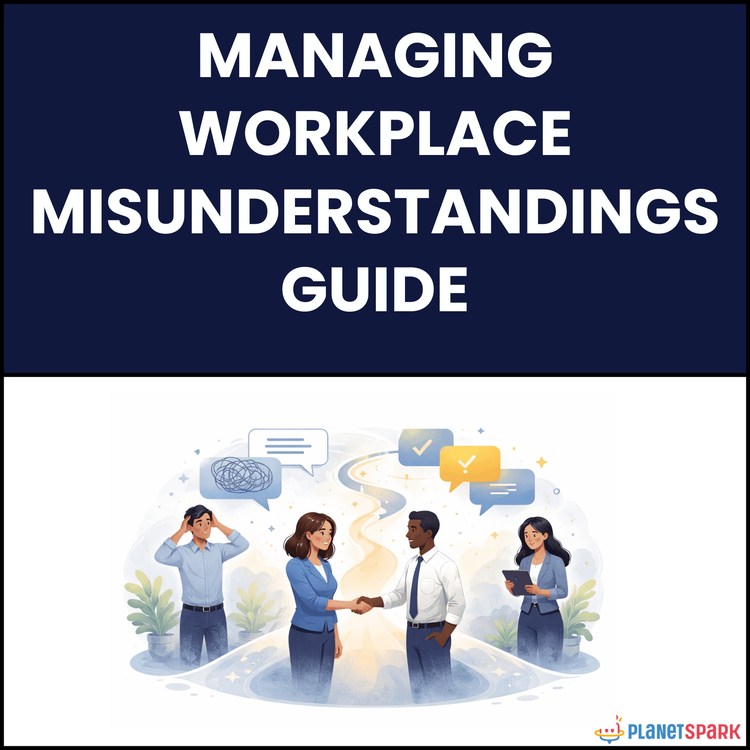
Managing Workplace Misunderstandings Guide
Conflict Resolution Improvement Guide: A Practical Framework to Handle Workplace Conflict with Clarity and Confidence
If you’ve ever found yourself in a workplace conflict thinking, “I know I should handle this better—but I don’t know how,” you’re not alone.
Most professionals understand the importance of communication, emotional control, and collaboration. But when conflict actually happens—in a meeting, over email, or during a high-pressure situation—knowing what to do in theory doesn’t always translate into action.
That’s where most advice falls short. It’s either too abstract or too generic to apply in real time.
That’s exactly why the “Conflict Resolution Improvement Guide” exists. It bridges the gap between knowing and doing—giving you a structured, practical system to navigate conflict with clarity, confidence, and consistency.
Who Is This Resource For?
This resource is especially valuable if you are:
- A working professional with 0–15 years of experience
- A manager handling team disagreements or performance conversations
- A consultant dealing with stakeholder or client conflicts
- A career switcher adapting to new workplace dynamics
- An early–mid career professional building communication and leadership skills
- Someone who wants to handle conflict more effectively without stress or confusion
If you want to stop reacting and start responding with intention, this guide is built for you.
What Does This Resource Contain?
This is not a theory-heavy guide. It is a complete, actionable playbook designed for real workplace situations.
Inside the resource, you’ll find:
- A clear explanation of why conflict is inevitable—and how to handle it productively
- A practical 5-step conflict resolution framework:
- Pause
- Diagnose
- Choose your style
- Have the conversation
- Co-create resolution
- The STOP technique to manage emotional reactions in high-pressure moments
- A deep understanding of conflict types:
- Task conflict (goals and decisions)
- Process conflict (roles and workflows)
- Relationship conflict (trust and interpersonal tension)
- The Conflict Escalation Ladder to identify when to intervene
- Diagnostic tools to uncover root causes (interests vs positions)
- Strategic conflict style selection (competing, collaborating, compromising, avoiding, accommodating)
- The SBI-I framework (Situation–Behaviour–Impact–Intent) for structured conversations
- A co-resolution framework to build mutually agreed solutions
- Active listening techniques that reduce defensiveness and build trust
- Emotional intelligence tools to manage reactions and improve communication
- A comprehensive Conflict Preparation Checklist (before, during, after conversations)
- A Conflict Mapping Worksheet to prepare for high-stakes discussions
- A real-world case study showing how these tools work together
- The 7 most common conflict mistakes—and how to avoid them
- Advanced guidance for:
- Power dynamics (manager vs employee, client vs consultant)
- Remote and hybrid team conflicts
- A self-evaluation tool to track your progress over time
- A quick-reference card for use during real conflict situations
Everything is designed for immediate application—not passive reading.
Summary of the Resource
The “Conflict Resolution Improvement Guide” is a structured, real-world playbook that helps professionals handle workplace conflict using clear frameworks, practical tools, and repeatable systems.
It simplifies complex, emotionally charged situations into actionable steps—so you can respond with clarity instead of confusion.
If you want to improve how you communicate, decide, and resolve issues under pressure, this resource gives you a complete system to do it.
How Will This Resource Be Useful?
This resource helps you move from reactive behaviour to intentional action.
You’ll gain:
- Clarity on what type of conflict you’re dealing with—and how to handle it
- Confidence in high-stakes conversations
- The ability to pause and respond instead of reacting emotionally
- Strong communication using structured frameworks like SBI-I
- Better listening skills that build trust and reduce tension
- Faster resolution of conflicts before they escalate
- Improved relationships and team collaboration
- A stronger professional reputation as someone who handles challenges effectively
Most importantly, it helps you stop avoiding conflict—and start using it as a tool for better outcomes and stronger relationships.
How Should You Use This Resource?
To get the best results, use this guide as both a learning tool and a real-time reference.
Start by reading the entire guide once to build your mental model. This helps you understand how all the frameworks connect.
Before any important conversation, use the Conflict Preparation Checklist and Conflict Mapping Worksheet. This ensures you’re clear, calm, and intentional.
During the conversation, apply the 5-step framework. Focus on listening, using the SBI-I structure, and staying aligned with shared goals.
After the conversation, reflect on what worked and what didn’t. Use the self-evaluation tool to identify one area to improve.
Over time, revisit the guide regularly. The more you apply it, the more natural these skills become.
This is not a one-time read—it’s a repeatable system for continuous improvement.
Action Steps
After accessing this resource, take these steps immediately:
1. Identify one ongoing or recent conflict situation
2. Use the Conflict Mapping Worksheet to clarify the situation
3. Write your SBI-I opening statement
4. Practise the STOP technique before your next conversation
5. Apply the 5-step framework in a real discussion
6. Reflect on the outcome and identify one improvement area
Even one well-handled conversation can significantly improve your confidence and credibility.
Conflict is not something to fear—it’s one of the most important skills in your professional journey. The people who grow fastest are not those who avoid difficult situations, but those who learn how to handle them with clarity, consistency, and intention.
This guide gives you the structure to do exactly that. Use it consistently, and you won’t just resolve conflicts better—you’ll strengthen your communication, your relationships, and your long-term career growth.
Book your free session today!