
Mapping Career Damage vs Recovery Opportunities

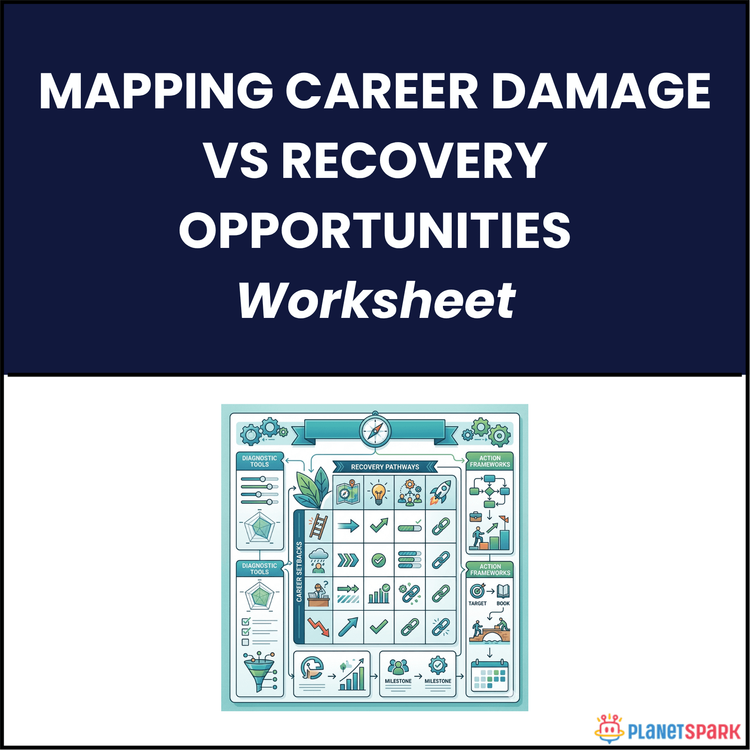
Mapping Career Damage vs Recovery Opportunities
Assessing Career Impact and Identifying Recovery Opportunities: A Practical Recovery Guide for Working Professionals
A restructuring eliminates your role. A difficult manager damages your confidence. A failed project impacts your visibility. A career pivot makes you feel like you’re starting from zero again. For many professionals, these moments create a silent but overwhelming fear: “Have I permanently damaged my career?”
The reality is that career setbacks are far more common than most people realise. But what often makes these situations harder is not the setback itself — it’s the lack of clarity around what to do next. That’s exactly why the resource “Mapping Career Damage vs Recovery Opportunities” was created.
This practical worksheet helps working professionals move from emotional overwhelm to structured career recovery. Instead of catastrophising setbacks or ignoring them completely, the guide provides a clear framework to assess what was affected, identify what opportunities still exist, and take deliberate action toward recovery. If you’ve been feeling professionally stuck, uncertain, invisible, or discouraged after a career setback, this resource helps you regain perspective, direction, and momentum.
Who Is This Resource For?
This resource is especially valuable for:
- Working professionals with 0–15 years of experience
- Professionals recovering from layoffs, restructurings, or redundancy
- Career switchers navigating uncertainty in a new field
- Managers and team leads dealing with confidence or reputation setbacks
- Consultants and specialists recalibrating their professional trajectory
- Professionals struggling with stalled growth or reduced visibility
- Individuals who feel emotionally affected by professional setbacks but don’t know how to recover strategically
It is particularly useful for professionals who are outcome-oriented, reflective, and ready to take structured action instead of remaining stuck in anxiety or self-doubt.
What Does This Resource Contain?
This is not motivational content or generic career advice. It is a structured diagnostic and recovery workbook designed to help professionals assess their current situation honestly and build a practical recovery plan.
Inside the resource, you’ll find:
- A detailed explanation of why career damage is more common than most professionals think
- A framework to identify four core professional assets that may be affected:
- Reputation
- Relationships
- Track Record
- Confidence & Identity
- A career damage audit worksheet to assess the severity and visibility of setbacks
- Guided prompts to distinguish emotional perception from actual professional impact
- A structured recovery asset inventory to uncover hidden strengths and opportunities
- The Damage-vs-Recovery Matrix to identify your current recovery quadrant
- Quadrant-based strategic guidance tailored to your situation
- Action frameworks for:
- Stabilise
- Accelerate
- Expand
- Maintain career positions
- Real-world case examples demonstrating recovery in action
- A weekly 30–90 day recovery tracker for accountability and momentum
- Seven practical principles for long-term career recovery and resilience
Everything inside the resource is designed for practical application, reflection, and strategic career decision-making.
Summary of the Resource
“Mapping Career Damage vs Recovery Opportunities” is a practical career recovery worksheet that helps professionals assess setbacks objectively and create a clear, actionable path forward. Rather than treating career damage as permanent, the guide helps readers identify what was actually affected, understand where recovery opportunities already exist, and make focused professional moves with confidence and clarity.
The resource combines structured self-assessment, strategic thinking, practical exercises, and recovery planning into a framework that professionals can immediately apply to their real-world career situations. For professionals feeling uncertain after a setback, this guide provides something extremely valuable: perspective backed by structure.
How Will This Resource Be Useful?
One of the biggest challenges after a career setback is losing clarity. Many professionals either overestimate the damage or become paralysed by uncertainty. This resource helps replace emotional assumptions with practical evaluation and action.
By working through this guide, you will:
- Gain a clearer understanding of what was actually impacted in your career
- Separate emotional reactions from professional reality
- Identify recovery opportunities you may currently be overlooking
- Improve confidence through structured reflection and action
- Build a more strategic recovery approach instead of reacting impulsively
- Strengthen professional decision-making during uncertain periods
- Rebuild momentum through focused, realistic action steps
- Create a practical 30–90 day recovery roadmap
- Improve how you communicate your professional narrative moving forward
Most importantly, this resource helps professionals stop viewing setbacks as permanent identity failures and start treating them as manageable, recoverable career situations.
How Should You Use This Resource?
To get the best results from this worksheet, approach it in phases instead of rushing through it. Start by reading through the entire guide once to understand the overall framework. This gives you context for how the recovery process is structured.
Next, complete the diagnostic exercises honestly and without self-editing. The effectiveness of the resource depends on accurate self-assessment, not perfection. Begin with the Career Damage Audit and identify which professional assets have actually been affected. Avoid vague thinking — specificity creates clarity.
Then move into the Recovery Asset Inventory section. This step is critical because it shifts your focus from damage alone toward opportunities, strengths, and leverage points that still exist. After that, complete the Damage-vs-Recovery Matrix to determine your current strategic quadrant. Use the corresponding recovery actions to prioritise your next moves over the next 30–90 days.
Finally, use the weekly recovery tracker consistently to maintain momentum and reassess progress over time.
This resource can also be revisited whenever you:
- Experience a major professional setback
- Feel stuck or professionally disengaged
- Prepare for a career transition
- Reassess long-term career direction
- Navigate layoffs, restructurings, or difficult work environments
- Want to rebuild confidence after professional disappointment
Action Steps
After accessing this resource, take these steps immediately:
1. Set aside 2–3 uninterrupted hours for reflection and planning
2. Complete the Career Damage Audit honestly without minimising or exaggerating
3. Identify your highest-impact recovery asset or opportunity
4. Determine your current Damage-vs-Recovery quadrant
5. Choose 2–3 quadrant-specific recovery actions to execute within 30 days
6. Reach out to at least one trusted professional contact this week
7. Create a simple weekly recovery tracking system
8. Reassess your progress every 30 days using the framework
Recovery rarely happens through one dramatic move. It happens through small, deliberate actions repeated consistently over time. Professional setbacks can feel deeply personal, but they do not define your long-term career trajectory. What matters most is your ability to assess the situation honestly, recognise where opportunity still exists, and take intentional action instead of remaining stuck in fear or uncertainty.
“Mapping Career Damage vs Recovery Opportunities” helps you do exactly that. It provides structure when emotions feel overwhelming, clarity when your direction feels uncertain, and practical guidance when you need forward momentum most.
Your career is not determined by one setback. It is shaped by how deliberately you respond to challenges, adapt to change, and continue building from where you are today.
Book your free session today!