
Mapping Communication Effectiveness Across Different Contexts

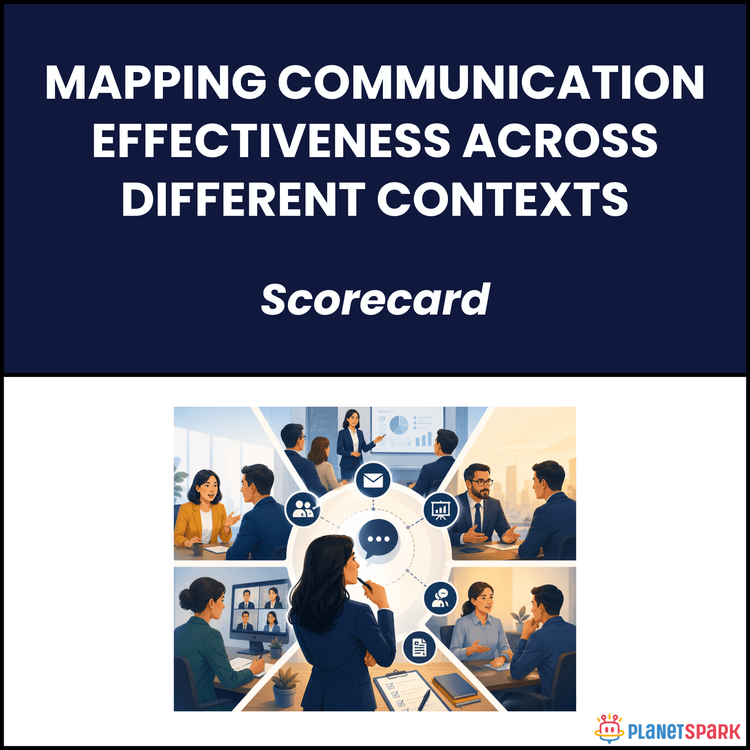
Mapping Communication Effectiveness Across Different Contexts
Mastering Workplace Communication
Most professionals assume communication is a single skill. If they can write a good email, speak confidently in meetings, or present ideas clearly, they believe they are “good communicators.” But modern workplaces don’t reward one-dimensional communication anymore.
The communication style that works brilliantly in a team brainstorming session can damage credibility in a client presentation. A tone that feels friendly in a Slack message may come across as unprofessional in cross-functional collaboration. Even highly capable professionals often struggle not because they communicate poorly—but because they communicate the same way in every situation. That’s where this resource becomes extremely valuable.
This practical communication scorecard and self-evaluation framework helps professionals understand how communication changes across different workplace contexts—and how small adjustments in tone, structure, listening, preparation, and delivery can dramatically improve professional outcomes.
Instead of teaching generic communication theory, this resource focuses on real workplace interactions professionals deal with every week: emails, one-on-one conversations, meetings, presentations, and difficult conversations under pressure.
Who Is This Resource For?
This resource is especially useful for:
- Working professionals with 0–15 years of experience
- Managers and team leads handling multiple stakeholders
- Professionals preparing for leadership roles
- Career switchers adapting to new workplace environments
- Consultants and client-facing professionals
- Individuals who receive feedback like “good communicator, but inconsistent across situations”
- Professionals who want stronger executive presence and workplace influence
It is particularly valuable for people who already communicate reasonably well but want to become more intentional, adaptable, and effective across different professional settings.
What Does This Resource Contain?
This resource is designed as a practical communication effectiveness toolkit—not a theory-heavy textbook.
Inside, you’ll find:
- A context-first communication framework that explains why communication effectiveness changes across situations
- Detailed modules covering:
- Written communication
- One-on-one conversations
- Group and team meetings
- High-stakes presentations
- Conflict and negotiation scenarios
- Communication scorecards to evaluate your effectiveness in each context
- Practical workplace checklists for meetings, conversations, and written communication
- Reflection questions to identify communication blind spots
- Structured communication improvement frameworks
- Real-world examples of communication mistakes and improvements
- Guidance on listening, tone management, clarity, stakeholder awareness, and credibility-building
- A complete self-evaluation worksheet for ongoing professional development
- A 30-day communication improvement challenge for deliberate practice
The resource is built for immediate application in real workplace interactions.
Summary of the Resource
This communication effectiveness guide helps professionals understand a critical workplace truth: communication is context-dependent.
Rather than searching for one “perfect communication style,” the resource teaches professionals how to adapt effectively across different situations, audiences, and professional stakes.
Through practical frameworks, scorecards, reflective exercises, and real-world workplace examples, the guide helps readers identify communication gaps, improve self-awareness, and build stronger professional relationships through deliberate communication adjustments.
It transforms communication from an instinctive habit into a strategic professional capability.
How Will This Resource Be Useful?
This resource helps professionals improve communication in ways that directly affect career growth and workplace effectiveness.
You’ll learn how to:
- Communicate more clearly and confidently across different professional settings
- Avoid common workplace communication mistakes
- Improve meeting participation and facilitation
- Build stronger one-on-one relationships through better listening
- Deliver presentations with greater authority and credibility
- Handle conflict without becoming defensive or avoidant
- Adapt communication style to different audiences and stakeholders
- Increase trust, influence, and professional presence
- Identify personal communication blind spots through structured reflection
Most importantly, this resource helps you move from reactive communication to intentional communication.
That shift alone can significantly improve collaboration, leadership perception, and long-term professional growth.
How Should You Use This Resource?
To get the maximum value from this resource, use it alongside real workplace interactions—not as passive reading material.
Start by reading through all five communication contexts to understand how communication expectations shift depending on audience, pressure, and purpose.
Next, complete the communication scorecards honestly using recent real-life examples from your workplace experience.
Avoid scoring yourself based on your best performance. Use typical interactions for a more accurate baseline.
Then identify one or two high-impact communication areas to improve first instead of trying to fix everything at once.
As you move through the resource:
- Use the written communication checklist before important emails
- Apply the one-on-one conversation framework in manager or peer discussions
- Practice meeting facilitation techniques during team sessions
- Rehearse presentation preparation using the three-layer framework
- Use the conflict communication tools during difficult conversations
Finally, revisit the self-evaluation worksheet monthly to track progress and identify new adjustment areas.
The resource works best when paired with consistent reflection and deliberate practice.
Action Steps
After accessing this resource, take these practical steps immediately:
1. Complete the self-evaluation scorecard across all five communication contexts
2. Identify your two weakest communication environments
3. Choose one real workplace interaction each week for deliberate practice
4. Apply the communication checklists before important meetings or conversations
5. Ask one trusted colleague for honest communication feedback
6. Review your progress after 30 days using the scorecard again
Small communication adjustments repeated consistently create major long-term professional advantages.
Strong communication is not about speaking the loudest, sounding the smartest, or trying to impress every room you enter. It is about understanding what each situation demands—and responding with clarity, awareness, and intention.
Professionals who grow fastest in their careers are rarely the ones who communicate perfectly all the time. They are the ones who observe, adapt, reflect, and improve continuously.
Use this resource as an ongoing professional practice tool, not a one-time exercise. The ability to adjust your communication across contexts is one of the most valuable career skills you can build in today’s workplace.