
Mapping Energy Strengths and Weaknesses for Personal Optimization

Mapping Energy Strengths and Weaknesses for Personal Optimization
Optimize Your Energy for Peak Performance: A Practical Guide for Working Professionals
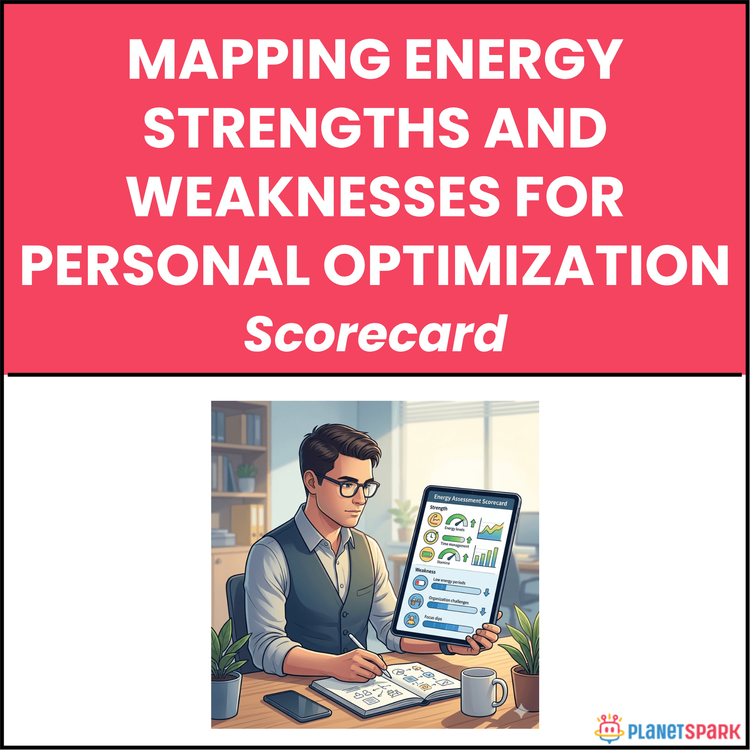
If you often find yourself running on empty, barely keeping up with the demands of your job and personal life, you're not alone. For most professionals, energy management is the missing piece in their productivity puzzle. While we all have the same 24 hours, what sets high performers apart is their ability to manage their energy effectively. If you feel like your energy is constantly depleted, it's time to take a structured approach to understand and optimize it. That's exactly what the Mapping Energy Strengths and Weaknesses for Personal Optimization scorecard offers—a practical, results-driven tool that helps you assess your energy, recognize your strengths and weaknesses, and develop actionable strategies to operate at your peak.
Who Is This Resource For?
This resource is designed for professionals who want to take control of their energy and maximize their performance, including:
- Career switchers looking to adjust to a new role without burning out.
- Consultants managing multiple clients and tight deadlines.
- Managers who juggle team responsibilities and leadership demands.
- Professionals in the early to mid stages of their careers aiming to boost performance without compromising well-being.
- Anyone who feels drained at the end of the workday and wants to identify concrete actions for a more energizing work-life balance.
What Does This Resource Contain?
The Mapping Energy Strengths and Weaknesses for Personal Optimization resource offers a comprehensive, self-assessment tool divided into several key modules that provide practical and actionable insights:
1. Energy Scorecard: A detailed self-assessment across four energy dimensions—physical, emotional, mental, and purpose—to evaluate where your energy is strongest and where you need to focus.
2. Energy Profile Analysis: Learn how to interpret your energy scores and prioritize the areas that need attention, ensuring you're targeting the highest-leverage opportunities for improvement.
3. Energy Drain Identifier: Pinpoint common drains in each energy dimension, such as poor sleep, toxic relationships, or mental overload, and uncover the root causes.
4. Energy Recharge Menu: A curated set of recovery strategies to help you recharge and optimize your energy across all four dimensions—physical, emotional, mental, and purpose.
5. Reflection Worksheet: A practical guide to help you identify your personal energy blueprint, make commitments to change, and track progress over 30 days.
6. Real-World Application: A case study showcasing how a professional, Priya, used the scorecard to regain control of her energy and significantly improve her performance and well-being.
7. Common Mistakes to Avoid: Identify the most common errors professionals make when trying to optimize their energy and how to avoid them.
8. Next Steps and Activation Plan: A low-pressure, actionable 7-day plan to help you begin implementing the changes right away.
Summary of the Resource:
The Mapping Energy Strengths and Weaknesses for Personal Optimization scorecard provides a structured approach for professionals to assess, understand, and optimize their energy. Whether you're struggling with fatigue, low motivation, or burnout, this resource offers clear steps to identify your energy drains, boost your strengths, and implement effective recovery strategies. It’s perfect for professionals who want to perform at their best without burning out.
How Will This Resource Be Useful?
This resource provides tangible benefits to working professionals:
- Identify your energy strengths and weaknesses: Understand where your energy comes from and what drains it.
- Make smarter decisions: Strategically manage your day by prioritizing activities that boost energy and avoiding those that deplete it.
- Recover with intention: Implement research-backed recharge strategies to restore your energy across all dimensions.
- Improve work performance: Increase your focus, emotional stability, and sense of purpose, leading to better decision-making and sustained high performance.
- Prevent burnout: Learn how to manage your energy over time to stay engaged, motivated, and productive.
How Should You Use This Resource?
To make the most of this resource, follow these steps:
1. Start with the Energy Scorecard: Honestly rate yourself across the four dimensions—physical, emotional, mental, and purpose energy. This gives you a clear snapshot of your current energy levels.
2. Analyze Your Energy Profile: After completing the scorecard, identify your strongest and weakest dimensions. Focus on your lowest-scoring dimension as it’s the area most likely draining your overall energy.
3. Pinpoint Your Energy Drains: Use the Energy Drain Identifier to uncover specific habits, relationships, or environments that are negatively impacting your energy.
4. Implement Recharge Strategies: Choose recharge strategies from the Energy Recharge Menu tailored to your specific energy needs. Commit to at least one strategy in each category for 30 days.
5. Reflect and Reassess: Use the Reflection Worksheet to track your progress, identify patterns, and make adjustments after 30 days.
Action Steps:
After accessing this resource, take these immediate actions:
1. Block 2–3 hours of focused time to complete the Energy Scorecard and the Energy Drain Identifier.
2. Choose at least one recharge strategy from each energy dimension to implement daily.
3. Set a clear boundary to protect your peak energy hours (e.g., morning focus time, avoiding meetings during your low-energy periods).
4. Revisit your energy profile in 30 days and adjust strategies as needed.
5. Share your findings with a colleague or manager to gain additional insights or support.
Your energy is the most valuable asset you have as a working professional. By intentionally managing it, you can unlock higher performance, better work-life balance, and more sustainable success. Use this scorecard to optimize your energy, and remember—small, focused changes can lead to significant results. Start today, protect your energy, and give your best self to the work that matters most.
Book your free session today!